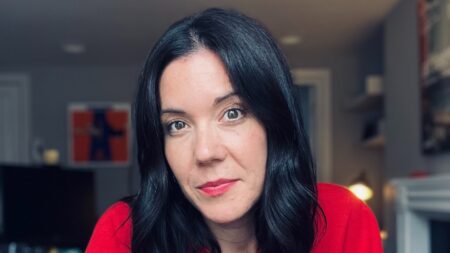





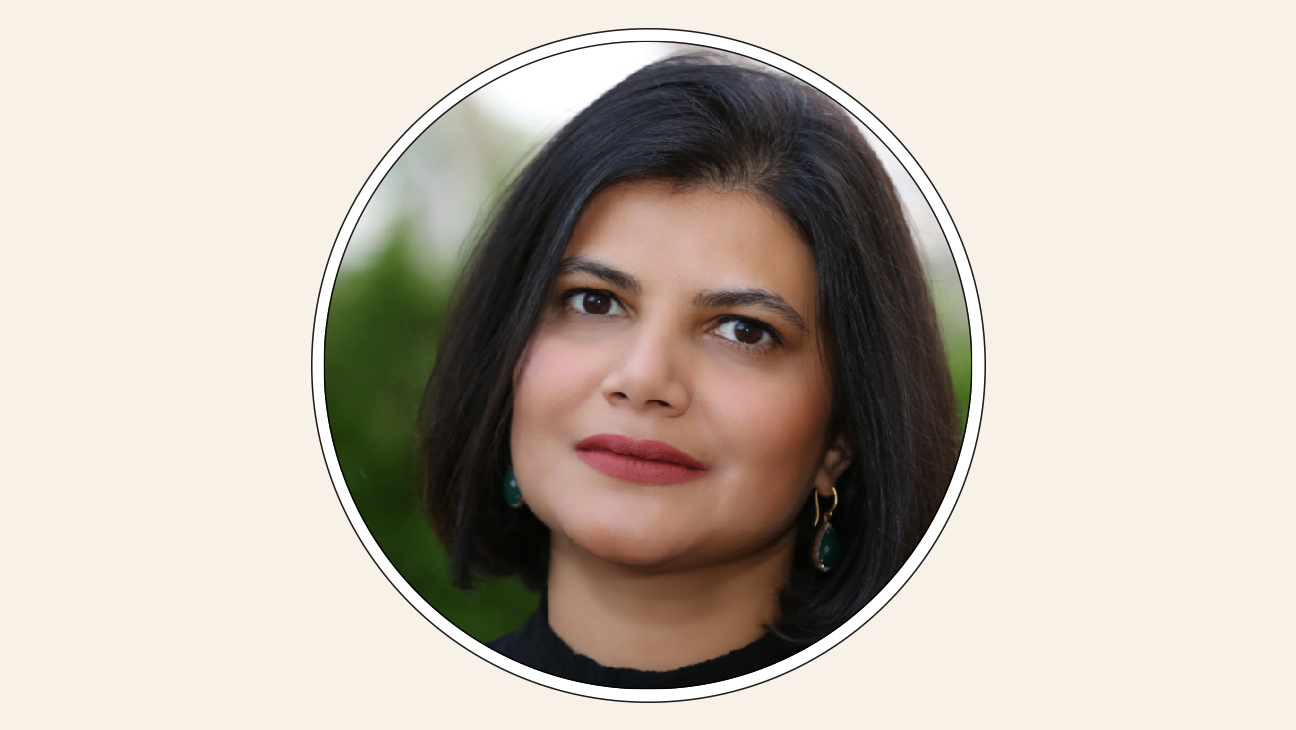


In just five years, Saudi Arabia’s Red Sea International Film Festival has gone from an ambitious start-up to an established stop on the global festival circuit — and few people have had a closer view of that transformation than managing director Shivani Pandya Malhotra. A veteran executive with more than 25 years in the entertainment business, and previously the longtime managing director of the Dubai International Film Festival, Pandya Malhotra joined the Red Sea Film Foundation in 2019 with a remit to build a world-class festival from scratch and a year-round engine to finance and nurture filmmakers across Saudi Arabia, the wider Arab world, Africa and Asia.
Under her leadership, the foundation has rolled out four key pillars — the festival, the Red Sea Souk market, Red Sea Labs and the Red Sea Fund, which has already supported some 280 projects from across the region. Since debuting in Jeddah’s UNESCO-listed Al Balad district in 2021, the festival has showcased more than 520 films from 85 countries and over 130 Saudi titles, helping put a once-nascent local industry on the map as the country’s box office and production levels surge.
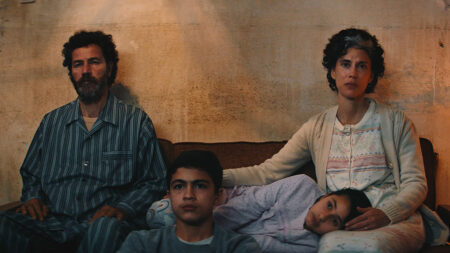
The fifth edition, running Dec. 4–13, 2025, leans into Red Sea’s “East meets West” mission: Rowan Athale’s boxing biopic Giant opened the festival, while a 16-strong competition line-up mixes new work from Asia, Africa and the Arab world, including Saudi Oscar submission Hijra and the world premiere of Somali director Mohammed Sheikh’s Barni. Sean Baker, fresh off his Anora Oscar run, presides over the jury, as a packed talks program welcomes guests ranging from Aishwarya Rai Bachchan and Adrien Brody to Giancarlo Esposito, Juliette Binoche, Darren Aronofsky, Ana de Armas, Nicholas Hoult and many more.
The Hollywood Reporter connected with Pandya Malhotra to discuss the festival’s rapid growth, the structural challenges still facing Saudi’s film industry, and how she responds to Western skepticism following the recent backlash over the Riyadh Comedy Festival.
How would you describe the original vision when you began building the Red Sea Film Foundation and festival in 2019? Five years later, how do you feel about how you have or haven’t fulfilled those goals?
When we started in 2019, it really was a clean slate — which is very exciting but also a huge responsibility. We knew from the outset that we didn’t just want a festival; we wanted a foundation with four core pillars that would support an entire ecosystem: a festival, a market, labs and a fund. The idea was to build something that could nurture talent and projects year-round, while also creating a truly international platform.
From the beginning, we were clear that our international focus would be on Asia, Africa and the Arab world. That’s the region we wanted to champion and become the ultimate platform for. Today, all of those verticals are fully open to that geography, and we’ve been very strategic about sticking to that long-term plan. There’s always more to be done, I feel we’ve accomplished a lot.
It’s unusual to launch a new festival in a country where the public film culture is so young. What did you learn about Saudi audiences from that first edition, and how have they evolved over five years?
What surprised us most is how cinema-literate people already were. For decades, Saudis have watched a huge amount of cinema — but privately, at home. So the culture was there; it just wasn’t a collective experience. We didn’t fully realize how much they had already absorbed until we opened the festival.
In that first year, we were unsure how audiences would respond to foreign-language films and independent cinema. Then we started seeing sold-out screenings for everything from Indian films to anime. We had one Indian title where we were nervous we wouldn’t fill the room — and it completely packed out. We discovered there was a long history of people watching Indian cinema, Egyptian cinema, some arthouse, anime… all of that had been part of people’s lives already.
What has changed over five years is that we’ve become much more audience-focused in a targeted way. This year’s program is very consciously shaped for this public: there’s something for families, for genre fans, for people curious about arthouse cinema. And you can see that reflected not just at the festival but in Saudi box office admissions generally. International films regularly rank in the top 10 here now, and the market is growing this year, which is also why so many studios are suddenly very interested in this market.
What do you see as the major structural challenges that still need to be addressed for the Saudi industry to become fully self-sustaining?
Every pillar of the ecosystem is developing — the infrastructure, the creatives, the financing, the international interest. The ambition and enthusiasm are enormous, and film is part of Vision 2030, so there is strong support at a national level.
Where we still need to accelerate is in crew and craft. The creative talent has always been here; a lot of people moved from being YouTubers or content creators into filmmaking, and that adaptation has happened quite quickly. But to sustain the volume of production we’re now seeing — and the international projects that are coming in — we need experienced crews on the ground at every level. That just takes time, targeted training and investment.
For us at the foundation, that’s one of the main reasons we launched the Labs very early on. We run feature labs with TorinoFilmLab, series labs with Film Independent, shorter programs with USC and Misk, workshops on sound design, film music, scriptwriting — all of these are about building capacity. And of course, there are other institutions in Saudi that have their own strategic programs. Collectively, those efforts will help fill the gaps. But it will take some time.
Were there particular international models you looked at when imagining how Red Sea and the Saudi industry might develop?
I think everyone in this part of the world looks at Korea. What they achieved across film, series and pop culture is remarkable — and, in my view, very strategic. They championed their cinema, they worked to get it seen internationally, and they built a global audience over time. It didn’t happen overnight, but suddenly it felt like Korean content was everywhere.
We’ve definitely studied what others have done, including Korea, knowing that each country has its own curve and you can’t just copy-paste a model. But you can learn from the way they structured support, how they positioned their stories globally, and how they kept investing for the long term. From a Saudi perspective, that’s very inspiring.
Looking ahead another five years, what would count as success for you — or as a sign that the foundation has achieved what you hoped?
On a practical level, I’m quite pragmatic: I want to see films we’ve supported doing well both on the festival circuit and commercially. Already this year, seven films backed by the Red Sea Fund have been selected by their countries as Oscar submissions, which is incredibly encouraging. But for me, the real success is when those kinds of films are also reaching audiences and performing at the box office.
We’ve already seen several Saudi films, including titles we’ve supported or premiered at the festival, become top-grossing releases in the local market. I’d love to see a diverse slate of films — from different countries, in different styles — traveling to major festivals, winning awards and also finding sustainable audiences. That balance between artistic recognition and commercial viability is very important if the industry is going to thrive.
Because most of THR’s readership is in the U.S., I do want to ask about the recent backlash around the Riyadh Comedy Festival, and the way some Western observers view cultural events in Saudi primarily through a political or human rights lens. How do you respond to that skepticism?
For us at the Red Sea Film Foundation, we’ve always been very focused and strategic about what we’re doing. In the early years, there was definitely some skepticism around people coming to the festival. But I can genuinely say that everyone who has actually attended has seen the work we’re doing, experienced the atmosphere and the community, and wanted to come back. That’s why you see so many returning guests — high-profile talent, directors, industry figures.
Often, the loudest critics are the ones who have never been here. They don’t know Saudi; they haven’t seen the changes on the ground. This is a question I’ve been asked consistently over five years, and my answer is always the same: come and see it. Judge for yourself. Speak to the people who have attended — regardless of where they are from — and they’ll tell you about their experience.
Have the headlines around the Riyadh comedy festival made it harder this year to convince American filmmakers or industry participants to attend?
Honestly, no. At this point, people are familiar with us. Almost everyone we invite either has a friend who has been to Red Sea or knows someone who has worked with us. Word of mouth from those guests has been our strongest ambassador. The feedback they share about the festival, the people they’ve met here and the filmmakers they’ve discovered has been overwhelmingly positive. We haven’t faced resistance on that front at all.
What are you most excited about in the fifth edition’s program?
It’s difficult to single out films, but I’m very proud of the shape of the competition and the strength of our women filmmakers this year, particularly from the Arab world. We have filmmakers like Haifaa al-Mansour, Annemarie Jacir, Kaouther Ben Hania and Shahad Ameen presenting new work, alongside a broader line-up that really reflects our Asia–Africa–Arab focus.
I’m also excited about the overall range: Giant as an “East meets West” opener; a competition that includes the world premiere of Barni and titles like Hijra and Lost Land; and our International and Arab Spectacular strands, which bring together everything from Angelina Jolie’s Couture to Haifaa’s mystery thriller Unidentified.
Then there’s the conversations program — Sean Baker presiding over the jury and doing a masterclass, Adrien Brody and Aishwarya Rai Bachchan joining In Conversation, Giancarlo Esposito mentoring our SeriesLab participants. All of that creates a very rich environment for dialogue between local and international talent.
You previously spent many years helping build the Dubai International Film Festival. What lessons from that chapter have you applied in Jeddah?
There were many lessons. From Dubai, I took a very clear sense of what works structurally in a festival, what kinds of industry support are most effective, and what the region as a whole needs in terms of platforms. When I came to Saudi, I didn’t yet know exactly what Saudi needed, but I did know what the wider region lacked.
For someone attending Red Sea for the first time — maybe a reader who’s curious after all these headlines — what’s your practical advice for getting the most out of the festival and Jeddah?
From a festival perspective, I’d say: don’t just stick to the red carpets. Watch films in competition, go to the In Conversation sessions, drop into a Souk talk or a masterclass if you can. That’s where you really feel the energy of the community we’re trying to build.
And then take time to explore Al Balad. We’re based in a UNESCO heritage site, and the old town tells you a lot about Jeddah’s history as a gateway to the kingdom — you feel the diversity of people and cultures that have passed through here. If you manage to escape the festival bubble, the beaches are beautiful, the food scene is fantastic, and there’s a growing number of local chefs doing really interesting things. My hope is always that first-time visitors come once for the films, and then come back because they’ve genuinely fallen in love with the place.
Read the full article here