






When Steven Soderbergh expressed frustration over the commercial failure of his well-reviewed Black Bag back in March, his comments crystallized one aspect of film-industry anxiety in the post-pandemic years.
The spy thriller’s box office disappointment seemed almost to confirm that star-driven mid-budget movies for discerning grown-ups are no longer a viable Hollywood business. Soderbergh suggested that shrinkage of the theatrical market for films like Black Bag would further cement the monopoly of massive franchise entries promising maximum spectacle, if little else of substance.
But even those blockbusters are no longer the surefire profit generators they once were. For every financial hit like Jurassic World: Rebirth or Superman, there’s a costly under-performer like Captain America: Brave New World, Tron: Ares or even Mission: Impossible — The Final Reckoning, despite grossing almost $600 million worldwide.
While Black Bag notched up a near-perfect 96 percent Rotten Tomatoes score and had strong support from its distributor, the Soderbergh movie came and went in theaters almost unnoticed. Which points to a broader industry pathology across the spectrum — the diminishing cultural imprint of movies.
The crowded streaming landscape, the decline of the collective moviegoing experience and the ever-shortening window between theatrical and home-viewing are just some of the factors that have made movies appear more marginal — issues certain to be amplified with news of the Netflix-Warner Bros. merger and what seems an inevitable squeeze on competition.
The flatlining numbers for film production in Los Angeles are another cause of industry pessimism. Can we still call it the Dream Factory if everyone has decamped to Budapest?
Contrary to all that justifiable alarm, however, this still turned out to be an exceptional year for movies, and the success of audacious, highly original entertainment like Sinners or One Battle After Another (or, fingers crossed, the upcoming Marty Supreme) lets us hope we’re not yet condemned to be stuck in an endless loop of the same regurgitated IP.
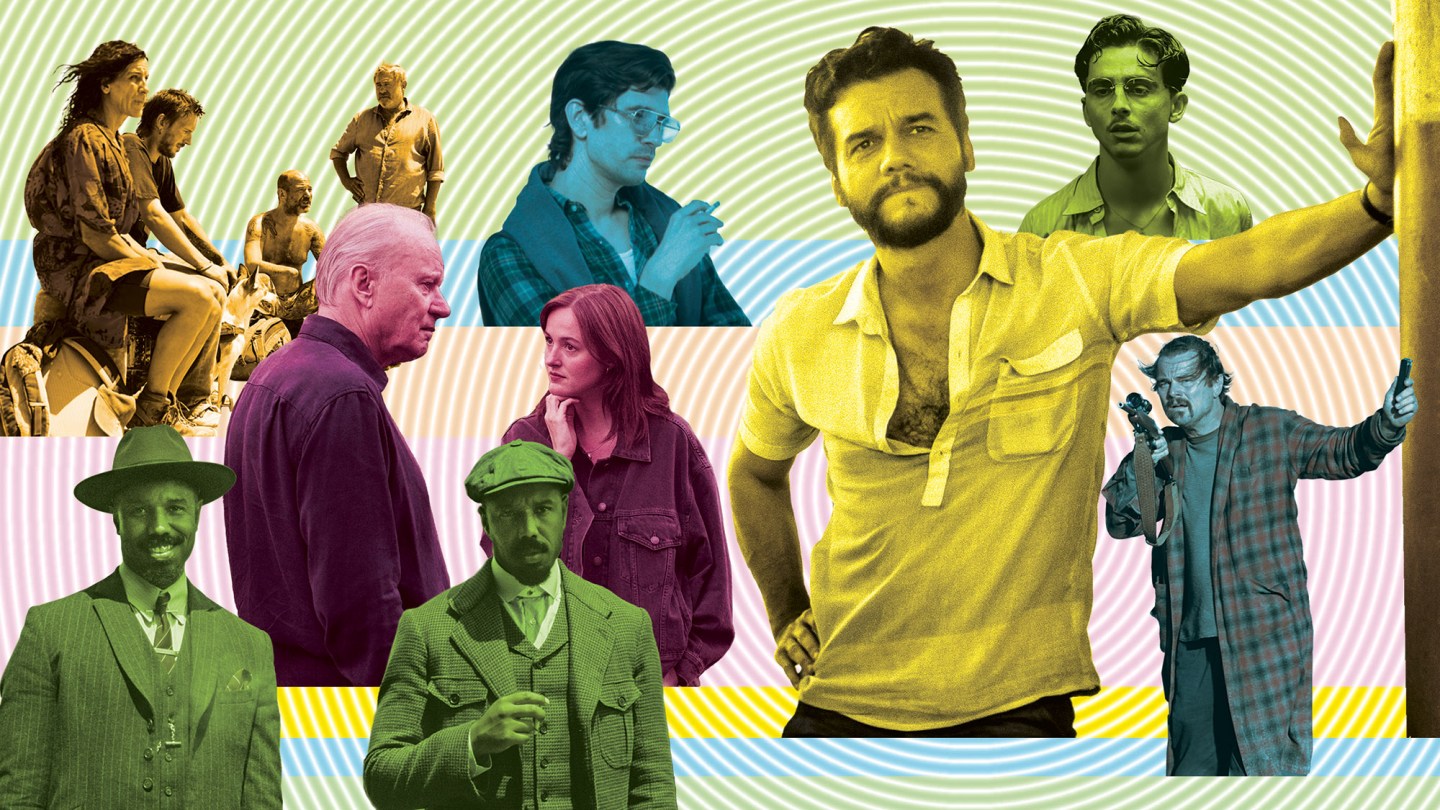
When I started narrowing down my picks for best of the year, I had a shortlist of almost 30 releases that left a lasting impression — a mix of standout work from international auteurs, American indie darlings, relative newcomers and seasoned Hollywood directors.
I can’t get too caught up in handwringing in a year when my list is too loaded to find room for movies as beautiful as Richard Linklater’s one-two punch Blue Moon and Nouvelle Vague; Norwegian director Dag Johan Haugerud’s Sex, Dreams, Love trilogy about intimacy, gender and sexuality; Jia Zhang-ke’s melancholy story of lost love in a rapidly changing modern China, Caught by the Tides; or Harris Dickinson’s trenchant directing debut, Urchin.
Read on for my ranked Top 10 (plus 10 alphabetically listed honorable mentions), followed by those of my clever colleagues Jon Frosch and Sheri Linden. And instead of grumbling that half these titles are movies you’ve never even heard of, seek them out. You might even agree!
— DAVID ROONEY
-
1. The Secret Agent
Image Credit: Neon/Courtesy Everett Collection Set in 1977 during the height of Brazil’s long military dictatorship, Kleber Mendonça Filho’s sinuous reimagining of the political thriller casts a never-better Wagner Moura as technology expert Armando, who returns to his — and the director’s — northeastern hometown of Recife after an unsettling clash with a corrupt federal official. The widowed Armando holes up in a leftist safe house, making plans to whisk his young son out of the country to safety as hitmen close in. Laced with generous notes of absurdist humor, haunting reflections on history and memory, roiling emotional undercurrents, scorching color and profound love of movies, this is a sui generis masterwork. A WTF scene that hilariously evokes urban legend starts with capybaras grazing in a field at night and segues to a severed leg terrorizing a queer cruising ground — a deft metaphor contrasting the tranquility of nature with the chaos and persecution of regime rule.
-
2. One Battle After Another
Image Credit: Courtesy of Warner Bros. Loosely adapting Thomas Pynchon’s postmodern 1990 novel Vineland, Paul Thomas Anderson has made his most propulsively entertaining movie since Boogie Nights with this invigorating epic. Juxtaposing the revolutionary radicalism of past decades with a stealthier underground resistance that might be medicinal for our current political malady, the film strikes a canny balance between despair and dogged resilience. With sardonic humor, buoyancy and provocative urgency, Anderson and a crackerjack ensemble led by Leonardo DiCaprio tap, without preachiness, into a collective discontent with creeping authoritarianism, corruption and cruel victimization of immigrants. Sean Penn and Benicio del Toro provide superb backup, but it’s the incandescent trio of women — played by Teyana Taylor, Regina Hall and exciting newcomer Chase Infiniti — that fuel the pulsing humanity.
-
3. Sirat
Image Credit: Neon A road movie like no other, Oliver Laxe’s mind-blowing fourth feature has been compared to Mad Max, The Wages of Fear and Zabriskie Point. But the visionary Spanish director’s blistering experiential odyssey boldly inhabits its own universe. Visceral, spiritual, metaphysical, sensorial and powerfully elemental, the film follows Luis — a father played by a heart-rending Sergi López, his bear-like physicality belying his achingly human fragility — as he travels from Spain with his young son to the mountains of southern Morocco in search of his missing daughter, last seen at a desert rave. They arrive to the thumping sounds of EDM and start handing out flyers, but the party is broken up by soldiers ordering all Europeans to evacuate following the escalation of armed international conflict. Tagging along with a group of hardcore ravers, they head for another dance party deeper into the desert in a journey both tragic and transcendent that navigates the bridge between heaven and hell referred to in the Arabic title. A stunner.
-
4. Peter Hujar’s Day
Image Credit: Berlin Film Festival Constructed from recently rediscovered recordings of a 1974 conversation between the eponymous photographer and his author friend Linda Rosenkrantz for an unrealized book project on the day-to-day lives of artists, Ira Sachs’ exquisite experiment in verbatim first-person biography is hypnotic. A brilliant actor with a seemingly inexhaustible capacity to surprise, Ben Whishaw plays Hujar with transfixing grace and subtlety — by turns petulant, self-dramatizing, playful and melancholy — while Rebecca Hall pours the warming nourishment of intimate friendship into the role of Rosenkrantz. This deceptively simple but affecting film paints a full-bodied portrait of a queer artist and the downtown New York City art scene of the period, in which he feels both at home and an outsider. It’s also a gorgeous salute to the special friendships between women and gay men. Sachs achieves something quietly miraculous, finding texture and depth in even the most quotidian details.
-
5. Marty Supreme
Image Credit: A24 The energy exploding from every frame of Josh Safdie’s first solo feature in 17 years could power a small nation. There ought to be a new word for dynamic. In a virtuosic turn that refuses to soften the cocky title character’s abrasiveness, Timothée Chalamet plays a brash embodiment of New York City itself, angling to turn his ping-pong prowess and off-the-charts chutzpah into his ticket out of a mundane life, selling shoes on the Lower East Side in the early 1950s. Marty Mauser’s tireless adventures in self-promotion are a rollicking picaresque that takes him halfway around the world, throwing roadblocks in his path but never crushing his dreams. In what could be the crowning achievement of a career spanning more than five decades, Jack Fisk’s period production design is just one key ingredient in the movie’s heady evocation of a time and place. It’s a smash serve, a kinetic blast from start to finish, surrounding Chalamet with an ace ensemble that includes Gwyneth Paltrow, Odessa A’zion and Tyler, The Creator.
-
6. Sentimental Value
Image Credit: Kasper Tuxen/Neon/Courtesy Everett Collection Strained family dynamics are seldom explored with the clear-eyed maturity and formal elegance that Norwegian director Joachim Trier brings to this drama tinged with wry humor — think Bergman, but with as much light as darkness — about the mutable contracts between sisters, and even more so, fathers and daughters. In one of the best performances of his distinguished career, Stellan Skarsgard plays Gustav, an egotistical, once-celebrated filmmaker attempting a comeback, in which he hopes to persuade his estranged actress daughter Nora (Renate Reinsve, so luminous in Trier’s The Worst Person in the World) to star. Gustav’s return into the life of volatile Nora and her more grounded academic sister Agnes (impressive newcomer Inga Ibsdotter Lilleaas) rekindles old resentments and sparks new ones when he embarks on a backup plan to shoot the film with an eager young Hollywood recruit, played by Elle Fanning. Largely a four-hander with a principal cast that could not be better, this is an enormously satisfying reflection on grief and sadness as hereditary traits and the tricky corridors of memory in a family home.
-
7. Sinners
Image Credit: Courtesy of Warner Bros. Ryan Coogler has more than proven himself with a shattering real-life drama about police brutality, the resuscitation of a dead boxing franchise and two uncommonly soulful MCU entries. His first wholly original feature is a sensational genre-hopping horror movie that harnesses the spiritual and supernatural power of the blues to contemplate race, freedom, history and consuming darkness. Michael B. Jordan plays identical twin entrepreneurs who return from WWI and Chicago gangland in 1932 to their Mississippi Delta hometown with a fat wad of cash to open a juke joint. Unfortunately, the transporting music draws not only revelrous sharecroppers but predatory white vampires, promising eternal life as an escape from cruel oppression. A visually sumptuous, thematically rich knockout that flanks Jordan with an exceptional cast, including Hailee Steinfeld, Jack O’Connell, Wunmi Mosaku, Delroy Lindo and bright new talent Miles Caton.
-
8. Train Dreams
Image Credit: Courtesy of Netflix Adapting Denis Johnson’s elegiac 2002 novella, Clint Bentley’s poetic minor-key chronicle of a life is a superlative example of the right way to flesh out spare prose for the screen. Novelistic but never page-bound, this haunting slice of frontier Americana at the start of the 20th century allows Joel Edgerton to plumb fathomless depths as a day laborer taken far from his family by logging and bridge-building jobs in the Pacific Northwest, a milieu depicted with an exactitude of detail that recalls the fiction of Bret Harte. The passage of time is both fluid and jagged in this contemplation of pioneer fellowship and solitude, graced by echoes of Terrence Malick yet unerring in the assuredness of its own voice and visual language. A miniaturist epic whose atmospheric spell and penetrating sorrow linger long after the end credits have rolled.
-
9. The Mastermind
Image Credit: MUBI/Courtesy Everett Collection This was an outstanding year for Josh O’Connor, whose sensitivity and rumpled charms elevated Rebuilding, The History of Sound and Wake Up Dead Man: A Knives Out Mystery. Arguably the British actor’s best role in 2025 was in Kelly Reichardt’s funny-sad art heist caper, a reinvention of the genre set in the early 1970s and enriched by an aesthetic that recalls the films of that decade. The director carved her reputation on piercing character studies of struggling Americans, and O’Connor’s underdog carpenter in over his head is a worthy addition to that canon in a movie whose poignancy creeps up on you as it tracks the bumbling museum robbery and spiraling complications that follow. The marvelous ensemble includes Alana Haim, Bill Camp, Hope Davis, John Magaro and Gaby Hoffman.
-
10. Frankenstein
Image Credit: Ken Woroner/Netflix Guillermo del Toro’s entire career might be considered a prelude to the maestro’s intoxicating encounter with Mary Shelley’s 1818 classic, which comes roaring back to life in a lightning-charged act of Gothic reanimation. While honoring the novel’s essence, the director dials back the horror to focus more on tragedy, romance, the tortured love between fathers and sons and the question of what it really means to be human. Oscar Isaac plays the egotistical scientist like a dandified rock star and Mia Goth is enchanting as a free-thinking woman who develops tender feelings for “The Creature.” In a revelatory performance, Jacob Elordi invests that role with searing pathos as he discovers the inescapable loneliness of immortality. As is characteristic of del Toro’s work, the craftsmanship is magnificent.
Honorable mentions: Afternoons of Solitude; Father Mother Sister Brother; La Grazia; Highest 2 Lowest; It Was Just an Accident; One of Them Days; Pillion; Sorry, Baby; The Testament of Ann Lee; Twinless
-
Jon Frosch’s Top 10
Image Credit: Neon
-
Sheri Linden’s Top 10
Image Credit: Courtesy of TIFF
Read the full article here