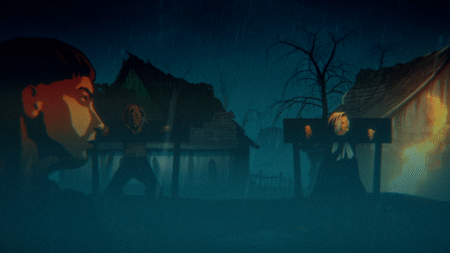




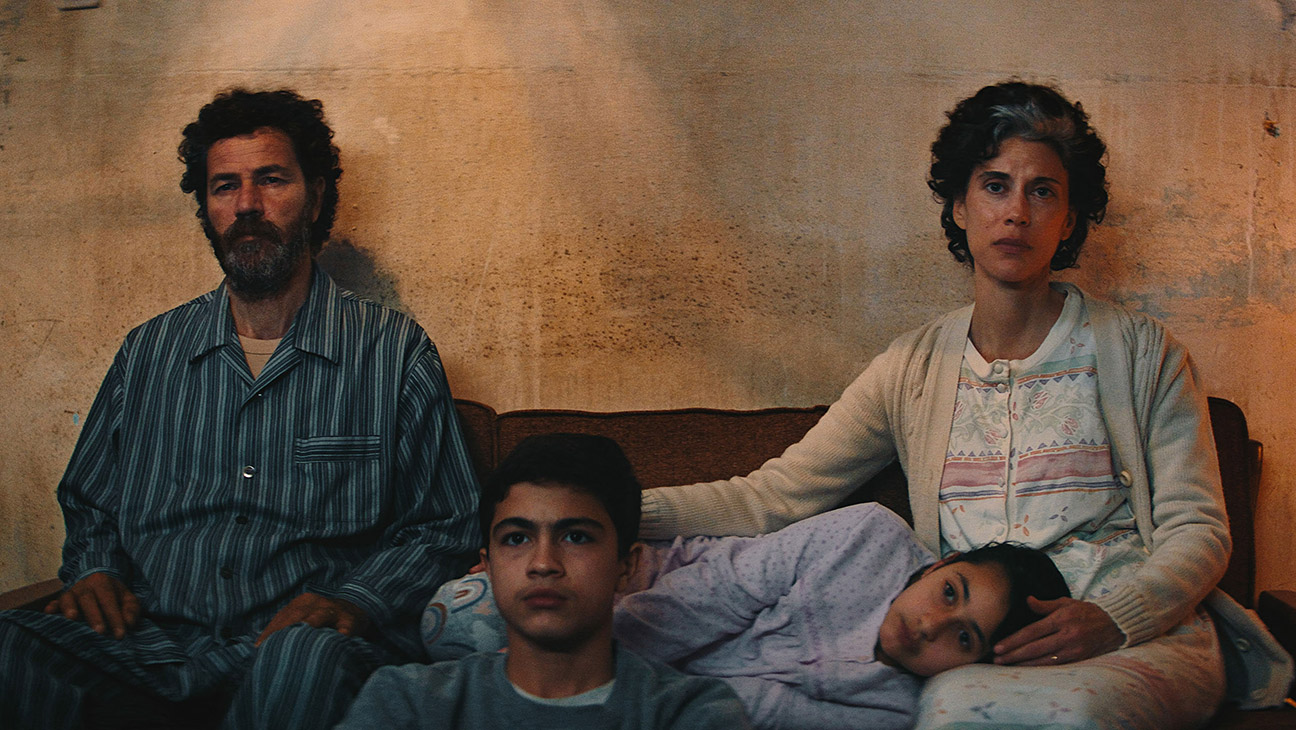


Cherien Dabis’ All That’s Left of You is both intimate and epic. The third film from the actor/director is a sweeping family saga that covers three generations of history and struggle, from 1948 through to the present day, through the lens of a single Palestinian family.
For Dabis, a Palestinian American filmmaker best known for his 2009 debut Amreeka and as an actor, for her work on Ozark and Only Murders in the Building, the story is deeply personal, inspired by her father’s exile in 1967 and his lifelong grief over a homeland he could visit only on a foreign passport.
She spent years “marinating” the script before finally writing it in 2020. Financing came together quickly and she was ready to shoot, on location in Palestine, when October 7 happened. The war in Gaza upended the production, which ended up moving to Cyprus, Jordan, and Greece, with cast and crew working in “a state of total crisis.”
All That’s Left of You premiered to raves at Sundance and was picked by Jordan to be its official Oscar contender for the best international feature category. But U.S. distributors, perhaps concerned about the political repercussions, balked at the film. “Every mainstream distributor essentially backed away,” she says. Eventually, Dabis decided to go it on her own. She set up a standalone distribution company, Visiblity Films, and, together with upstart distributor Watermelon Pictures, is co-releasing the movie stateside, kicking off with an awards-season run on Dec. 5.
All That’s Left of You is one of four films in this year’s international feature races focused on the Palestinian experience. It joins Palestine’s official Oscar entry, Palestine 36, directed by Annemarie Jacir, a period drama set during the 1936–39 Arab revolt; Tunisia’s contender The Voice of Hind Rajab, from Kaouther Ben Hania, a harrowing real-life tale of a young Palestinian girl killed in Gaza by Israel soldiers; and The Sea, Israel’s submission, directed by Shai Carmeli-Pollak, which follows a 12-year-old Palestinian boy from the West Bank who risks his life to go to the beach for the first time in Tel Aviv.
Dabis spoke to The Hollywood Reporter about shooting an “11-month crisis production” across four countries, transforming her father’s inherited trauma into art, and why she’s embracing a direct artist-to-audience model for Palestinian stories, saying, “This is the least that I could do. This is what I must do.”
How long had you been thinking about this story, and how did the film come together?
I’ve been thinking about the story for a very long time. In 2014, after I made my first two features, I felt I was ready to make the big film that I’ve been wanting to make for a long time. I spent a while marinating on the script. I bought a notebook and just wrote down ideas for scenes and themes, putting in all these different things, the kind of characters, the story arcs, and so on. Eventually, I came up with a structure. And then the first image, the first scenes. Then I started writing. That was in 2020.
When I sat down to start writing, it all kind of flowed out of me. It was one of the easiest things I’ve ever written. Which is crazy. But considering I’d been thinking about it for so long, maybe it’s not crazy.
I took it out in 2021, and amazingly, it came together really fast. I was shocked. By 2023, we were financed, not fully-financed but well on the way, and I went into pre-production. That was in May of 2023. It all came together in two years. I kind of couldn’t believe it. But I felt, even at that time, that people were really looking for these stories and were more open to the Palestinian perspective.
Then, October of 2023 happened, and that made the story all the more urgent and important.
What happened to your production after the events of October 7, the attacks, and the war that followed?
We had prepped the entire film there (in Palestine). I was in Jaffa, and then production moved to Al-Birah, which is in the West Bank, and I spent five months on the ground, working with my local crew. We were planning to shoot all over the country: In three different cities in the West Bank, then Haifa and Tel Aviv/Jaffa. We had done all the work. We’d found all of our locations, done all the casting. We’d amassed a giant warehouse of really beautifully crafted, carefully curated props from all of the different time periods and then…October 7th.
We had to flee. We were in Ramallah and within three days, we knew we had to get out. We were hearing fighter jets. The West Bank cities were being sealed off. Checkpoints were closing.
We had to really re-prep the entire film. We started almost from scratch. We finally fled to Cyprus. I was always hoping that we could go back to Palestine, but as things just escalated, we ended up going to Jordan, which is where we shot the majority of the film. We shot in the refugee camps in the north of Jordan, which was amazing, to be able to be surrounded by the Palestinian refugee community, because in so many ways, this is their story. We shot the remainder of the film in Greece. So what was supposed to be mostly a Palestine/Israel shoot ended up being a four-country international one.
The whole thing was really shot in a state of total crisis. It was one kind of crisis after another. We didn’t end up wrapping until October of 2024, so it took 11 months. We’d stop and have to figure out where to go next, and try and raise more money. It was definitely not the way you usually make a movie.
Did everything that happened after October 7 make you reconsider the script or the ending?
There was a moment, as we were watching things really escalate and get really violent in Gaza, where I really considered changing the script. But I decided no, I think that the message of this movie, this message of humanity, is more important than ever. That it’s really about trying to look past our own pain to see the humanity of others. So I really decided to stick with that. Originally, the film was going to end in the present day. I decided to end it in 2022, just to say that all the events in the film happened before October 2023. It’s a look at what Palestinians have been through that led us to the current moment.
How much of this story comes from your own family’s history?
My father is Palestinian. My mother is Jordanian; her ancestors are originally from Lebanon. The film is inspired by my father. He became a refugee in 1967. He was exiled from Palestine and not allowed to return to live with his family in his homeland. He ended up needing to get foreign citizenship in order just to return to visit his family and the only home he’d ever known.
That part of the film, and really a lot of the intergenerational trauma, really the heart of the film, is inspired by my dad. The character of Sharif (played by Adam Bakri and by Mohammad Bakri in later scenes) is somewhat inspired by my dad. I grew up really watching how events impacted my dad emotionally and physically. He had heart attacks in his 50s. His health really suffered because of all of the stress and worry that was chronic. It was just nonstop. He was obsessed with the news. The TV was always on in our household. Those scenes in the film of people always turning off the TV are directly from that.
But I’d say all of this is relatable to most Palestinians, sadly. For me, it was watching my dad grieve the disintegration of his homeland and just seeing him become angrier as he got older. He successfully passed that trauma onto his kids. I ended up kind of looking at that and going: ‘What can I do with this?’ Seeing how that anger was destroying him, I was looking for another way. In some ways, it’s why I became a filmmaker. I didn’t want to be eaten alive by this thing. I think that’s kind of where the movie came from: What can I do with this inheritance, and is there a way to use it to try to heal? Or just even ask that question: Is there a way, by looking at this, to begin healing?
Who was the inspiration for the character you play, Sharif’s wife Hanan?
I feel like my character is inspired by Palestinian women in general, by the strength and resilience, and compassion of Palestinian women. How so often, when the men are kind of broken over time, because of the daily violence of occupation — you know, this term “occupation” just sounds so benign, but it’s something that is so violent — and the men I’ve witnessed in my travels and my time spent in Palestine and within my own family, I’ve seen this violence really does break you over time. And I feel that once the men are broken like that, the women really have to step up. What is beautiful about what I’ve witnessed is that, very often, that can lead to healing, that can change the trajectory of the family.
Did you ever feel, during the production and watching the war in Gaza, like you couldn’t keep going?
I mean, it was one of the most challenging things I’ve ever done in my life by far, certainly artistically, but also, emotionally and physically. We were thrust into total uncertainty, and I didn’t know where we were going to shoot next or how we were going to get the movie done. It was incredibly grueling. But there was never a moment where I thought, “I can’t do this.”
Again, because of the level of violence we were witnessing, I just felt a sense of urgency and a feeling of responsibility. Like, this is the least that I could do. This is what I must do. It was a privilege. It was really one of the greatest honors of my life to get to make this movie.
Why did you decide to release this film on your own, partnering with Watermelon on the release?
I wanted to partner with them because I think they’re doing really great things. They’re brand new out of the gate, and I think what they’re doing is remarkable. But I did not make that decision early on. I made it after we went to Sundance. We had this amazing premiere, super emotional, standing ovation, the whole nine yards, and we got great reviews. But still no distributor stepped up. The mainstream distributors expressed fear of the subject matter. That was incredibly disappointing. After everything we’d been through to get this movie made, to then have every mainstream distributor essentially back away, either say no or back away and express fear, was tremendously disappointing. I had people say to me: If this movie took place in any other part of the world, you would have a mainstream distributor by now.
So post-Sundance, I was really confused, I was really disappointed. But I sat with it. And I thought: I can’t ever allow this to happen again. I thought: I need to go direct from artist-to-audience, and I need to help build an audience for these films, because no mainstream distributor has been willing to do that.
I believe there is an audience for these films. I think we saw that with No Other Land, and I think we’re seeing that now with The Voice of Hind Rajib and even Palestine 36. These movies are being released in Europe right now, and they’re doing exceptionally well. I want to be part of that, part of building that audience for these films.
Have distributors’ and streamers’ attitudes toward Palestinian stories shifted at all since then?
My understanding is that they still don’t want to touch any films with these themes. It’s both mainstream distributors and streamers. I don’t think that’s changed. There were people within these distribution companies who loved my film and really fought for it in their company. So I think it’s coming from a higher level.
So even though we’re seeing waves of humanity kind of wake up to what the Palestinian people have gone through, I don’t think that it’s really translating into film distribution or streaming quite yet.
What does it mean to you to be in the Oscar race alongside so many other Palestinian films this year?
It’s really remarkable. I don’t think I ever imagined that I would get to the day where I would be not just in the race for the Oscars, but also among my Palestinian peers. I think that’s really tremendous.
I think in particular, if you look at Palestine 36 and my film and The Voice of Hind Rajab, we are covering a great deal of Palestinian history, from 1936 until almost the present day. I think the three films go very well together. It’s sort of like you can watch this triptych of films and get this kind of incredible breadth of experience of what it is and what it means to be Palestinian in the world. I think it’s pretty incredible. I really hope that people do watch all three.
Check out the trailer for All That’s Left of You below:

Read the full article here