


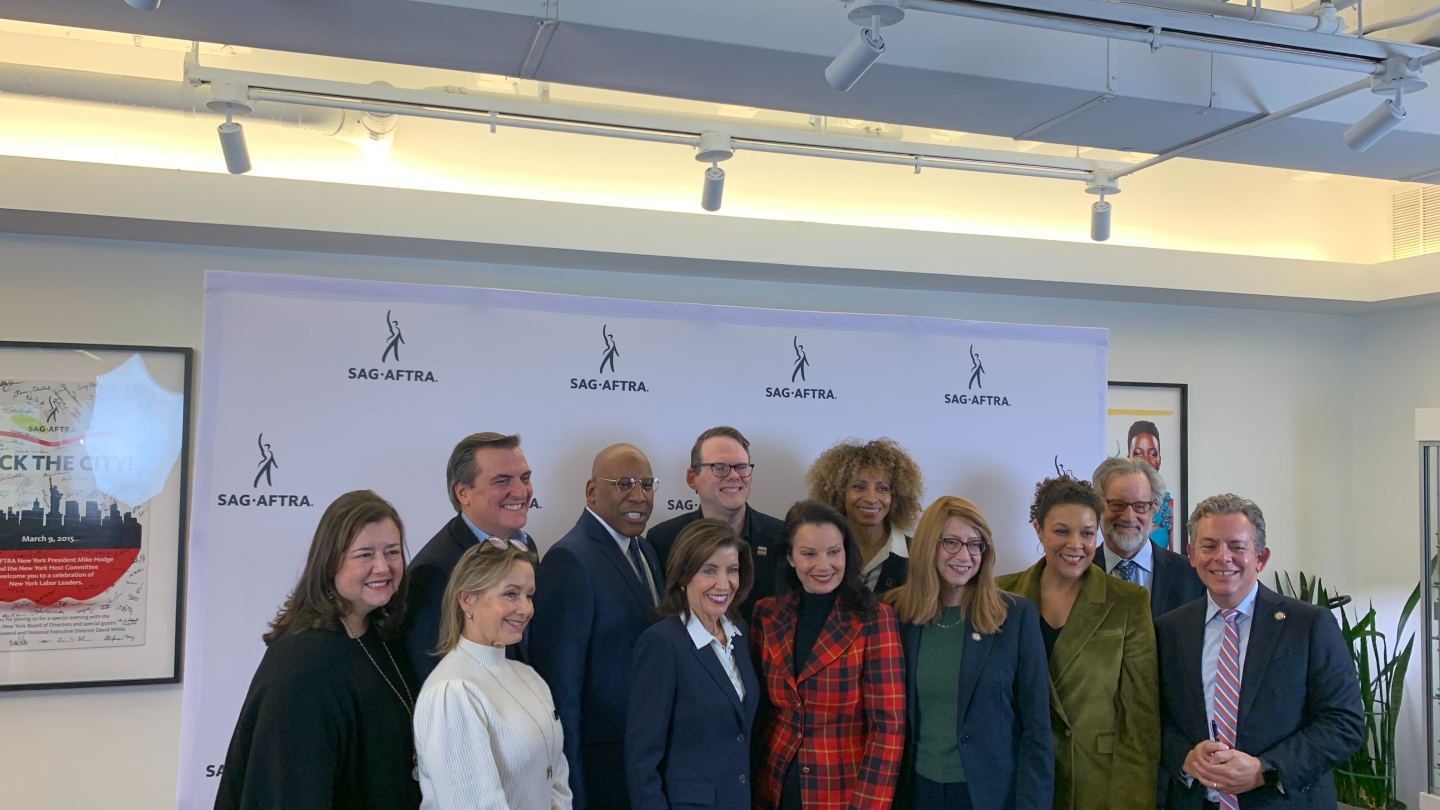


New York Gov. Kathy Hochul signed two bills Thursday to boost AI transparency in the film industry.
The first requires entities who produce or create an advertisement to disclose whether the ad includes AI-generated synthetic performers, while the second requires consent from heirs or executors if a company wishes to use the name, image, or likeness of an individual for commercial purposes after their death. Gov. Kathy Hochul described these as “first in the nation” policies and committed to continuing protecting performers.
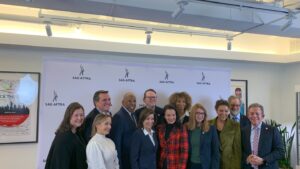
“We will have responsible AI policies in the state of New York,” Hochul said at a press conference at the SAG-AFTRA offices in New York City Thursday.
“It’s a time where we do want to embrace innovation,” she continued. “But not to the detriment of people. That has to be the dividing line right there.” She went on to call the use of AI actors in advertisements “fake entertainment.”
The Governor hosted a signing at the SAG-AFTRA offices in New York, surrounded by union executives as well as former president Fran Drescher, national executive director Duncan Crabtree-Ireland, Linda Powell, executive vice president of SAG-AFTRA.
The bill signing came the same day Disney announced a partnership with OpenAI in which users of its AI video creation platform Sora will be able to create clips using iconic characters from Marvel, Pixar and Star Wars franchises. Disney CEO Bob Iger said Thursday that the Sora deal will not include voices, potentially delaying a fight over using actor’s voices. The news loomed large in the room, with Chief Labor Policy Officer Rebecca Damon pointing to the announcement and saying the union is thinking about AI every day.
Crabtree-Ireland, chief negotiator in the most recent SAG-AFTRA negotiations, where AI was a major sticking point, did not speak directly to the Disney deal, but pointed to the union’s wider policy in relation to the New York bills.
“If we want the public to trust what they see, we must have guardrails on digital replicas and synthetic creations,” Crabtree-Ireland said, adding that the union refers to them as “synthethic figures” rather than “synthetic performers.”
SAG-AFTRA had previously established guardrails against the use of OpenAI’s Sora 2 in October, after the invite-only release used actor Bryan Cranston’s voice and likeness in some of the outputs, without his consent or any compensation. OpenAI then said it was strengthening its guardrails around the replication of voice and likeness, and already requires an opt-in policy.
“I’m glad that OpenAI has committed to using an opt-in protocol, where all artists have the ability to choose whether they wish to participate in the exploitation of their voice and likeness using A.I. This policy must be durable and I thank all of the stakeholders, including OpenAI for working together to have the appropriate protections enshrined in law. Simply put, opt-in protocols are the only way to do business and the NO FAKES Act will make us safer,” SAG-AFTRA President Sean Astin said at the time.
Read the full article here