



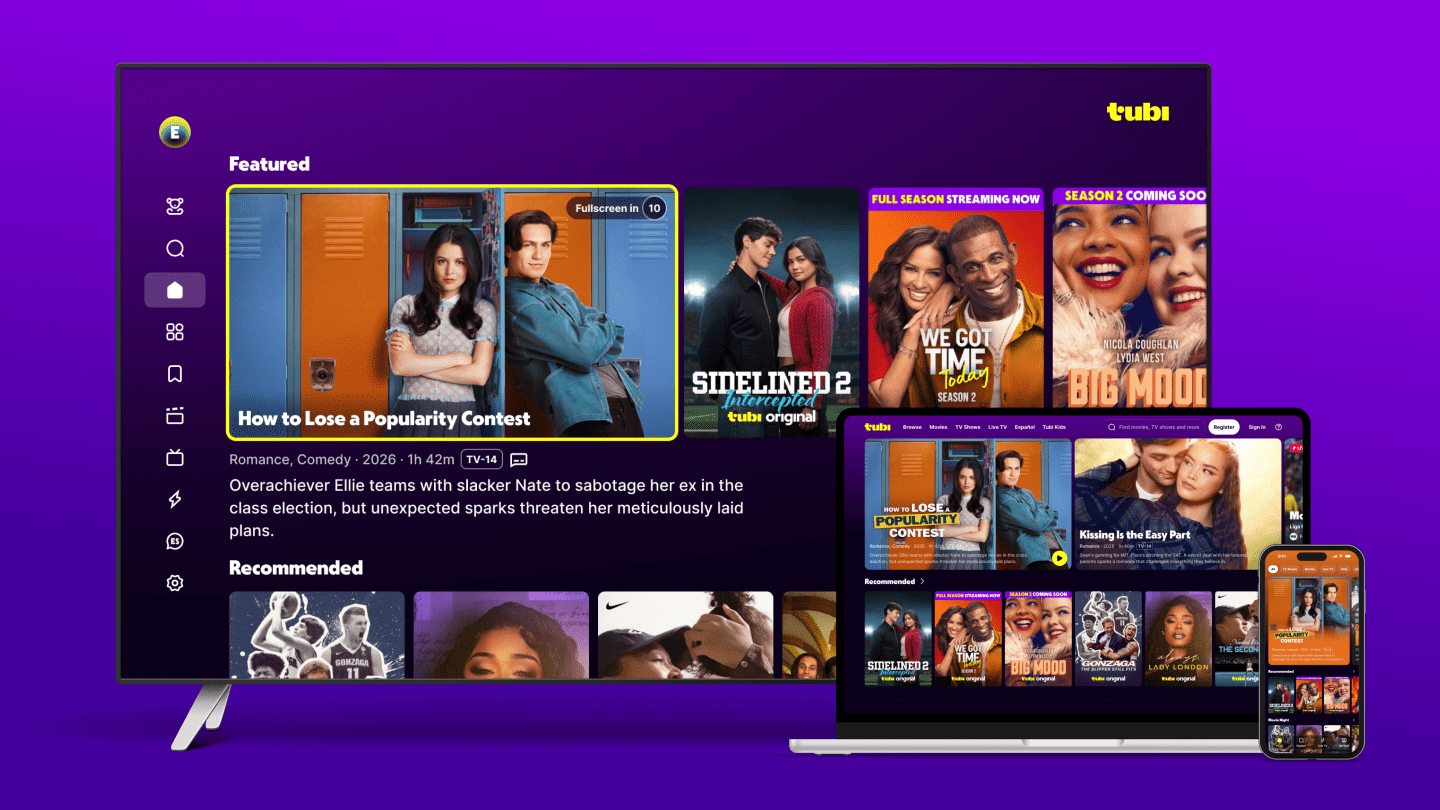


Tubi is on a tear.
The Fox-owned free streaming platform now has more than 110 million monthly active users, CEO Anjali Sud tells The Hollywood Reporter, and this morning the company will report that its Q2 was the highest revenue quarter in its history.
Tubi last reported MAUs last year, when it topped 100 million, and now has more than $1 billion in annual revenue.
“It really feels like we are seeing both in Tubi’s results and in the market a clear validation of a strategy that Tubi has believed in and been executing for over a decade, which is the power of free streaming, and our belief that consumers — especially this next generation — increasingly want premium entertainment, they want choice, they want it to be on-demand, and they don’t want to have to pay more and deal with rising prices and paywalls and fragmentation,” Sud tells THR in an interview, noting that other platforms like Disney are contemplating free tiers, while other premium players like Netflix push into the ad-supported business. “I think it’s encouraging that others are seeing the potential that we’ve long believed in in free streaming, and I think it’s validating that that is where the market is going.”
“Our audience is growing 14 percent but our engagement, our time watched, is growing even faster, growing 17 percent, and I think what we like to see is both of those things growing at the same time in concert, because it means that we’re not only bringing in more audience, but we’re also keeping them and entertaining them, and they’re finding value and staying,” she adds.
Tubi has emerged as Fox’s big digital bet, not only establishing itself as a dominant free streaming platform, but as a way to bet on other digital business lines like podcasts and creators through its Red Seat Ventures division (Fox will double down on that when its deal to acquire Roku closes).
It has also emerged as a key piece of the company’s advertising business, providing entertainment inventory beyond the broadcast network, and sports ad inventory that reaches an audiences beyond the linear networks.
“What we’re seeing is that for a lot of brands, they want to connect authentically. They want to connect with not just audience that are watching television in the background, a lean back kind of experience where you’re on your phone, you’re not paying attention,” Sud says. “They want to to engage with and advertise and reach an audience that’s leaned in, that’s just actively discovering and choosing to watch what they want to watch, when they want to watch it, where they want to watch it, and I think that that is the feedback we hear from advertisers around why they’re choosing to partner with Tubi.”
A couple of areas have emerged as strategic focus points for Tubi: sports, where it can piggyback off of Fox, and creators, where it not only licenses creator content, but also casts creators in originals, not to mention podcasts, where Red Seat Ventures is a major player as a B to B business.
Sud says that Tubi’s World Cup hub drew some 20 million viewers, helping lead it to its best quarter ever. But the platform has had to think differently, as it doesn’t have the ability to bid on NFL or NBA packages on its own. It has, however, been strategic, such as with the unique F1 deal that allowed for it to launch a creator-led altcast of some races.
“In the case of the World Cup, it was how can we bring in a younger audience, a more incremental audience, maybe the people who wouldn’t have paid to be able to watch the whole World Cup because they’re not diehard soccer fans, but this is such a cultural moment,” Sud says. “For the consumer, it’s giving them access to more of the culture and stories that are around sports, and in general, I think what we are seeing — and this is true of younger audiences, but it’s also just true in general — is that certain sports are becoming more and more cultural moments, and in that way, they are also becoming entertainment, and people want to know more about the stories off the field, and they want to feel like they’re part of that broader moment, and that’s I think the role we’re trying to play.”
The creator push, be it in licensed content, sports altcasts and original content, is also generating a flywheel of data, and Sud said that it is gratifying that other platforms, like Netflix and Disney+ (which announced a deal with TikTok this week), are moving to include more creators into their offerings.
“We’ve worked with independent creators and storytellers for a long time, and now what we’re seeing is that with the creator economy, with podcasting, we’re seeing just even more great storytelling coming from this other kind of non Hollywood group of storytellers, and that I think actually gives us even more rich data and insights into what people want,” she says.
“We’ve proven that we can we can actually deliver a free service that has great quality content and doesn’t have a terrible ad experience,” she adds. “So I think the question is, well, what’s the next version of that? Is it live sports? Is it more original exclusives? Is it bringing more of the next generation of creators into into sort of long form? These are all areas that we feel like we have a vision for and the tools to kind of continue to innovate in.”
Read the full article here