


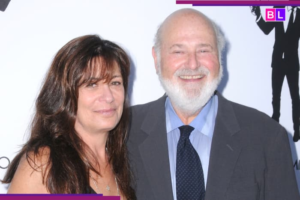

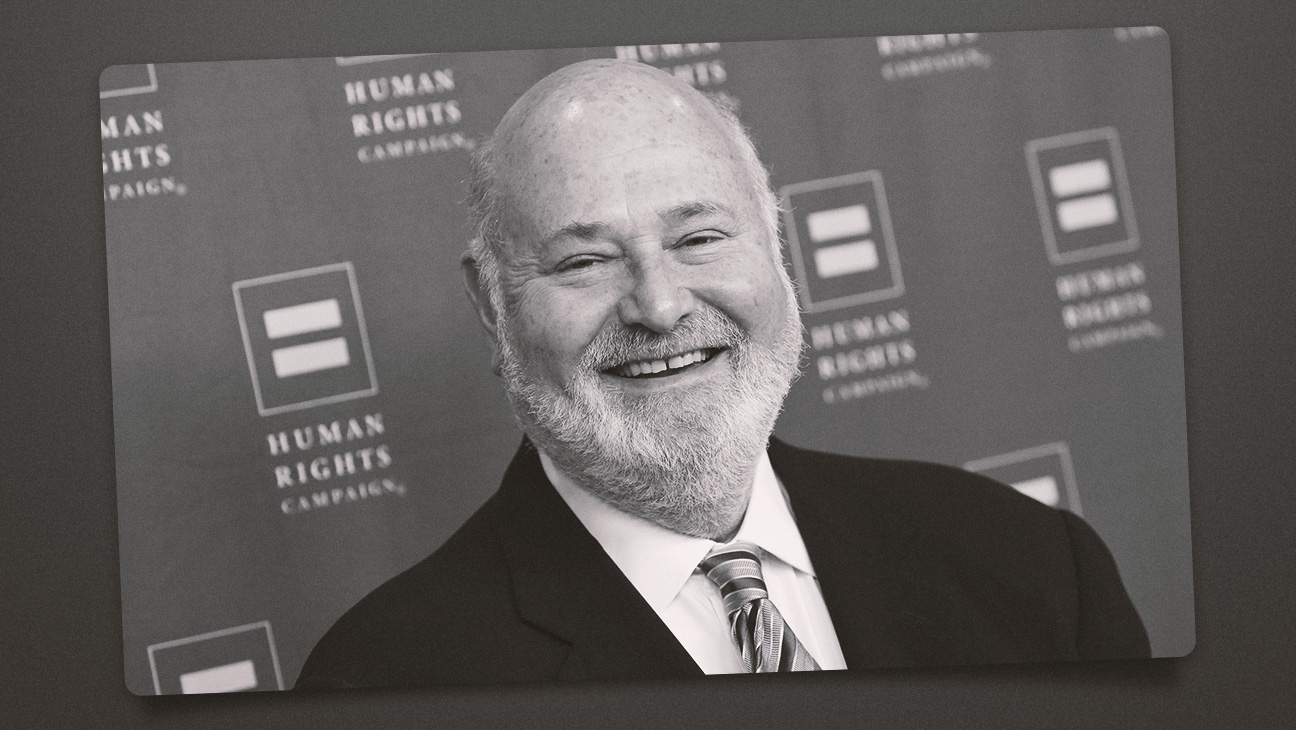


Rob Reiner, who directed such beloved Hollywood classics as This Is Spinal Tap, Stand by Me and When Harry Met Sally after starring in the trailblazing sitcom All in the Family, died Sunday along with his wife, Michele, in their Brentwood home. He was 78.
Reiner and his wife, 70, were found dead in their home on Chadbourne Avenue, with the couple “suffering lacerations consistent with a knife,” law enforcement sources told TMZ. There reportedly was no sign of forced entry.
Said a spokesperson for the family: “It is with profound sorrow that we announce the tragic passing of Michele and Rob Reiner. We are heartbroken by this sudden loss, and we ask for privacy during this unbelievably difficult time.”
Citing “multiple sources,” People reported that the Reiners’ son Nick, 32, is the suspected killer. He battled drug addiction and homelessness, had more than a dozen stints in rehab and co-wrote a film loosely based on his life, Being Charlie (2015), that was directed by his father.
Near the scene Sunday just before 9 p.m., LAPD chief of detectives Alan Hamilton said “we have not identified a suspect at this time,” there “was no person of interest” and that many family members would be interviewed.
The Los Angeles Fire Department had been called to the Reiners’ home at about 3:40 p.m. by an unidentified person, and LAPD Robbery Homicide Division detectives were investigating.
The Princess Bride (1987), Misery (1990), the Oscar best picture nominee A Few Good Men (1992), The American President (1995) and The Bucket List (2007) also were among Rob Reiner’s 20-plus directing credits.
Reiner was also a co-founder of Castle Rock Entertainment, the production company behind such films as City Slickers (1991), The Shawshank Redemption (1994), Waiting for Guffman (1996), Miss Congeniality (2000), Best in Show (2000), Michael Clayton (2007) and Seinfeld, one of the most lucrative television properties of all time.
From the outset of his feature directorial career with This Is Spinal Tap (1984), Reiner seemed to reimagine Hollywood standards, creating and starring in the first mainstream mockumentary — a rock ’n’ roll satire so dead-on, film critic Roger Ebert called it “one of the funniest movies ever made.” From there, he would move seamlessly from comedy to drama, from fantasy to horror, as few directors ever have.
Reiner would establish yet another benchmark — this time for romantic comedies — with When Harry Met Sally (1989), screenwriter Nora Ephron’s ode to true love (based loosely on her and Reiner’s lives) that starred Billy Crystal and Meg Ryan.
His biggest box office hit, the gripping courtroom drama A Few Good Men, based on Aaron Sorkin’s 1989 play and starring Tom Cruise and Jack Nicholson, could not have been more different.
Some of Reiner’s movies took a while to capture the world’s attention. The Princess Bride, his timeless fairy tale adventure that was based on the William Goldman novel and starred Robin Wright, Mandy Patinkin and Peter Falk, was one of several films that grew in popularity over decades on the way to cult status.
On television, Reiner played to some of the biggest audiences in history, first in the role of Michael “Meathead” Stivic, the liberal antagonist of Carroll O’Connor’s Archie Bunker, on CBS’ All in the Family, and then as a ground-floor executive on NBC’s Seinfeld, which he fought to keep on the air.
“We knew we had a great show,” Reiner told Howard Stern in 2016.
But after a rocky launch in the summer of 1989, the network was concerned that Seinfeld — famously a show “about nothing” — was a misfire. After four episodes, it was on the brink of cancellation.
“I went in there and had a screaming crazy thing with [NBC president] Brandon Tartikoff,” Reiner said. “And I promised him — there will be stories!”
In 1993, Reiner and Castle Rock partners Andrew Scheinman, Alan Horn, Glenn Padnick and Martin Shafer sold their company to broadcast mogul Ted Turner for about $160 million. (It became part of Time Warner when it acquired Turner Broadcasting in 1996.)
The principals stayed on, holding to their original ideal: to make independent movies outside the traditional studio system. But after a run of poorly performing films starting in the late ’90s, Castle Rock initiated layoffs and eventually was absorbed into Warner Bros.
In 2020, Reiner relaunched the company and revived its film division a year later, with Spinal Tap II: The End Continues (2025) among its offerings.
“There’s not one film that I’ve ever made that could get made today by a studio, not one — even A Few Good Men,” Reiner said. “Every movie that I make, have made and will make is always going to be independently financed.”
Throughout his behind-the-camera career, Reiner continued as a working actor. He played the well-intentioned plastic surgeon Dr. Morris Packman, who affectionately spars with Goldie Hawn, in The First Wives Club (1996); Tom Hanks’ pal in Ephron’s Sleepless in Seattle (1993); and the father of Zooey Deschanel on the 2011-18 Fox sitcom New Girl.
He was particularly memorable in Martin Scorsese’s The Wolf of Wall Street (2013) as stockbroker Max Belfort in scenes with Leonardo DiCaprio and Jonah Hill that were largely improvised.
Reiner’s sense of what worked onscreen was honed early on — first at home as the oldest child of comedy icon Carl Reiner and later around his dad’s close friends, among them Sid Caesar, Neil Simon, Mel Brooks and the most influential of all, Norman Lear, the TV auteur whose 1970s activist comedies All in the Family, The Jeffersons, Good Times and Maude sparked seismic shifts in popular culture.
“Norman was the first guy who recognized that I had any talent,” Reiner wrote for The Hollywood Reporter in the wake of Lear’s 2023 death, noting that he viewed him as “a second father.”
“It wasn’t just that he hired me for All in the Family,” Reiner told American Masters in 2005. “It was that I saw, in how he conducted his life, that there was room to be an activist as well. That you could use your celebrity, your good fortune, to help make some change.”
As the Hollywood scion forged his directing career, it was Lear who put up the money for Stand by Me (1986) and Reiner’s other early films, including the John Cusack-Nicollette Sheridan romp The Sure Thing (1985), lauded for elevating the teen comedy genre.
Stand by Me — regarded as among the finest of coming-of-age movies — marked Reiner’s ascent into Hollywood’s highest ranks, no longer just a sitcom actor or the genial ex-husband of a fellow TV comic, Penny Marshall, star of Laverne & Shirley. (Marshall too would go on to become a top Hollywood director.)
Famed author-screenwriter Goldman, who penned the Misery screenplay, said Reiner became a success because his work is “funny, but not simpy.”
“His films have a certain comedy style … a sweetness and toughness,” Goldman told The New York Times in 1987. “Stand by Me is not just about four kids coming of age before junior high school — they’re going to see a corpse. If John Hughes had made Stand by Me — and I’m not knocking Hughes — they would have been searching for a convertible.”
Stephen King, author of the 1982 novella The Body (on which Stand by Me was based) and the 1987 novel Misery, became one of Reiner’s most-steadfast collaborators.
Among other King books turned into movies by Castle Rock — Reiner named the company for the fictional setting in many of the author’s novels — were Shawshank, The Green Mile (1999)and Dolores Claiborne (1995).
After several false starts, King finally agreed to develop Misery for the screen, but only if Reiner put “his name on it” as producer or director.
“It was a very personal book to him,” Reiner told TCM in 2021. “It was all about himself as a writer and feeling trapped … And so he let us option the book for $1. In fact, I think we made seven Stephen King films, and each one of them we got an option for $1.”
The 1990 Kathy Bates-James Caan starrer remains one of Hollywood’s finest horror pieces, with Bates winning an Oscar for her role as the obsessive fan Annie Wilkes, who tortures author Paul Sheldon (Caan) while holding him hostage in her remote cabin.
“Rob had a fantastic crew of people — people he had worked with for years, just the creme de la creme,” Bates said of the Misery shoot in a 2020 interview with Vanity Fair. “I learned so much just hanging out [on set] and watching.”
Bates, 42 years old at the time, had predominantly been a stage actress. At the Academy Awards, where she bested Meryl Streep, Joanne Woodward, Anjelica Huston and Julia Roberts, she thanked Reiner “for taking a chance on me.”
Often the most memorable scenes in Reiner’s filmography came from his comedies — notably Ryan’s climactic moment in When Harry Met Sally in which she feigns an orgasm over lunch with Crystal’s character at Katz’s Deli.
Yet it was Reiner’s mother, Estelle Reiner, who landed the film’s renowned punchline: “I’ll have what she’s having.”
“I said to her, mom, the line you have is the last line in the scene, and if it doesn’t pop and top everything that’s come before it, I won’t use it,” Reiner told the AFI in a joint interview with Ephron in 2009. “We’ll shoot it but be prepared, it might have to be cut.
“And she said, ‘I don’t care, I just wanna spend the day with you and be with you on the set. I don’t care if it’s in the movie or not.’”
Robert Reiner was born in the Bronx on March 6, 1947, one of three children of the former Estelle Lebost, an artist and set designer, and Carl Reiner, the comic and writer who got his start as an entertainer in the U.S. Army and then in Broadway musicals.
The family lived just off Grand Concourse, across the street from Marshall and her brother, future writer-producer-director Garry Marshall. But it would be decades before Rob and Penny actually met — at the 1970 audition in Los Angeles for the roles of Mike and Gloria Stivik on All in the Family. (The role of Gloria, of course, would go to Sally Struthers.)
As Carl’s career gained steam (he would win 11 Emmys), the family moved to Bonnie Meadow Road in the bucolic New York suburb of New Rochelle. It was the very street where Reiner would set his landmark 1960s CBS sitcom The Dick Van Dyke Show, about a rising comedy writer, Rob Petrie, and his beautiful wife, Laura.
“Basically he wrote his own life in The Dick Van Dyke Show,” Rob Reiner said of his father. “And my mother was Mary Tyler Moore.”
Rob got his start as an apprentice at the Bucks County Playhouse in Pennsylvania and with small guest roles on such shows as That Girl, Room 222 and The Beverly Hillbillies.
After UCLA Film School in 1967, he was paired with another young comic, Steve Martin, as a writing team on CBS’ The Smothers Brothers Comedy Hour. The two were barely out of their teens.
The All in the Family role, for which Reiner would win two Emmys, followed in 1971. Convinced the show’s incendiary subject matter would be rejected by viewers, he initially viewed the gig as a stopgap to tide him over between writing gigs.
When the sitcom became a hit (Reiner stayed for eight of its nine seasons), he continued writing anyway, penning four episodes of the show and co-writing (with Garry Marshall and Phil Mishkin) the first episode of ABC’s Happy Days in 1974.
As a filmmaker notably surrounding himself with many of the industry’s top writers — Goldman, King, Sorkin, Ephron, Crystal — Reiner showcased their dialogue to everlasting effect.
The Princess Bride’s “Hello, my name is Inigo Montoya. You killed my father. Prepare to die”; Misery’s “I’m your No. 1 fan”; A Few Good Men’s “You can’t handle the truth”; and When Harry Met Sally’s “I’ll have what she’s having” (Crystal actually came up with that line) reigned in pop culture for decades.
But as Penny Marshall would humorously point out, no matter how substantive their accomplishments, “For me, all they say is ‘Laverne,’ and for Rob … it’s ‘Meathead,’” she told the New Yorker in 2012. “We’re stuck with it.”
The couple performed together infrequently but did co-star in the well-received 1978 romantic comedy More Than Friends. The ABC telefilm, written by Reiner and Mishkin and directed by James Burrows, was something of a precursor to When Harry Met Sally, about childhood pals unsure if they should pursue love as adults.
Reiner also made an appearance as “Sheldn” (no “o”), the fiancé of Penny’s Myrna Turner, on Garry Marshall’s ABC series The Odd Couple.
Their 10-year marriage came to an end in 1981 — amid tension as Laverne & Shirley shot Marshall to superstardom while Reiner was quietly forging his post-sitcom film career.
Upon Marshall’s death in 2018, Reiner professed his admiration for her, tweeting “so sad about Penny.” He added, “I loved Penny. I grew up with her. She was born with a great gift. She was born with a funny bone and the instinct of how to use it. I was very lucky to have lived with her and her funny bone. I will miss her.”
The couple were the parents of actress Tracy Reiner, born in 1964 to Marshall during a brief first marriage and adopted by Reiner soon after their 1971 wedding.
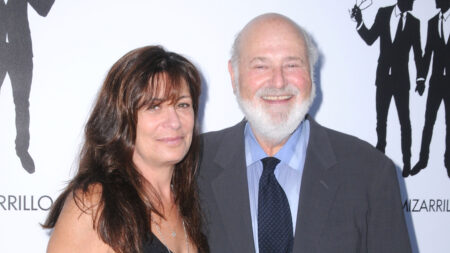
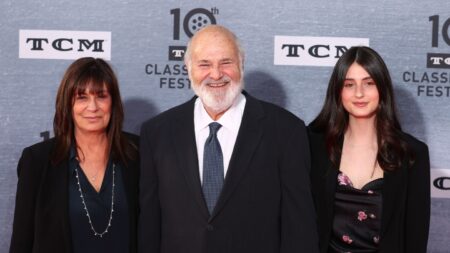
In 1989, Reiner married Michele Singer, a photographer whom he met on the set of When Harry Met Sally. He said she was the inspiration for the film’s happily-ever-after script change. In 2020, she joined Reiner in running Castle Rock and produced films.
In addition to Nick, the couple had two other children, son Jake and daughter Romy.
A lifelong political activist who with King was among the public figures to urge President Joe Biden to hand the 2024 re-election reins to Kamala Harris, Reiner rarely missed a week on social media, penning calls to action on a range of social justice issues for his millions of followers.
He was among Hollywood’s most vigorous and constant voices opposing Donald Trump.
Among his other causes, Reiner was the co-founder of the American Foundation for Equal Rights, which fought to overturn California’s ban on same-sex marriage. In the late-’90s, he and his father were activists for higher taxes on cigarettes — money that was earmarked for prenatal care.
His advocacy was often part of his writing and filmmaking, from his earliest days with the Smothers brothers to LBJ (2016) and Shock and Awe (2017), about journalists investigating the Bush administration’s 2003 invasion of Iraq.
Reiner was often a Hollywood peacemaker, well known for putting actors and crew at ease. When Bates and Caan clashed early in the production of Misery (she liked rehearsing; he preferred winging it), Reiner brokered a wary peace while using the tension to elicit superb performances.
“I want everyone around me to feel comfortable and happy,” he told The Guardian in 2018. “People only act up out of insecurity, and when they make it difficult, I just say, ‘We’re playing make-believe here — enjoy yourself!’”
Mike Barnes, Kimberly Nordyke and Scott Feinberg contributed to this report.
Read the full article here