






After taking a swing for the fences with the offbeat drag queen thriller, Dogman, Luc Besson returns to more familiar terrain with his fresh take on the world’s most famous bloodsucker. And yet, blood is mostly a rare substance in this suprisingly tame bodice-ripper, which frames Count Dracula‘s tale as a century-spanning romance filled with tons of amour and only a few splashes of gore.
The French filmmaker titled this umpteenth adaptation of Bram Stoker’s 1897 novel, Dracula: A Love Tale, revealing the softer side of an action auteur who made his name abroad in the 1990s with artsy shoot-‘em-ups like La Femme Nikita and Léon: The Professional, then went full-on Jerry Bruckheimer by writing and producing the highly lucrative Taken and Transporter franchises.
Dracula: A Love Tale
The Bottom Line
Packs more bodices than bite.
Release Date: Friday, Feb. 6
Cast: Caleb Landry Jones, Christoph Waltz, Zoë Bleu, Guillaume de Tonquedec, Matilda De Angelis, Ewens Abid, Raphael Luce
Director-screenwriter: Luc Besson
Rated R,
2 hours 9 minutes
Besson may have built his career on guns and mayhem — but those who have followed his work know he’s always been more of a diehard romantic at heart (emphasis on die and hard). Whether it’s the swooning threesome of free divers in The Big Blue, the space cadet lovebirds in Valerian and the City of a Thousand Planets or the obsessive fantasy girl of Angel-A, the 66-year-old director has no problem piling on the cheese, which, well, makes him very French after all.
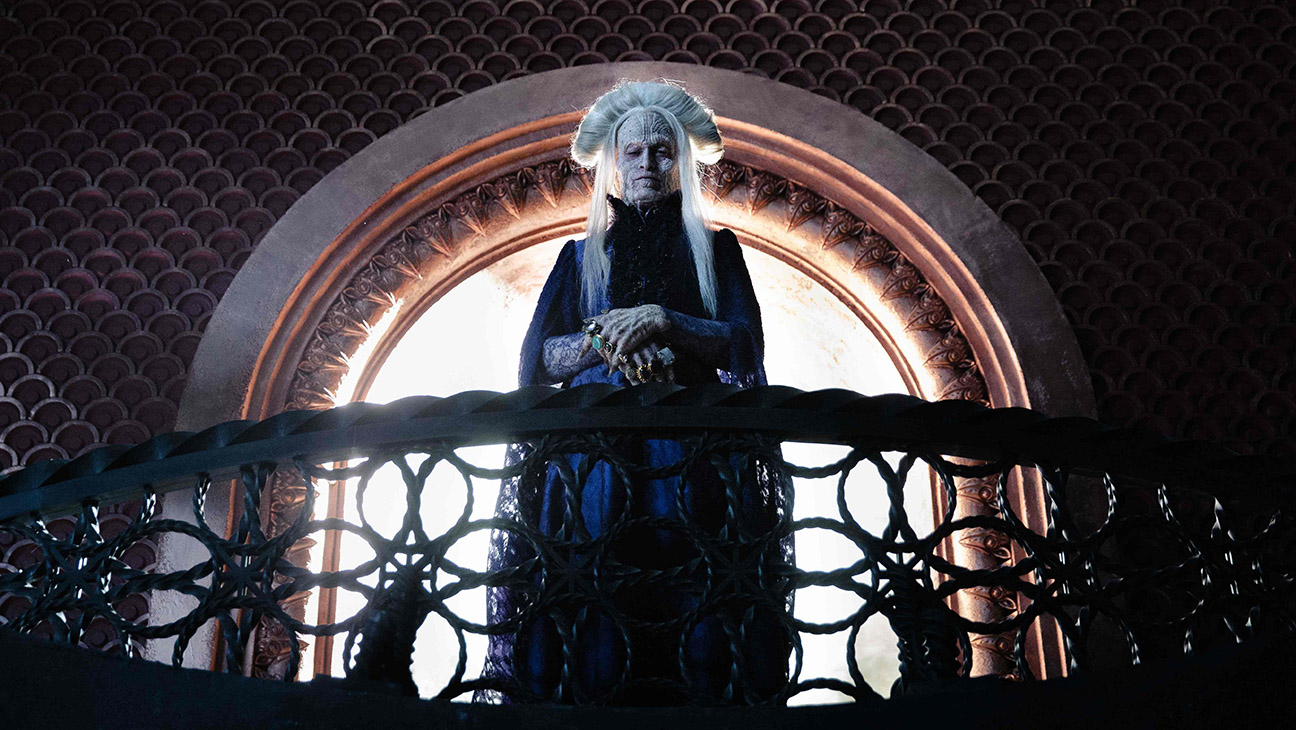
Cheese and kitsch, with smatterings of blood and decapitated heads, are all on the menu in Dracula, which is a watchable if totally ludicrous version of the Stoker story. At best, the movie is another showcase for the always-interesting-to-watch Caleb Landry Jones, who plays the lovestruck vampire with complete earnestness, even when his character is surrounded by goofy CG gargoyles, dancing aristocrats, horny nuns and other random things Besson tosses in front of the camera.
Like in Dogman, Jones carries a film that’s a pot-au-feu of good and bad ideas, which the director executes with his typical stylistic flourishes — although Dracula’s stuffy, overblown aesthetic makes it look at times like a Count Chocula commercial from three decades ago. Released in France late July, where it performed only modestly (it made twice as much money in Russia), the movie is unlikely to take a big bite out of the U.S. market.
It’s hard to even categorize Dracula as a horror flick, so much does it emphasize the passionate dark side of Prince Vlad the Impaler, aka Count Dracula, whom we first meet in 1480 when he’s having a wild sexcapade with his paramour, Princess Elisabeta (Zoë Bleu). Literally pulled from his booty call by army stewards, Vlad heads into a big battle while Elisabeta is forced to flee the castle, after which she’s viciously murdered by the enemy.
It all happens fast and without much thought, although Besson slips in a few memorable touches, such as a field of snow filled with bear traps that explode like landmines. After cradling Elisabeta’s dead body in his arms, Vlad completely loses his shit, stabbing the kingdom’s orthodox priest with a crucifix and vowing to bring his only love back to life.
Rest assured that none of this is in the original novel, which the director takes still more liberties with after the story jumps to Paris in 1889. There we meet another priest, played by Christoph Waltz in full snark mode, who serves as the Vatican’s official vampire hunter and arrives in town to deal with a fang-toothed vixen (Matilda de Angelis) locked up in an insane asylum. Soon Dracula turns up, dressed like an elegant dandy and armed with a vial of homemade perfume that intoxicates all the women around him, and, if we’re being honest, functions like a date rape drug.
It’s not worth detailing how the Count eventually reconnects with Elisabeta, now called Mina and engaged to a guileless lawyer (Ewens Abid) held prisoner by Dracula’s animated minions. Plot mechanics and credibility are less important than the emotional through line Besson attempts to forge via Jones’ extravagant turn, which involves the actor wearing multiple layers of makeup and dozens of different costumes, from medieval battle gear to a variety of fluffy shirts, one of which he wears while dancing what looks like the Louis XIV two-step.
It’s all so silly, yet also so sincere that Besson deserves a little credit for putting himself out there to such an extent. His Dracula may be weird and ham-fisted and hopelessly romantic; at least it’s original. No form of AI could have concocted some of the things he’s cooked up here, nor sidelined the requisite violence and gore — of which there is some, but much less than expected — to focus on one undead man’s lovesick blues.
The mood at times recalls Guillermo del Toro’s swooning recent take on Frankenstein, though the closest thing that comes to mind is actually Bram Stoker’s Dracula, whose gothic stylings Besson seems to be emulating in certain scenes. That film received a mixed reception when it came out in 1992, but it’s developed a steady cult following over the years, especially for Coppola’s use of practical effects and cinematic shadowplay.
Besson’s kitschy romance is unlikely to come to the same fate, although when seen in the light of his long and varied filmography (over 100 credits in 40-odd years), it shows that the French director can still think out of the box — or is that the coffin? — churning out mass entertainment with its own strange aroma.
Read the full article here