

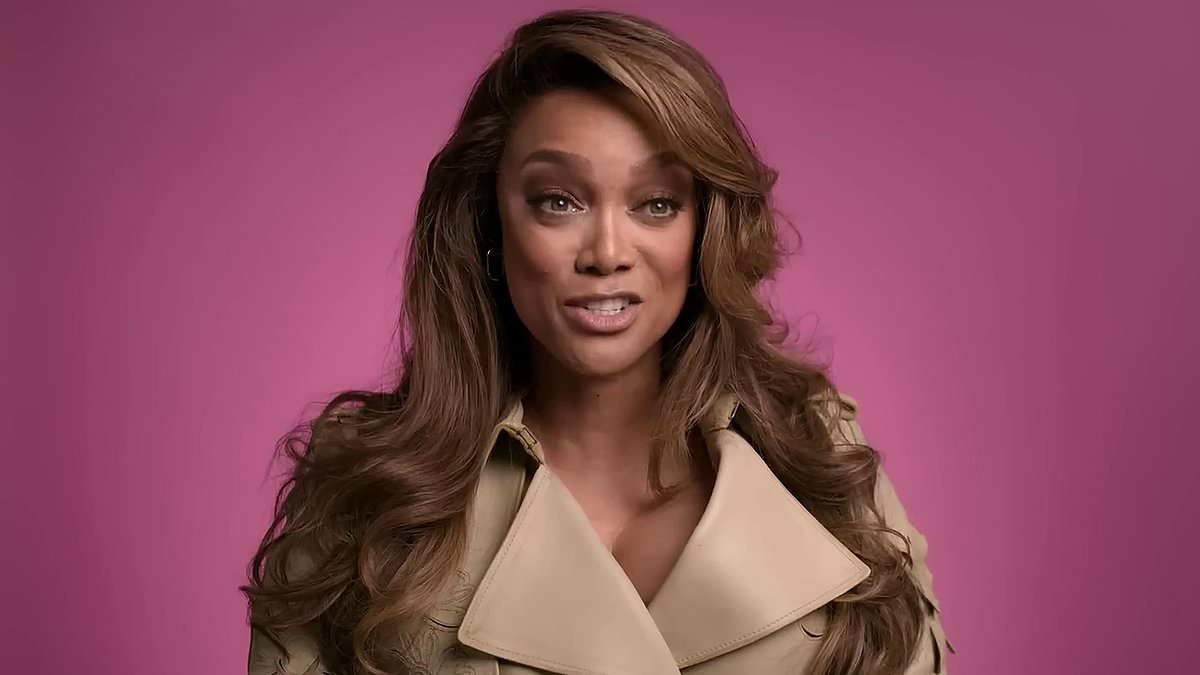


Tyra Banks has launched a lawsuit against Netflix, accusing the streaming platform of defamation over its documentary examining America’s Next Top Model.
The former supermodel, 52, took part in Netflix’s docuseries Reality Check: Inside America’s Next Top Model, released in February, which sparked controversy and renewed criticism of her long-running reality hit.
Banks alleges that producers relied on just 16 minutes of footage from a more than three-hour interview and edited it in a way she claims created a ‘false and defamatory narrative,’ according to legal documents obtained by TMZ.
The complaint argues that the series used ‘selective editing, deliberate omission, and surgical manipulation’ of footage to create a false and misleading impression, including ‘that Ms. Banks knowingly allowed a contestant to be sexually assaulted on her show.’
It also alleges the series suggested Banks exploited the contestant’s trauma for ratings, and later failed to recall the incident when questioned.
A central focus of the docuseries is Cycle 2 contestant Shandi Sullivan’s allegation that she was not properly protected after a sexual assault involving a guest during filming.
Tyra Banks has launched a lawsuit against Netflix , accusing the streaming platform of defamation over its documentary examining America’s Next Top Model
Banks alleges that producers relied on just 16 minutes of footage from a more than three-hour interview and edited it in a way she claims created a ‘false and defamatory narrative,’ according to legal documents obtained by TMZ
The incident, she claims, was later reframed on the show as an infidelity storyline, but Banks disputes that portrayal.
In the lawsuit, she states she was not aware Sullivan would be participating in the documentary and insists she has acknowledged the incident as a sexual assault, with the filing calling the implication that she ‘cannot even remember’ the case ‘devastating and deliberate.’
Banks is requesting a jury trial to determine the ‘appropriate’ amount she should be awarded in damages.
The Daily Mail has reached out to Netflix for comment.
Banks hosted America’s Next Top Model for its first 22 cycles after pitching the series to UPN, with the show debuting in 2003.
‘Tyra Banks participated in the Netflix documentary series America’s Next Top Model (‘ANTM’) because she believed viewers deserved a candid conversation about the show’s legacy – its successes and its shortcomings,’ the lawsuit begins.
‘There are aspects of the show for which Ms. Banks takes accountability and she wanted ANTM viewers to hear that from her directly.’
‘Going into her interview, Ms. Banks did not limit the ANTM topics the interviewer could ask,’ the filing continues.
Over the course of a three-and-a-half-hour interview, she answered questions about the show’s impact and its groundbreaking history, including criticism of decisions she would handle differently today.
A central focus of the docuseries is Cycle 2 contestant Shandi Sullivan’s allegation that she was not properly protected after a sexual assault involving a guest during filming
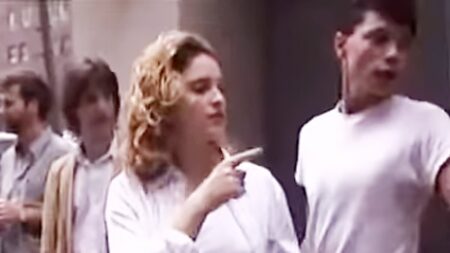
The complaint further alleges that the series used ‘selective editing, deliberate omission, and surgical manipulation’ of footage to create a false and misleading impression, including that ‘Ms. Banks knowingly allowed a contestant to be sexually assaulted on her show’; Above, Shandi Sullivan
‘The Netflix series Reality Check: Inside America’s Next Top Model (the ‘Netflix Series’) was sold to viewers as a ‘documentary series’,’ the lawsuit states. ‘Netflix called it ‘the definitive, must-watch chronicle of America’s Next Top Model’.
‘The genre matters. Viewers of a documentary do not expect manufactured drama or constructed narratives. They expect facts. Because they were promised a documentary, that is exactly how viewers interacted with the Netflix Series.’
Banks alleges that only 16 minutes of her extensive interview footage was ultimately used, with those clips ‘stripped of context and reassembled to support a false and defamatory narrative unrelated to what she actually expressed’.
She further claims that moments in which she accepted responsibility for some of the show’s most controversial incidents were omitted from the final cut.
The lawsuit adds, ‘Worse, the false narrative the producers constructed – through selective editing, deliberate omission, and surgical manipulation of continuous footage – included that Ms. Banks knowingly allowed a contestant to be sexually assaulted on her show, exploited that contestant’s trauma for ratings, and then could not even remember it when asked.
‘That narrative about Ms. Banks is a complete fabrication – one that Netflix streamed to a global audience of millions.’
In the documentary, Sullivan spoke candidly about the incident during Cycle 2, which has since become one of the most discussed moments from the show’s early seasons.
Footage from the series showed Sullivan appearing to have a sexual encounter with an Italian model, before later breaking down in tears while calling her boyfriend, who ultimately ended their relationship.
Banks hosted America’s Next Top Model for its first 22 cycles after pitching the series to UPN, with the show debuting in 2003
However, Sullivan has since claimed that what was originally portrayed as a drunken indiscretion was in fact a sexual assault, saying she had ‘blacked out’ due to alcohol and that ‘no one did anything to stop it.’
Speaking in the Netflix series, she recalled: ‘I remember being in the shower. And then just sitting in the shower. And then we were in the bed.’
She added: ‘I was blacked out for a lot of it. I didn’t even feel sex happening, I just knew it was happening, and then I passed out.’
Reflecting on the production, Sullivan suggested staff should have intervened, saying: ‘I think after getting out of the hot tub, and whatever happened after that, I think they should’ve been like, “All right, this has gone too far. We gotta pull her out of this.”’
Executive producer Ken Mok appeared to defend the approach, saying the show was always intended to function as a documentary-style production.
‘We told the girls that on day one, when they would show up, “There’s going to be cameras with you 24/7, day in and day out, and they’re going to cover everything,”’ he said.
Banks, meanwhile, said in the doc: ‘It’s a little difficult for me to talk about production because that’s not my territory.’
Read the full article here