




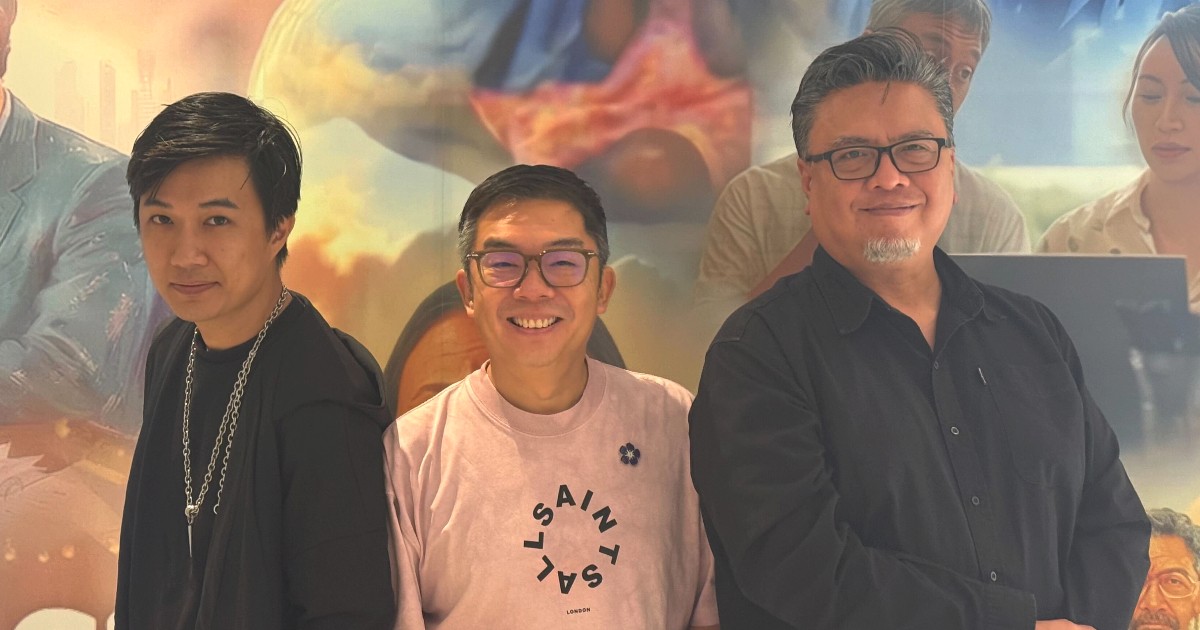


As stroke survivors, this duo felt the need to spread the message about dementia and health.
At a recent media screening of the anthology film A Singapore Dementia Story, AsiaOne spoke to local actor-comedian Suhaimi Yusof and former radio DJ Bernard Lim, who voiced the main characters in one of the short films, the AI-animated Two Ways to Forget.
Sponsored by Lien Foundation in partnership with Dementia Singapore (DS), A Singapore Dementia Story contains five short films by local filmmakers that aim to spotlight the emotional labour of caregiving, challenge perceptions of the condition, and amplify the voices of families who live with it.
Suhaimi, 56, voices Khairul, a corporate lawyer who hides his dementia with charades while Bernard, 58, voices Teck Soon, a cheerful math teacher who masks his decline with bravado. The two eventually cross paths at a dementia support group, building a humorous friendship.
The project was a “wake-up call” for Suhaimi and Bernard as they are both stroke survivors.
According to the American Academy of Neurology, people who suffered a stroke have an approximate 80 per cent higher risk of developing dementia than people who didn’t — something which Suhaimi highlighted.
‘Do things a little more purposefully’
In April 2024, Suhaimi was hospitalised after being diagnosed with a cerebellar stroke.
Even nearly two years into recovery, he still needs to be very careful of his health. “To put it simply, I need to have enough sleep,” said Suhaimi. “The problem with showbiz work is that I basically can’t have that — we either do lots of acting, video editing, crew work or even paperwork.”
Bernard’s stroke happened in April 2014, which was caused by arteriovenous-malformation (AVM) — a rare tangle of blood vessels that creates irregular connections between arteries and veins.
He was admitted into the hospital where he fell into a two-day coma, spending three months in recovery before returning to radio.
After quitting Singapore Press Holdings in 2022, Bernard pivoted to the social service sector and took on the role of Director of Advocacy and Communication at DS. “I think at the end of the day, all of us want to do things a little more purposefully,” he said.
“It isn’t corporate speak when I speak about ‘purpose’ as I tap on my network and connections, my experiences and bring them on board into a social service area where many have not come on board.”

Suhaimi added: “When we get hit by such incidents, it hits us that life is more than what it used to be when we were 25 years old — it holds more meaning. And while money can buy love, it cannot buy health and humanity.
“Given this opportunity and how long we’ve been in the media industry, we know people and how to approach the community with certain, curated messages. So why not put this to good use and somehow, we can sleep better at night knowing that someone out there will benefit from our work?”
Before playing Khairul, Suhaimi initially faced challenges separating the reality of dementia from his assumptions.
“Most people have no idea what dementia is until they get to a point where their close friends or relatives have it,” said Suhaimi. “Secondly, there’s this myth that only old folks will have it — which is a misunderstanding. Young onset dementia is a thing these days, attacking our younger people.
“It’s very dangerous to assume things as the world progresses.”
In his personal life, his uncle suffers from a severe type of dementia, while his aunt provides care. “The minute I visit him, I can picture what has been described as dementia and how my auntie has to live with it over again,” he said. “So when we got our scripts, I think my experience completed almost 50 per cent of our preparation.”
The ethics of AI
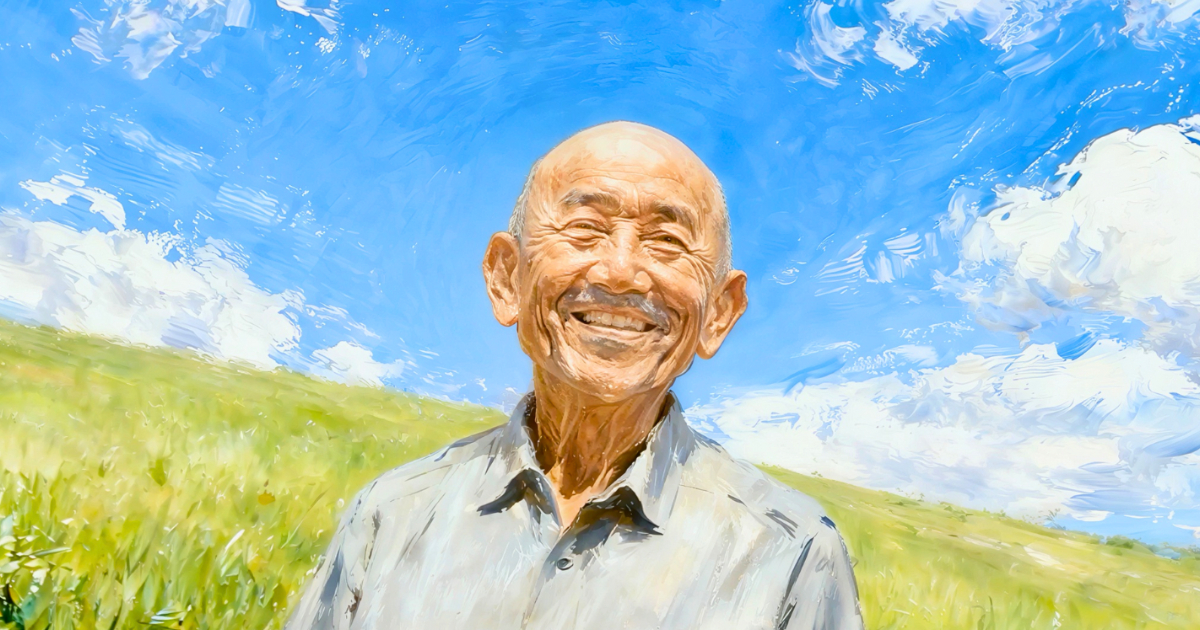
Directed by Raymus Chang, Two Ways to Forget was largely produced with the use of artificial intelligence (AI) and motion capture.
The 36-year-old, who has previously worked on numerous AI projects, clarified that this short film was not created with the commonly seen text-to-video generative AI available for public use.
“We went through all the movements of the scenes.: For example, in our office scenes, we must act and recite our lines as if we’re in the location. What Raymus then does is capture our voices, actions and emotions into whatever’s on screen through motion capture,” said Suhaimi.
[[nid:728904]]
Despite the film featuring a variety of backdrops ranging from different homes, workplaces, schools, parks, libraries and even a beach, Raymus revealed that the entirety of it was shot within just one day in a space equipped with a sofa, table and chairs.
“Without AI, an animation like this would be impossible with the budget and demand present in Singapore. In a more mature market, if you were to do an animation like this, its budget would be in the millions,” he explained, citing the film’s painted style and motion capture technique.
“Some animator friends told me this wouldn’t be animate-able either. To do an AI project, I had to base it on the premise that it would be too hard to execute traditionally to justify its use.”
Given the discussion surrounding the use of AI in creative works, Raymus admitted that he’d never once worried about using the technology while the other four short films used traditional filmmaking.
“I was creating a product that was not creatively possible here, so why not do it?” he told us
“Secondly, there was a lot of creative authorship with the script being written and our actors being fully involved. Every frame was painfully made, even if they were trained on data from other artists all over the world – but every model was like that, and that’s where the world is going.”
Upcoming public screenings will be held, with dates to be announced on Dementia Singapore’s social media channels. The full short films will be available for viewing on the Dementia Singapore and Lien Foundation’s YouTube channels in late February.

[[nid:729456]]
kristy.chua@asiaone.com
No part of this article can be reproduced without permission from AsiaOne.
Read the full article here