



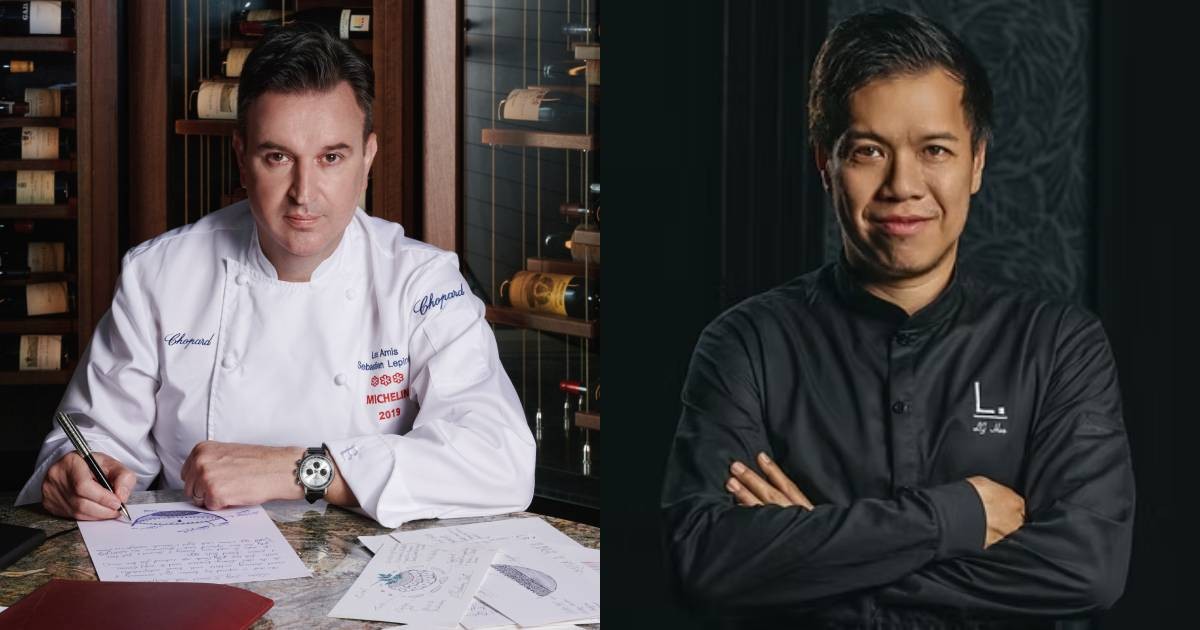


When Sebastien Lepinoy, 52, first found out that Les Amis had been awarded two Michelin stars during Singapore’s inaugural Michelin Guide awards in 2016, he was over the moon.
“I was incredibly happy because I immediately realised that we had entered a bigger league. Receiving two Michelin stars meant being recognised among the world’s finest restaurants,” the Director of Les Amis’ Culinary and Operations told AsiaOne in an interview.
“Having previously held one Michelin star in Hong Kong, I understood the significant distinction between earning one Michelin star versus attaining two.”
Meanwhile, for chefs like Han Li Guang, 41, chef-owner of Restaurant Labyrinth, hearing his restaurant’s name called at the Michelin Guide ceremony was a career-defining moment.
“When they called Labyrinth for the very first time saying we won a star, my legs were shaking out of pure nervousness and excitement. I think it was probably one of the best moments of my life,” said the chef, who won his first Michelin star in 2017.
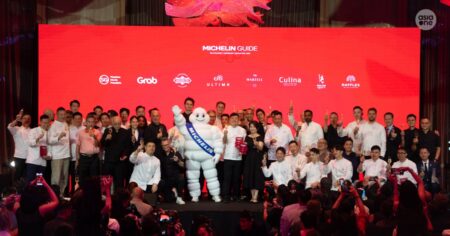
A decade on, those memories remain as vivid as ever, with the Michelin Guide Singapore marking its 10th anniversary this year after its debut in 2016.
On Aug 4, the full Michelin Guide Singapore selection was announced at a ceremony held at Raffles Sentosa Singapore.
In total, 307 establishments were recognised in this year’s Michelin Guide, comprising 45 Michelin-starred restaurants. Three restaurants earned three Michelin stars, nine earned two Michelin stars, and 33 received one Michelin stars. There are also 97 Michelin Bib Gourmand eateries and 165 Michelin Selected establishments.
Ten years after the guide arrived in Singapore, chefs tell AsiaOne that while earning Michelin recognition remains one of the industry’s greatest achievements, keeping it can be an even tougher challenge.
Consistency is key
For Christine Teoh, who declined to share her age, being recognised by the Michelin Guide is recognition of the team’s hard work.
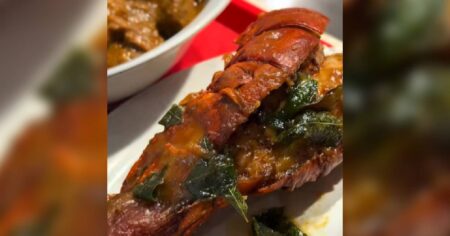
“It’s not easy, because being in the guide is not something you can just want and have,” the Operations Director of Nana Curry told AsiaOne.
The brand’s hawker stall in Bukit Merah has been recognised in the Michelin Bib Gourmand since 2016.
But for restaurants that have already earned Michelin recognition, the challenge doesn’t end with making the list.
Despite holding a Michelin star for years, restaurants such as one-starred Summer Pavilion refuse to become complacent.
“It’s not easy to retain a star, or to earn it in the first place. We don’t take that for granted over here,” said Chef de Cuisine of Summer Pavilion, Cheung Siu Kong, 57.
“Every single day is a very intentional effort to keep producing the same standard as we always have, even before we earned that first star.”
Whether it’s a Michelin star or a Bib Gourmand distinction, restaurants say consistency is what ultimately keeps them in the guide.
“Consistency is at the heart of what we do. Excellence cannot be achieved in just a day, a month, or a season. Consistency must be sustained year after year,” said Sebastien.
“This is why we take the time to continually reflect on our cuisine and menus in harmony with the changing seasons. Our commitment has always been, and will always be, consistency.”
Christine pointed out that because Michelin inspectors dine anonymously, eateries must maintain their standards every day or risk losing their place in the guide.
“You don’t even know who it is, it’s like a mystery shopper. So, you must be very consistent to be able to be in the Michelin Guide,” she said.
For Li Guang, however, consistency should never come at the expense of cooking purely to satisfy Michelin inspectors.
“While holding a star is important, the inspector comes in to dine anonymously, just like any other customer. So my true ethos is to please every customer that walks through my door. To make ourselves better, to improve our service, to improve our food, to improve the flow of our menu,” he explained.
“If you make the customers happy, technically, you’re making Michelin happy too.”
More than just prestige
For many restaurants, Michelin recognition goes beyond prestige. It’s about visibility and business too.
Christine shared that the Michelin accolade has helped attract more overseas visitors, especially since Nana Curry has outlets in tourist-heavy areas.
“Michelin recognition has definitely impacted and helped our business, especially because Nana Curry is targeting tourist areas such as Marina Bay Sands, Lau Pa Sat and the airport,” said Christine.
“Tourists are willing to give us a try. We even receive enquiries from some who want to bring our curry back to their country.”
Beyond attracting customers, she believes the guide also shines a spotlight on businesses that might otherwise struggle for recognition.
“When our business appears in the news, people will make an effort to go and try our food. To me, the guide does help the whole F&B industry and gives us brand awareness,” she added.
Summer Pavilion has also experienced an increase in both local and international diners.
“It has brought us popularity and a lot more exposure, especially on the international stage,” said Siu Kong.
He described the Michelin Guide as a “trusted entry point” for travellers unfamiliar with Singapore’s dining scene.
“First-time visitors to Singapore who have a short, limited amount of time would naturally trust established reviews, such as famous guides like the Michelin, which is held as one of the gold standards of restaurant reviewers and critics,” said Siu Kong.
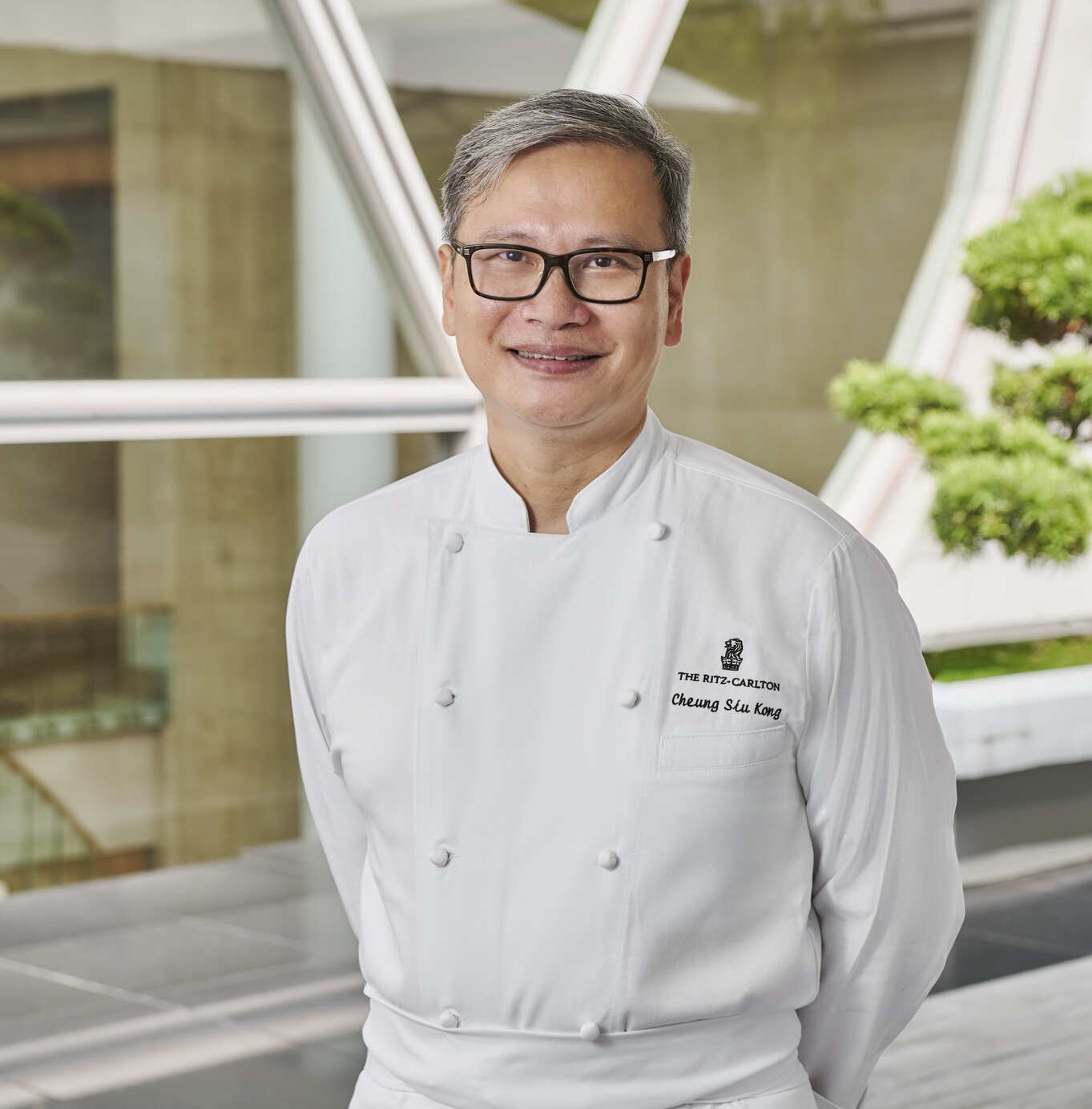

“The guide’s contribution to Singapore is that it helped put us on the global map, so we become a culinary destination for people overseas, which brings even more recognition to our dining scene.”
For chef-owners such as Li Guang, Michelin recognition has also strengthened the business financially, allowing him to invest back into his team.
“Obviously, business is very important to me because I want to pay my staff better. I’ll make sure that my team is rewarded for all their hard work as well,” he said.
Les Amis experienced perhaps the biggest transformation as it climbed from two Michelin stars to three.
“Back in 2016, when Les Amis was awarded two Michelin Stars, we saw a significant increase in regional tourists from across Asia. Then when we received our third Michelin Star in 2019, it truly changed the game,” said Sebastien, adding that their records showed a particularly notable rise in visitors from the United States.
“In many ways, two Michelin Stars established Les Amis as a leading destination in Asia, while three Michelin Stars opened the doors to the world. It brought with it an entirely new audience and further reinforced Singapore’s position on the global gastronomic map.”
Yet as restaurants become more recognised, they also find themselves under greater scrutiny, which comes with a new set of challenges.
The price of recognition
For many restaurants, Michelin recognition brings more diners, greater exposure and international acclaim.
But the higher a restaurant climbs, the greater the expectations become.
For Nana Curry, one of the biggest challenges of being recognised by the guide is managing diners’ perceptions.
“When you say you’re in the Michelin Guide for 10 years in a row, people have very high expectations,” said Christine.
“However, food is very subjective, it may not be your cup of tea. We have some people who say that our food is too spicy and isn’t edible, which is a bit discouraging. But we try to look at the overall picture.”
Li Guang has faced similar challenges since Restaurant Labyrinth first earned its star.
“The Michelin star is the global award for gastronomy, and so obviously, a lot of tourists will suddenly come to your restaurant when you first get it. Even now, Restaurant Labyrinth still has a lot of tourists coming through our doors,” he said.
But while Michelin inspectors focus solely on the food, guests arrive with their own expectations shaped by their own dining experiences.
“Michelin always focuses on food, and the quality of the food alone. But I think expectations always differ among customers coming from different countries, and they base these on different kinds of restaurants that they’ve dined in.”
To him, the real challenge isn’t winning the accolade, but living up to the expectations that come with it.
“Having a star is great for business and it’s great validation. We do our best to improve every day, whether or not we have a star. But I think the challenge is really about meeting everyone’s expectations from all around the world.”
For Sebastien, however, pressure is simply part and parcel of striving for excellence.
“There are some pressures, of course. We cannot say we have no pressure, but we must always be positive. We must take this pressure in a positive way to always challenge ourselves, instead of complaining that we have too much pressure,” he said.
“It’s better to take this pressure and say ‘let’s do this’ and ‘let’s change this’. Even now, after seven years of having a Michelin star, we are always still changing, adapting and making modifications.”
Siu Kong also feels that pressure is inevitable in the F&B industry, regardless of whether a restaurant holds a Michelin star.
But these challenges can be good for chefs, both current and in the future.
“The challenges I feel moving forward year on year is always to nurture a generation, and then the next. That’s the continuous challenge, with or without the Michelin guide,” he shared.
“Of course, the Michelin Guide adds another layer of pressure, in both good and more anxiety-inducing ways. But mostly a good sort of pressure to maintain these same standards with our current generation of talent, and also the next.”
Yet for some restaurants, maintaining those standards is only one part of the challenge.
Even Michelin recognition cannot shield restaurants from rising costs, manpower shortages and shifting consumer habits, realities that have forced several acclaimed establishments to shutter in recent years.
Michelin doesn’t guarantee survival
Over the past few years, several restaurants in the guide have closed or dropped off the list, including Rhubarb Le Restaurant, Alma by Juan Amador, Esora and Terra Tokyo Italian.
Several cited reasons such as rising operational costs, market changes and shifting consumer tastes.
The challenges faced by the F&B industry were also reflected in last year’s Michelin Guide Singapore, where only one restaurant earned its first star, down from four in 2024.
For Sebastien, the trend is unfortunate, but hardly surprising.
“It is not a surprise to me, but it is certainly saddening. It is always unfortunate when Michelin-starred restaurants close. The F&B industry is not easy to operate in.”
He pointed to mounting rental costs, manpower shortages, rising ingredient prices and increasing operational expenses as some of the biggest hurdles facing restaurants today.
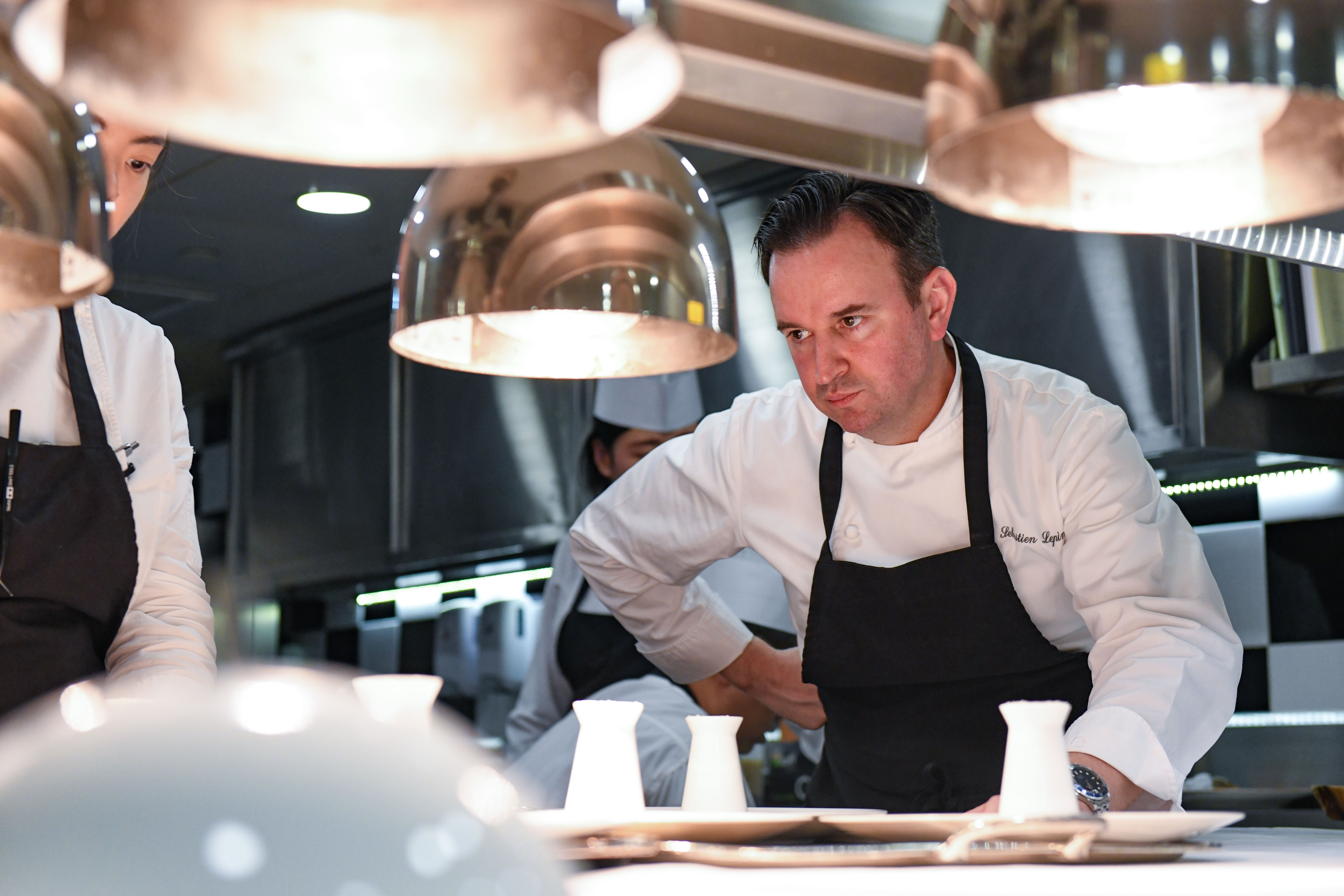

At the same time, restaurants have to ensure their prices remain competitive in an increasingly cautious dining environment.
“There is so much that goes into running a restaurant, and the reality is that it is becoming increasingly challenging, particularly in Singapore,” he said.
“I am deeply saddened when there is news of a Michelin restaurant closing, but I understand firsthand the dedication, sacrifices and perseverance required to sustain a restaurant at this level.”
Li Guang believes the recent closures also serve as an important reminder that awards alone are never enough to build a successful restaurant.
“For me, the reality is that a star alone is not the only single ingredient for a restaurant’s financial success,” he said.
He explained that restaurants also need sound financial management, effective marketing, staff retention and a sustainable business model.
“At the end of the day, awards like Michelin are a very big bullet to put in the gun, but you will still need to have the trigger.”
Nevertheless, watching fellow chefs close their restaurants has been especially painful for him.
“It is very sad. It’s a very tight-knit community and all these chefs who close their shops are friends of mine. As a fellow comrade in the business and industry, we know that our lives and jobs are not the easiest. We have made so much sacrifices along the way as well,” he said.
“I mean, we cannot control the economy and how our consumers want to spend. I won’t say I was surprised or not, but I feel like Singapore has lost a bit of glow with all these closures. These are amazing restaurants with such talented chefs.”
Still one of the industry’s highest honours
Despite those realities, none of the chefs AsiaOne spoke to believe the Michelin Guide has lost its relevance.
If anything, they say its influence has only grown over the past decade.
For Siu Kong, earning a place in the guide is still something chefs around the world aspire towards.
“It is still a very highly regarded, globally recognised standard. I don’t think that ever goes away, no matter how the scene changes,” he said.
Sebastien believes Michelin’s biggest contribution extends beyond individual restaurants.
“When the Michelin Guide first arrived in Singapore in 2016, there was only one restaurant awarded three Michelin stars. Now, Singapore is home to three three-Michelin-starred establishments,” he said.
“Having lived in Singapore for the past 13 years, I have witnessed firsthand how the fine dining landscape has evolved. The arrival of the Michelin Guide has undoubtedly elevated standards across the industry, inspiring restaurants to continually refine their craft and raise the overall level of excellence in Singapore’s fine dining scene.”
Li Guang also believes Michelin has benefitted Singapore beyond individual restaurants.
As a country that relies heavily on tourism, he feels international dining accolades play an important role in strengthening Singapore’s reputation overseas.
“We are a country without much natural resources, and we do rely a lot on imports, exports and tourism,” he said.
For diners, Michelin recognition also provides reassurance when choosing where to eat.
Christine explained that if two eateries were serving similar dishes at the same price point, many customers would naturally gravitate towards the Michelin-recognised one.
“Why would I not choose the one that has a Michelin award?” she said.
Yet despite its prestige, Christine stressed that earning a place in the guide is never something chefs can simply chase.
“Other chefs in the industry definitely aspire to earn a spot in the guide. But you can want it, and desire it, but it’s really not up to you,” she said.
“You can’t knock on their door and ask them to give you a rating. There’s no means. You don’t even know where to find the Michelin inspectors.”
Cook for yourself first
Sebastien’s advice for those hoping to get a place on the Michelin Guide is simple: Just cook what you like to eat.
“There is no need to be fancy or think too much about it,” he said.
He pointed out that one good thing about the Michelin Guide is that it is possible to get a star even if you’re not a fine dining chef, citing Hill Street Tai Hwa Pork Noodle and Hawker Chan as examples of hawkers who received one Michelin stars.
Li Guang echoed that sentiment.
“Don’t open a restaurant and cook purely with the aim of winning a Michelin star. That is the wrong reason to cook,” he said.
“Cook because you love to cook. Cook with your heart. Cook what you want your customers to eat. Cook what you love to eat. Whatever comes after that will come, but it is more important to have great business than the star itself.”
Siu Kong offered similar advice.
“Don’t chase the star. Don’t go chasing after somebody else’s validation of you. The first step is always to find your voice, focus on your craft and be the best version of yourself.
“Always work with purpose and intent. When you do that every single day over years, then the star might naturally follow.”
[[nid:741823]]
No part of this article can be reproduced without permission from AsiaOne.
melissateo@asiaone.com
Read the full article here