







This article is produced in partnership with Republic Polytechnic as part of its Diploma in Mass Communication’s Media Practicum module.
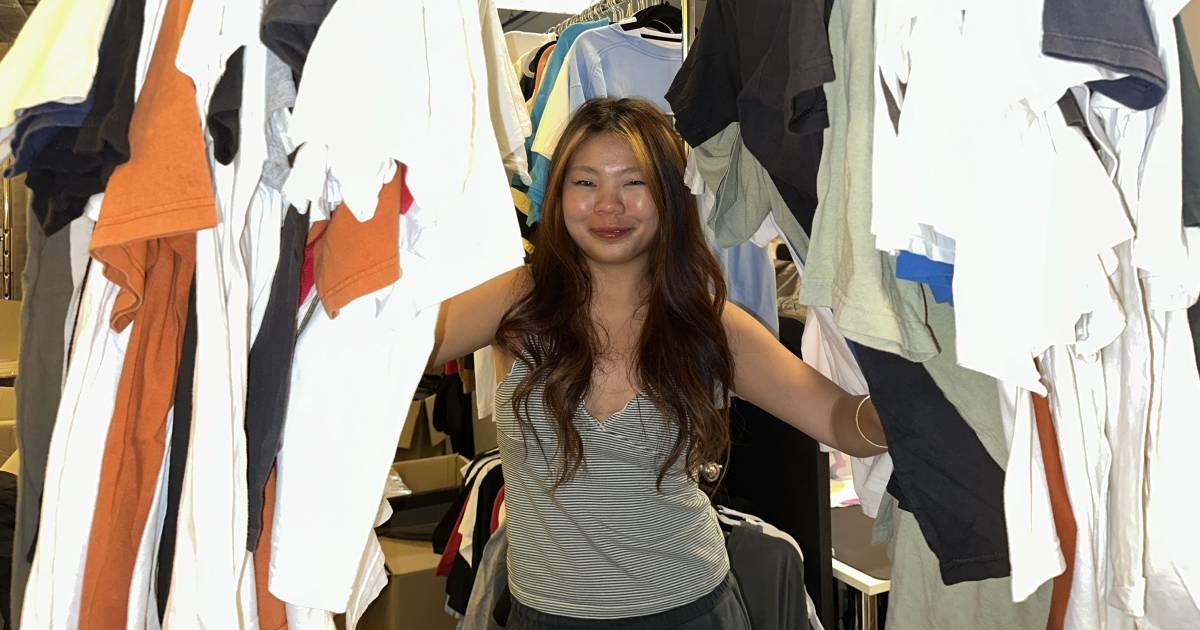
The clang of metal hangers fills the air as Ashley Khan Kit, co-founder of thrift store Weare, straightens a rack of colourful windbreakers inside a rental space in Midview City. Around her, music pulses softly through a speaker as her team shifts boxes of thrifted clothes across the floor for their next weekend event.
Despite the bustle, Ashley moves with quiet focus, flashing her signature grin when a teammate cracks a joke. For the 21-year-old, it is a familiar scene filled with last-minute adjustments, laughter, and controlled chaos.
Her story mirrors a growing movement in Singapore, where youths are redefining what it means to live sustainably and creatively.
In 2024, Singapore generated 206,000 tonnes of textile and leather waste with only 7,000 tonnes being recycled, according to the National Environmental Agency’s statistics.
As an alternative to fast fashion, thrifting has become increasingly popular.
For Ashley, Weare was never about chasing a trend. It began as something simpler: a shared passion among friends and a desire to build a space that celebrates both fashion and community.
From hobby to hustle
Ashley’s entrepreneurial journey began in secondary school, where she developed an interest in DIY crafts.
She would make jewellery and team up with friends to sell these on Instagram.
Ashley also spent plenty of time in the crowded aisles of thrift stores at Lucky Plaza rummaging through bins.
“I always saw people post their hauls online and watched American YouTubers visit Goodwill bins,” she says, recalling the joy of finding quality pieces at cheap prices.
Back then, thrifting was just a hobby for Ashley. But her passion for pre-loved fashion soon took on new meaning when her friend Ian Thio, 21, and his brother Jachin, 23, floated an idea: what if they started a thrift store together?
She recalls how Ian had excitedly told her about his trip to Johor Bahru, where he explored the thrift scene.
“He kept talking about it for days,” Ashley shares.
“Then he asked me if I wanted to help out with the marketing, because we’ve worked together on many other things before.”
She admits she was hesitant at first, but curiosity and friendship won her over.
Soon, the trio began collecting and sorting donated clothes from friends and family to sell.
For Ashley, the thrill came not from the profit, but from seeing people find joy in clothes others had discarded.
What started as a small project soon took on a life of its own when their first pop-up drew long queues snaking through the venue, surprising them.
“When people came up to me and told me they’ve heard about or love our brand, that was quite shocking for me,” Ashley says, realising she had stumbled onto something that spoke to both her creative side and sense of purpose.
Creating something from nothing
While the idea started on a whim, the execution was anything but easy. Ashley quickly learnt that building something from scratch meant sleepless nights and constant multitasking.
“It required a lot of hard labour,” she says, adding that as a small company, they had to do everything themselves.
“We also didn’t have a storeroom, so I would go over to Ian’s house every day to tag and price the clothes.”
That early grind taught her more than any textbook did. As the team grew, Weare eventually moved from pop-ups to its own physical store at Queensway Shopping Centre.
Ashley recalls feeling the same hesitation when the idea of opening a physical store first came up.
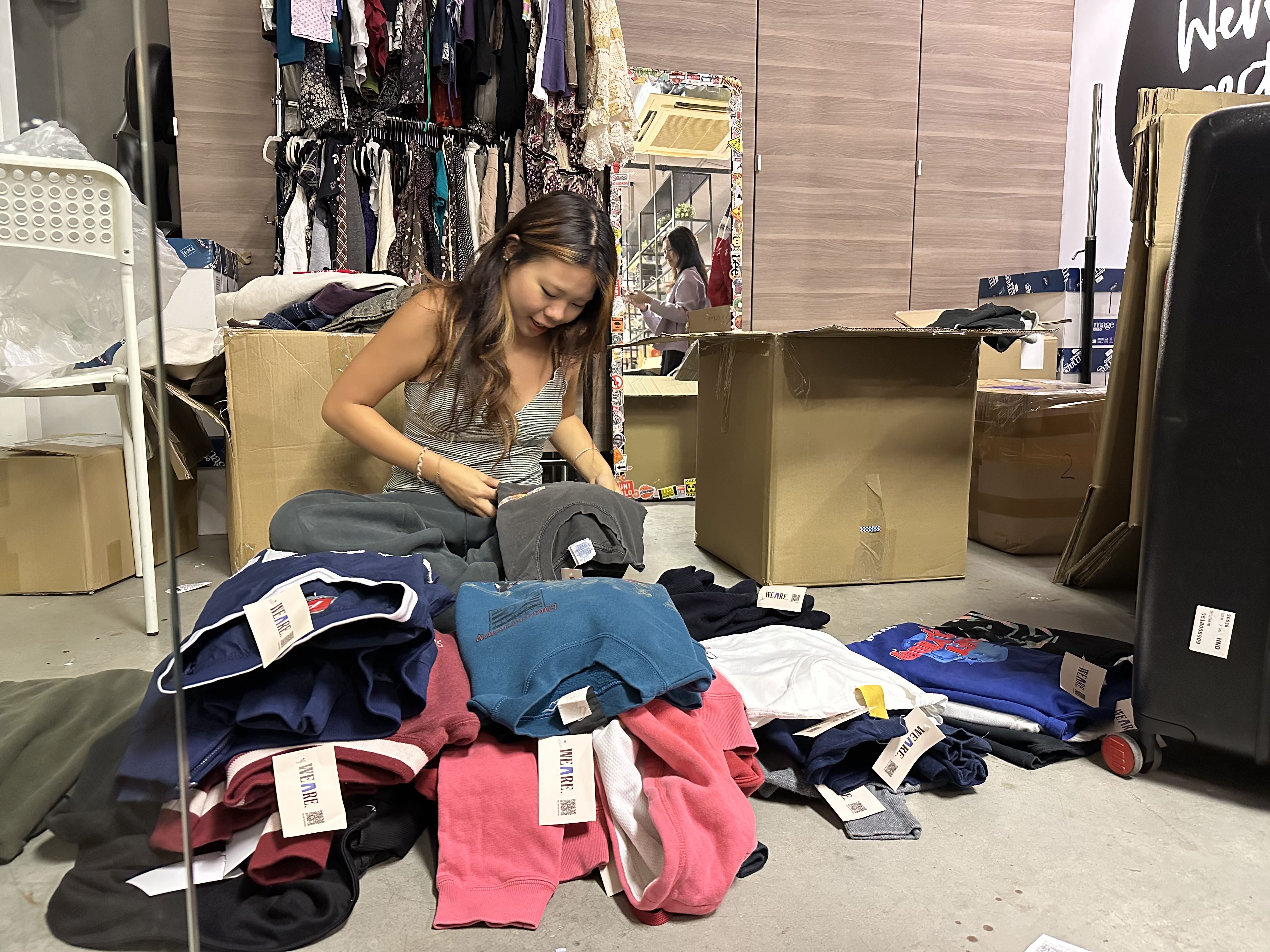

As students, the rental and renovation costs intimidated them.
“It was like a gamble, but we found a space with a decent rental price and decided to go with it,” she states, laughing as she remembers how the space initially looked “suspicious” as it used to be a massage parlour.
Her role within Weare naturally evolved into the backbone of its operations. She manages stock, pricing, quality control, and ensures the store has a cosy and approachable atmosphere.
Ashley’s commitment even extends beyond local shores, travelling to Bangkok monthly to source vintage pieces and build relationships with suppliers.
Her close friend and Ian’s sister Clara, 16, who has helped them at every event since Weare’s early days, sees that side of Ashley most clearly.
“Some people don’t notice how much effort and dedication she puts into Weare,” she says.
Through it all, Ashley’s quiet leadership and grounded nature have become her defining traits. Clara shares: “Every moment I see her working is a proud moment for me, because I can see she’s doing everything with her best.”
From a shy person who was scared to voice out her opinions, these days Ashley is more independent and confident in her decisions, both at school and work.
“She has grown so much personally, like her patience and resilience,” Clara reflects.
Juggling dreams and doubts
When Weare began in 2023, Ashley and Ian were still in their final year at Singapore Polytechnic studying marketing.
“It was quite hectic,” Ashley chuckles. “Both Ian and I were studying, so we would go to our warehouse, set up, then after that, we’ll have our laptops out, all doing work at the same time.”
Now a second-year marketing student at the Singapore University of Social Sciences, making sure Weare still flourishes remains no easy feat.
Luckily, this is where her team has stepped up.
“For example, Ian is in the army now, and I’m helping him with certain roles. We help to cover each other’s back when these kinds of things happen,” she explains.
Ashley admits to “some tensions here and there” over money and division of workload, and “small fights”, but they always got through it.
“We have so much fun at the events. Then after that, we eat a good meal – all these kinds of things are what bond us and keep us together.”
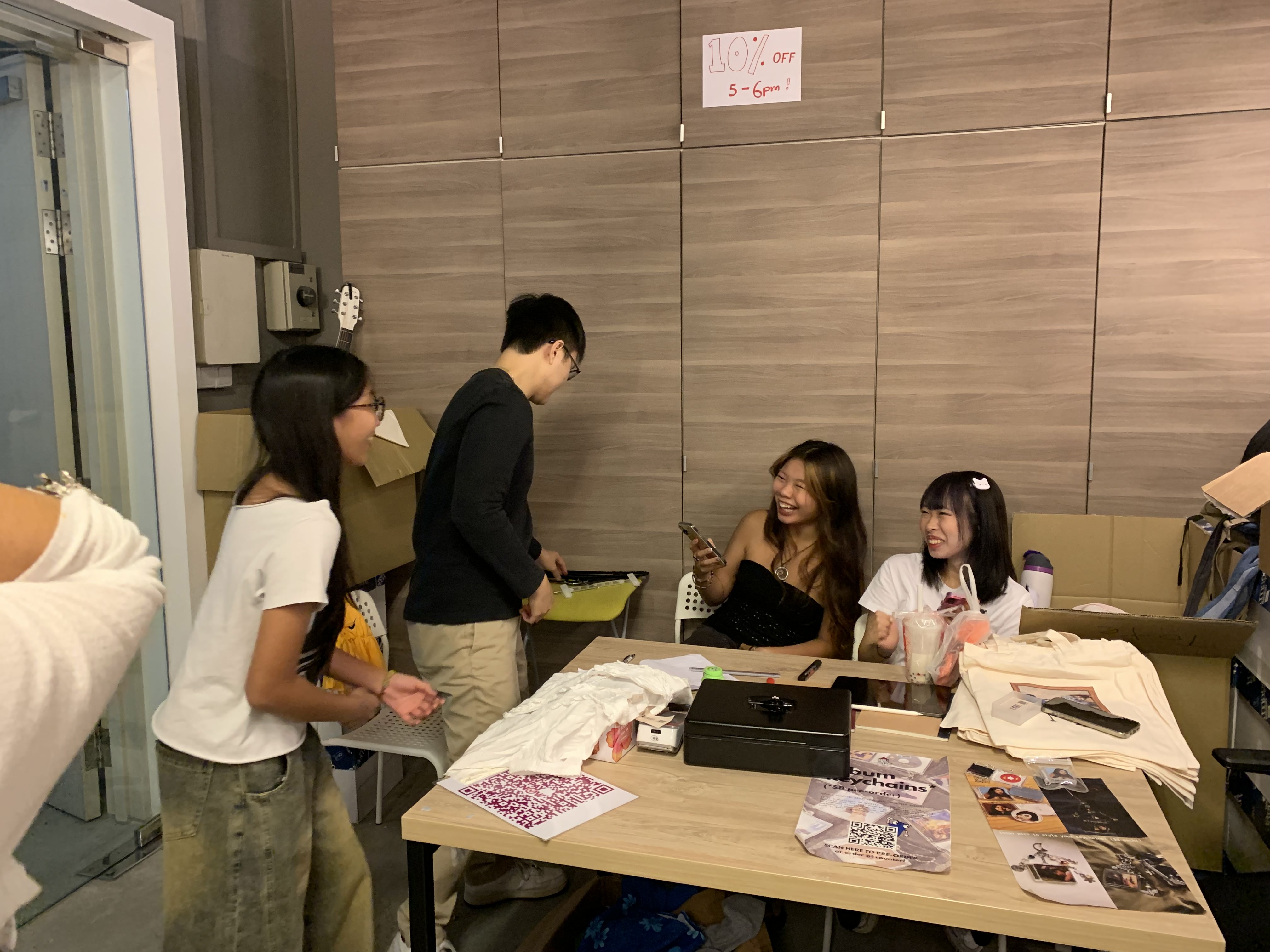
Ian was the one who reassured her when she doubted if Weare would work out.
“If you believe that you can’t do it at the beginning, you’re never going to do it and it’s never going to work out,” she notes gratefully.
As both a seller and a buyer, Ashley has seen not just the highs of thrifting, but its dips in popularity as well.
“I just hope it doesn’t stay a trend, because I know it can be a passing trend.”
“Sustainability shouldn’t just be a trend,” she implores, explaining how concerning it is to see other stores unable to keep up with rent, such as those in Haji Lane and Queensway.
“So, I really hope the community is kept alive, and our business is kept alive.”
[[nid:710635]]
editor@asiaone.com
Read the full article here