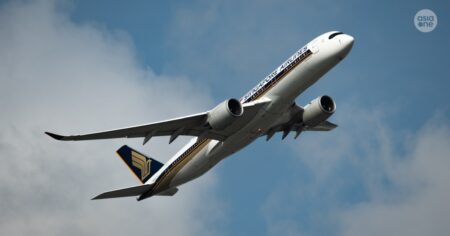





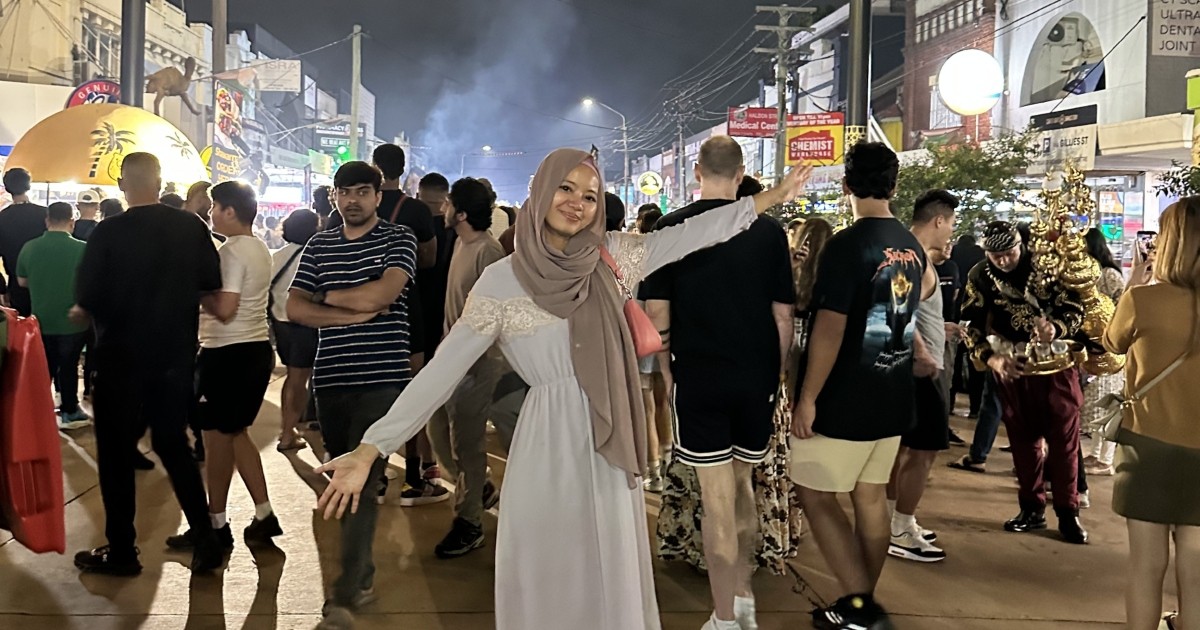


Having worked as a cabin crew member for the past eight years, Amira Rahmat is no stranger to spending long hours in the air and crossing time zones.
But as a Muslim, the 32-year-old Singaporean faces challenges during Ramadan — fasting on the job, often with odd hours and in foreign cities.
“I’ve been fasting since young. But when it comes to work and being in the service line, it’s very different, especially when I have to fast longer hours and cross time zones,” Amira, who is also a content creator, told AsiaOne in a recent interview.
On certain flight routes, the fasting hours could extend to as long as 17 hours, making interactions with hundreds of passengers on the plane tiring.
“I get thirsty and hungry but at the same time, I have to be patient because it’s my job,” said Amira, who clarified that fasting wasn’t an excuse for subpar service.
Another challenge is navigating time zones for iftar (the meal to break fast).
“It can be tricky, because sometimes I’m not sure which time to follow,” she told us.
But as the years pass, Amira has since grown accustomed to observing Ramadan onboard the plane and overseas — mainly with the help of her Muslim colleagues and seniors, from whom she seeks advice whenever she’s unsure of how to go about certain things — such as when to break fast.
The air stewardess, who declined to share which airline she works for, also adapted by adjusting her mindset.
“I see it as a privilege that I get to travel during Ramadan,” Amira said. “When I have my layovers overseas, I always look forward to it because I can visit the mosques there, meet other local communities who are also observing Ramadan.
Ramadan abroad
One of Amira’s routines for Ramadan when she’s in another city for work is to look for the largest mosque in the area to break fast.
According to her, one of her most memorable experiences of observing Ramadan overseas was visiting a mosque in a small town in China.
“The mosque looked like a temple, but there were Arabic scriptures. It was very majestic and something that I don’t get to see every day,” Amira shared.
There, she interacted with the locals, who were welcoming and enthusiastic to offer her something to break fast with. As Amira understands some Mandarin, she made conversation with them while breaking fast over a variety of local foods, including a Chinese soup with mutton and vegetables, as well as barley soup.
“I was very mesmerised [by the infrastructure] and took a lot of photos and videos to share with my family, friends and on social media. The experience of breaking fast with the local Chinese community… There are no words to describe it,” she recalled.
“I felt like that was so wholesome.”
As a big foodie, one of Amira’s favourite Ramadan experiences abroad is trying different local cuisines.
She tried Somali food for the first time during iftar at a Somali mosque in Helsinki, which she thoroughly enjoyed.
“That’s one thing I really can never forget,” she said.
On another occasion, she tried camel burgers at a Ramadan bazaar in Sydney.
Besides experiencing local culture and communities, Amira also befriends those from the Muslim community from around the world, even when visiting non-Muslim countries.
Recalling another experience in Helsinki, she shared that she made a friend when she went to a mosque alone, and while they were chatting, a woman who overheard their conversation invited them to her home and offered to show her around the area.
“That was very sweet,” the Singaporean said, adding that it’s nice to interact with local communities and share about their culture and religion with each other.
Besides working as an air stewardess, Amira has been sharing her Ramadan experiences on social media, where she also answers questions from netizens. She has over 84,000 followers on Instagram and over 55,000 followers on TikTok.
‘I felt lonely and sad’
While Amira’s experiences with Ramadan overseas are mostly positive now, it didn’t start out that way, especially with the challenges that come with fasting while working and spending the holidays alone.
In her first year as an air stewardess, she had to celebrate Hari Raya Puasa alone as she had a layover in Japan.
“I felt sad and lonely, because it was my first year of being a cabin crew, and I wasn’t ready to miss out on important dates such as birthdays and big events,” said Amira. “All of my colleagues were also not Malay.”
Despite that, Amira said that she felt comforted because she had a good group of colleagues who accompanied her and tried to celebrate the holiday with her.
Her positive mindset also helped her along the way.
“I’ve learnt that every experience is a blessing, I see it as an abundance and a privilege. Once I frame it that way, it gets easier to fast while working,” she told us.
For other Muslims who may be experiencing Ramadan and Hari Raya Puasa away from home, Amira advises that preparation — both physically and mentally — is important.
In addition to preparing “emergency meals” such as biscuits, oats and dates for breaking fast, it also helps to keep in contact with family as some may feel very lonely during this period.
“I feel like being connected with loved ones makes a difference,” she said. “Being able to call someone or a loved one for them to tell you ‘You’re not alone’ would help a lot for motivation.”
“Also, practise compassion for yourself, because it can get tough. So just be gentle with yourself,” she added.
Amira also encourages those who are abroad to visit local mosques.
“It’s so unique that you will not be able to get these different experiences back home,” she said.
“You get to meet so many people from different countries, but the way they observe Ramadan is still the same. We still pray the same way, we still break fast with halal food, just that the cuisine is different.
“Cultures are different, but there are always these shared, common Muslim practices.”
[[nid:677784]]
No part of this article can be reproduced without permission from AsiaOne.
carol.ong@asiaone.com
Read the full article here