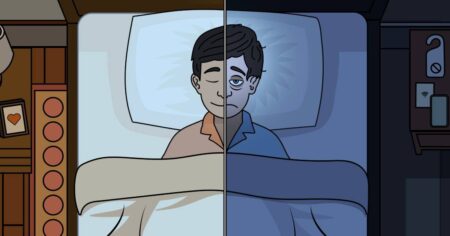






When former video creative and editor Edgar Tang was told he was being retrenched in March this year, he was hit hard even though he saw it coming.
The 50-year-old had been working at a multi-national entertainment company for about 4.5 years and described his role as “a dream come true”.
He added that it was also the first workplace where he felt he could show up as himself.
Speaking to AsiaOne about his experience, Edgar said his department had been alerted to structural changes which the company had planned for and that there was a “general time period” during which it would occur.
One day, when he and his colleagues got called into a meeting with people they usually would not have meetings with, Edgar quickly caught on to what was happening, he said.
But mentally preparing for retrenchment and actually hearing the words in person are very different, he stated, describing the experience as “surreal”.
“Even though you knew it was going to happen, it still hits you. You’re in this concussion period — in a fog — just trying to find your way out,” Edgar told us.
He also felt a sense of loss as he realised he would not be working with his colleagues, whom he had grown to deeply care for, anymore.
Reality of retrenchment
As he navigated life after retrenchment, Edgar shared that he experienced feelings of shame and self-doubt.
He would wonder if he had been let go because he “wasn’t good enough” and hesitated to tell people he had been retrenched as he did not want to be viewed as a failure or unsuccessful.
“I had to go through about a month and a half of this ‘grieving period’,” the 50-year-old said, explaining that he needed time to internalise the fact that being laid off was a business decision which had nothing to do with his value as an employee or as an individual.
Edgar also admitted that he has yet to tell his parents that he was laid off from his job.
“You could say that it’s an Asian thing…but when you are going through something, and if you can solve it on your own, why worry your parents by telling them?”
“My priority is to move forward and get better, and anything that would distract me from that would also distract me from being the best possible son,” he explained.
Edgar added that he is still able to pull his weight in supporting his parents financially, a responsibility he shares with his older brother, and continues to handle the bulk of their caregiving needs.
While Edgar believes his “grieving process” was vital after such a major life event, he did not wish to wallow in the negative feelings he had post-retrenchment.
As he worked through the emotions surrounding his retrenchment, Edgar began thinking about how he could use his skills and experience to help others with similar struggles.
Although he had the support from family and friends, as well as from his former colleagues, Edgar wished to create a community of like-minded people that could help one another.
This pushed him to share his experience, documenting how he rebuilds after retrenchment on his Instagram account edgarafter50.

Content creation was a key part of his healing process, Edgar told AsiaOne.
“When you take something that you were previously keeping private and feeling embarrassed about and just cast it into the public realm, there’s something very liberating about that,” he explained
He also highlighted how his videos created a “virtuous cycle” with people who related to or felt inspired by his content. They thanked him for sharing his story and offered words of encouragement, sharing their own experiences as well.
“It showed me that I was not alone, and I didn’t need to be ashamed,” he said, adding that him being vulnerable on a public platform allowed both sides — Edgar and those who watched his videos — to heal at the same time.
Edgar also recounted that some of the most memorable messages and comments he received online were from people who came forward with their own stories.
When asked which messages hit the hardest, he said that those from people who usually do not reach out to others or open up — especially online — often move him the most.
Some of these individuals are going through the same situation as him, while others have experienced and overcame similar setbacks and wish to assure him that better days are ahead.
He also shared that he sees being able to rebuild after a setback as a gift, stating: “I feel that rebuilds are what make life. If you don’t have a moment where you must make a big change, then where will you really learn?”
Currently, Edgar is still in the process of growing his social media presence, and he hopes to make content creation his full-time career in the near future.
‘Give yourself time to decompress’: Expert
Although he is navigating a life-changing situation, Edgar has seemingly found a healthy way to handle the difficult emotions.
According to James Chong, principal counsellor at mental health organisation The Lion Mind, the first step to coping with retrenchment is acknowledging it as emotionally significant — instead of “rushing into positivity”.
Echoing Edgar’s views, James stressed the importance of taking time to grieve after retrenchment.
He advises individuals in such situations to take the opportunity to explore what really matters to them, especially the things they may have been putting off because of work.
James also assured those who might be going through this situation that shock, grief, sadness, anger, anxiety, shame, uncertainty and sometimes imposter syndrome, are all common emotional responses to receiving such news.
“Give yourself time to decompress, seek support where needed, and then take the next step from a place of clarity rather than panic,” the counsellor said.
James also highlighted the differing impact of retrenchment on people based on their stage of life.
For someone in their 50s, retrenchment may feel like a major disruption to their life trajectory, and they may experience a deeper sense of loss of control, he said.
James pointed out that these individuals may also have built a strong sense of identity around their expertise, seniority, organisation or industry.
“When that is suddenly taken away, it can be emotionally destabilising,” he told us.
However, those who get laid off in their later years may also have greater financial savings or stability, which may make a different career pathway or self-employment more realistic, James acknowledged.
[[nid:736872]]
Read the full article here