

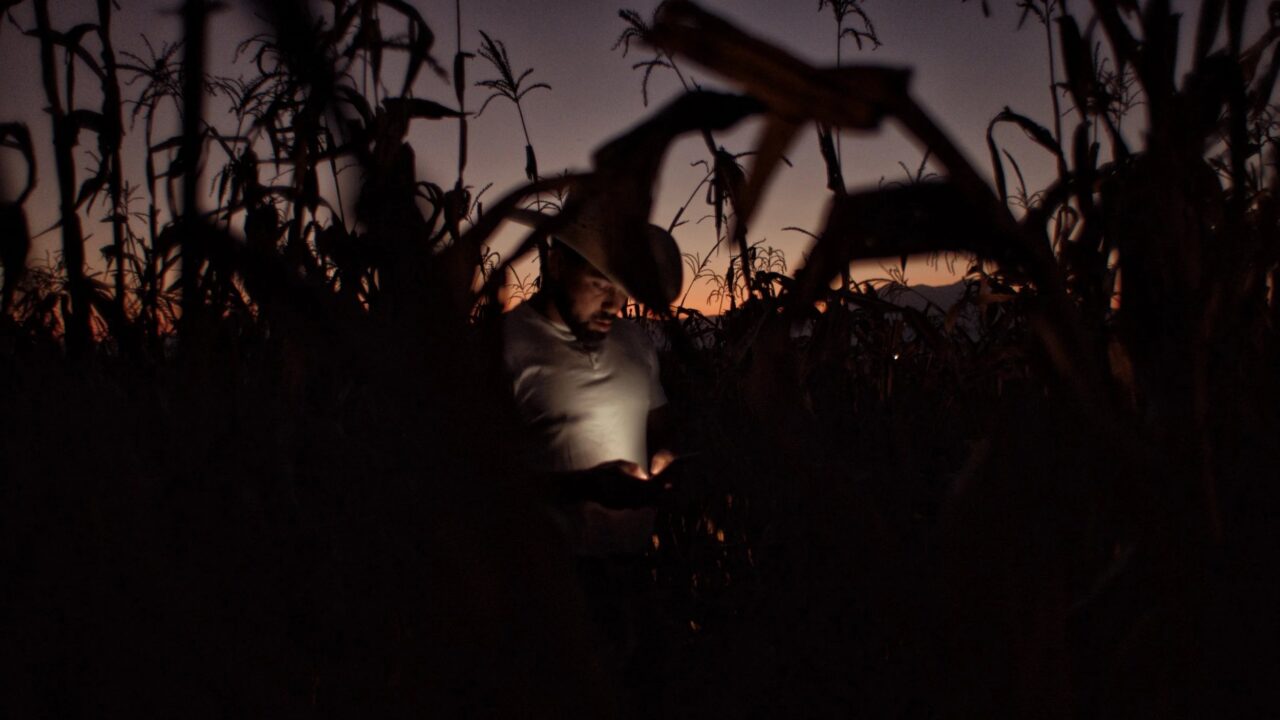


Cowboy hats, jeans, a lot of alcohol and bull riding combine into a special mix of hypermasculine rituals at Mexican rodeo shows. But underneath also lies hidden queer desire, as we find out in Jaripeo, a film that world premiered at Sundance and now screens at the 23rd edition of the Copenhagen International Documentary Film Festival, CPH:DOX.
Co-directors Efraín Mojica and Rebecca Zweig mix cinema vérité, Super 8 footage, and stylized scenes into a cocktail where machismo and queerness come together.
“We meet macho cowboys who have come out of the closet and a flamboyant diva who effortlessly takes the bull by the horns,” notes the CPH:DOX website, calling Jaripeo “a sensual exploration of performative masculinity, secret desires, and the longings that breathe beneath the surface of a rodeo show.”
Cinematography for the film was handled by Josué Eber Morales and Gerardo Guerra, editing by Analía Goethals, and the sound by Maria Rojas. Music is courtesy of Emilia Ezeta and Marton Radics.
The co-directors and producer Sarah Strunin spoke
to an appreciative Copenhagen audience after a screening early this week.
Mojica was asked about their use of Super 8 footage, sharing: “I’ve always loved film and its texture, and once we talked about making the film, I just ordered a little Super 8 camera online, for something like 20 bucks.” They described is as playing the role of a “magnifying glass” for the queer eye. “That camera was in my hand the entire time,” they said. “I hope you notice it’s not actually a queer rodeo, but a very traditional macho rodeo. And the function of the camera is to show you the details, this coded language that exists, and all the gay [stuff] that’s happening.”
Jaripeo’s stylized, almost music video-ish, sequences also fulfill a key purpose. “It was a way to portray the queer subconscious,” Mojica explained.
Zweig emphasized how the visuals allow to bring out the mix of a “celebration of queerness in this film, but also a lot of hidden desire,” adding: “These things are happening on the margins of of this very straight place.” The filmmakers goal: “To embody this experience, these emotions, without doing it in an exploitative way, but doing it in a way where people felt empowered by the scene.”
With Jaripeo focusing on the male queer experience, the creative duo was also asked about a potential queer female perspective. “We are also friends with all the lesbians in town, and they were in the shoots and they are in some of the footage,” Zweig explained. But the film team didn’t want to superficially incorporate the lesbian experience. Concluded Zweig: “I actually have thought a lot about going back and going into their stories in a separate project.”
Mojica shared that they originally didn’t plan to expose their personal life as much as they did for Jaripeo. “I definitely did not expect to have my personal story be a part of this,” they shared. “I really didn’t want to be in the film at first, but then listening to the process – we took four years to make this film – and listening to what it means,” they did end up doing so.
Read the full article here