



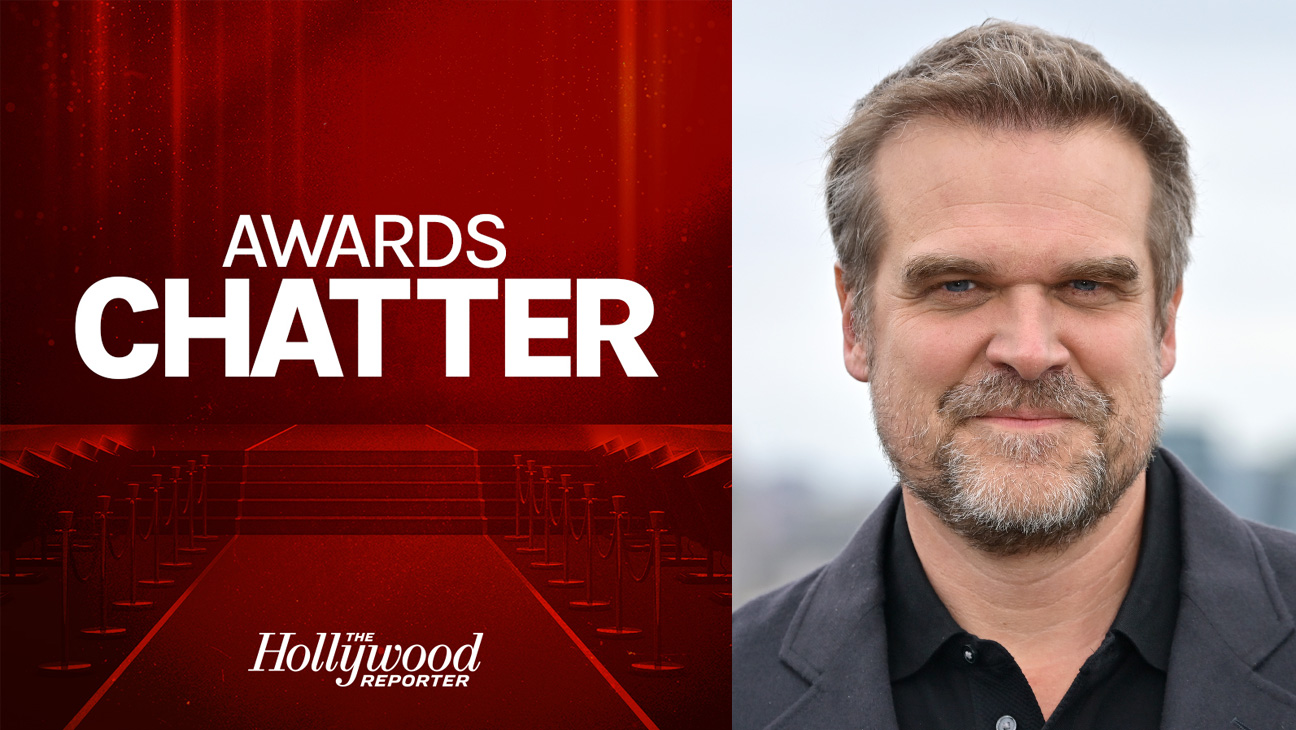

David Harbour, the Emmy and Tony-nominated character actor best known for his portrayal of a small-town Indiana police chief on the Netflix drama series Stranger Things, is the guest on this episode of The Hollywood Reporter’s Awards Chatter podcast.
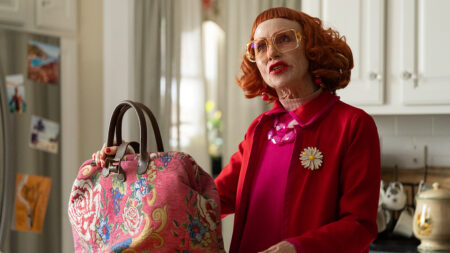
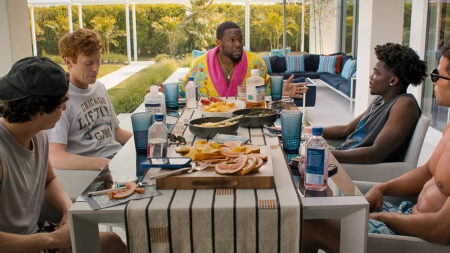
Harbour, who received two best supporting actor in a drama series Emmy noms for Stranger Things, recently added two more Emmy noms to his name. In June, he was nominated for his work as a producer and supporting actor on the HBO limited series DTF St. Louis, a highly unusual, darkly funny and surprisingly moving show about two friends in present-day middle America — one played by Harbour and the other by Jason Bateman — simultaneously experiencing existential crises.
Over the course of a conversation at THR’s L.A. offices, the 51-year-old reflected on abruptly going from decades of barely making ends meet to starring on the most popular show on TV, and the toll that both struggle and fame took on his mental health. He spoke about what drew him to DTF St. Louis as his first major post-Stranger Things project, and what he feels it has to say about modern-day masculinity. And he teased what he has lined up to do next, including a reunion with his Stranger Things costar Millie Bobby Brown.
You can listen to the full conversation via the audio player above or read excerpts of it — lightly edited for clarity and/or brevity — below.
On mental illness…
“I wonder about mental illness sometimes, whether it’s an actual disease, as they say, or whether it’s a recidivist condition like homelessness or something… It comes with certain components that feel like a disease, for sure — I still think I’m mentally ill even though I have more money! But a lot of people say, ‘I wasn’t mentally ill. I was just broke.’ And I do feel like there’s something about, ‘The greatest sin in America is poverty.’ There is something about being broke in the East Village, worried about being able to pay your rent, that causes stress on the nervous system. Also, I think the artistic life is a choice — you’re going into territories that other people don’t have to go to, and you in a sense say, ‘I want to go there.’ I used to have this argument with my dad when I was like 14 years old. This will sound kind of pretentious, but we’d talk about Van Gogh and he’d be like, ‘Oh, I love those paintings, but I would never want to live the tortured life that he lived.’ And I would be like, ‘How could you not, dad? To paint that, to paint Starry Night? The guy that paints Starry Night, that’s the guy you want to be.’ And he was like, ‘No, it’s not.’ I was like, ‘Okay. There are just certain people that gravitate toward those things.’”
On New York versus L.A….
“There were times when I was like, ‘I don’t know if this town [L.A.] wants me or what I have to give.’ New York has always sort of been embracing of what I have to give, except for that one damn reviewer [referenced earlier in the convo], and a lot of my successes have come as a result of returning to theater… A lot of the Hollywood stuff came out of that theatrical work. So I’ve never thought about giving up acting, but in terms of my relationship to movies and TV and to the town? I’ve never thought I was sort of pretty enough to do it. I’ve never thought I looked good on film. I’ve always thought I looked weird.”
On getting Stranger Things right when State of Affairs, an NBC series on which he appeared, was canceled…
“I was 40 and I needed to scrape together some money — at 40, you kind of need to scrape together some money. I didn’t have another season of that [State of Affairs]. And then I got sent this script [Stranger Things], and I read it and I really thought it was fantastic — so immediately I was like, ‘There’s no way they’re going to cast me.’”
On season one of Stranger Things surprising everyone, including Netflix…
“You should have seen that premiere. I joked around with Ted Sarandos a little bit about this at the last premiere we went to, because the first season’s was like a joke. It was some place in Los Feliz that was like a bar, and we were showing it to a couple people, and then Netflix, to throw us a bone, dressed a couple people as lab technicians with rubber gloves to walk around and scare people. I was like, ‘This is just not what you do for a real show that you guys care about.’ I think they didn’t know what they had. They claim to me now that they were doing some kind of very sophisticated stealth marketing, but I think they didn’t know what they had.”
On sudden fame, starting the weekend the first season of Stranger Things dropped…
“I became famous overnight. I was doing this play, and at the time, [a few] people would always show up to see me in plays — there’d be one person at the stage door who would be like, ‘Hey, David, you were great in this. We loved you in…’ ‘Oh, thanks man.’ It was really nice. And this time, it was Saturday night, and there were 20 people waiting for me, and I was like, ‘Whoa.’ They were like, ‘We just saw this show [Stranger Things].’ And then Sunday night there were like 50 people waiting for me, and I was like, ‘What the hell is going on?’ They’re like, ‘Sorry, man, we’re all just Stranger Things fans — we didn’t even see the play, but we heard you were here!’ I was like, ‘Oh, my God, what is happening?’ I think I’m still digesting it.”
On the evolution of his relationship with Stranger Thing sover its five seasons across 10 years…
“Your relationship to the material and your growth as a human being and what your interests are — all of that changes. And the other thing is, I wasn’t a producer on Stranger Things, so you’re just getting scripts, and that’s what you get. They were very open to changing stuff and working on stuff and blah, blah, blah. But at the end of the day, it’s a show that’s much bigger than me… We would always talk a little bit about each upcoming season, and I would also send them an email — which I’m sure they hated, or maybe just didn’t read — with all my ideas. It’s like, ‘Oh, here’s the David’s ideas email.’”
On putting together DTF St. Louis as his first post-Stranger Things project…
“I wanted to work with adults as opposed to children. And I wanted something with no monsters in it except for the spectre of middle-age, like a belly. I’m so in the genre world — I’ve got Stranger Things, I’ve got Marvel, I’ve got Doctor Doom, and world-ending events. I just wanted to go to the grocery store with my screen wife and do something very ordinary about very ordinary people and show extraordinary lives just in that framework, so that’s really what drew me to it… The other thing is I wanted to put together groups of people. For the last 10 years I’ve been in this circle, and have lots of friends and people I know that I respect and that respect me, and I wanted to put them together. I love doing that… There’s certain themes that I want to talk about, and there’s certain ideas that I want to get behind… I really liked that first season of The White Lotus — it sort of blew me away, with him in the pool doing the ape stuff — and I was just like, ‘What are we doing in civilization? What are we Americans doing?’ I just started to ruminate on that.
On the TV Academy’s enthusiastic response to DTF St. Louis…
“The fact that there were 13 nominations across the board for this show? And all the acting in it got nominated? It’s just like an embrace of us in a way that I really appreciate. It’s very moving to me. So I am taking the time to bask in and appreciate it, and also taking the opportunity to be like, ‘And here’s some more stuff I got, guys…’”
On possibly continuing DTF St. Louis…
“There could be more DTF. Who knows? It was successful. I don’t know what HBO feels about that. More of an anthology [like The White Lotus]. Nothing’s been decided.”
On his upcoming reunion with Millie Bobby Brown…
“We sold a show to Netflix which is me and Millie again. It’s a spy-thriller thing. It’ll be a series for Netflix. It’s written by Jack Thorne, who wrote Adolescence and who wrote all of her Enola movies. It’s really quite brilliant. It’s an idea that came from a book that Jack and A24 and I sort of all hashed out. I’m really excited about that… She’s a partner. She’s someone I love, and who loves me. We’ve gone through a lot, and we have a deeper understanding of each other, and we both desire to explore similar things… We talked [during this interview] about how when I was 35, I gave up the idea of being on a talk show. She, I think, is in a different point in her life. She’s just a huge star, so she hasn’t given up anything, but I think she’s searching for what she wants to say as an artist, as opposed to with all the brands and all the things. And I was psyched that she came to me and we talked about it, and I came to her and we talked about it, and we came up with this thing that is really exciting. She’s someone who I really care about, and it’s been such an interesting journey, because I’ve known her for so long. I’ve been her fake dad for years and years. I think there’s something that we have to serve audiences with still, especially that fanbase of Hopper and 11, which was such a dynamic thing… So it’s like, what can we do with Hopper and Eleven, or Millie and David, in terms of that partnership going forward? That’s exciting to me.”
Read the full article here