






How content are you with your current salary?
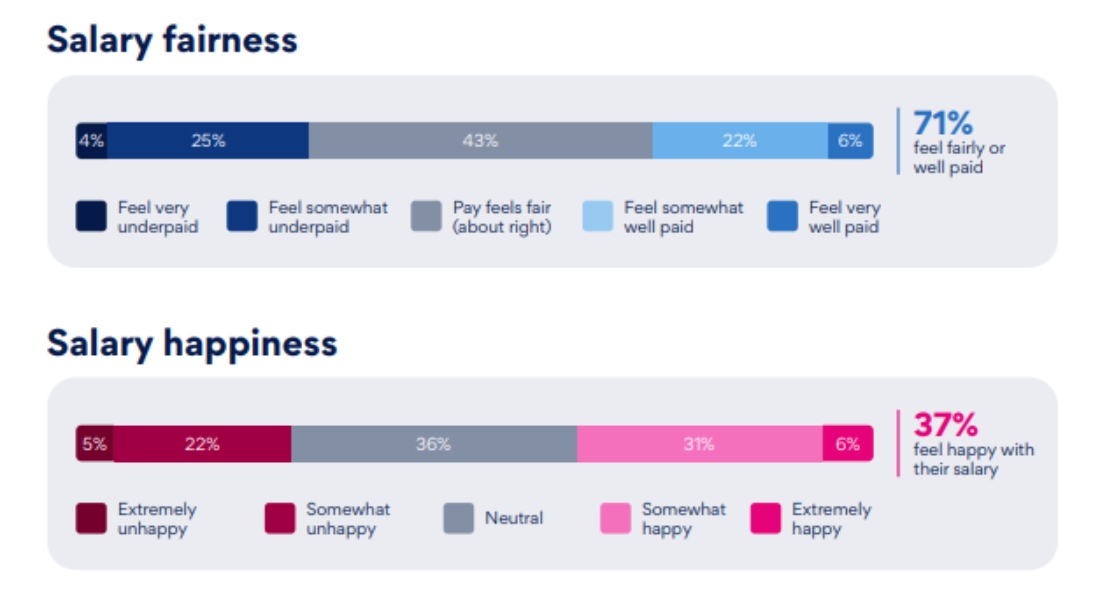
While almost three quarters (71 per cent) of Singaporean workers believe they are fairly compensated, only 37 per cent say that they are content with how much they earn, according to Jobstreet by SEEK’s Salary Pulse: Singapore 2026 report released on Monday (May 25).
This places Singapore among the weakest markets surveyed in the Asia-Pacific region for pay satisfaction, alongside New Zealand with 41 per cent and Hong Kong with 34 per cent.
Leading the region with pay satisfaction is Indonesia, with 66 per cent feeling somewhat or extremely happy with their salary, followed by the Philippines with 59 per cent, Thailand with 50 per cent, and Malaysia and Australia, with 49 per cent each.
Why Singaporeans are not satisfied
But what is causing this disconnect?
A factor could be that Singaporean employees feel ill-equipped to start pay conversations.
According to the report, many workers in Singapore still feel uncomfortable initiating salary discussions, even though those conversations often lead to positive outcomes — one in two workers have asked for a pay raise before, and 73 per cent of those who did were successful in receiving an increment either in full or in part.
Yet, the confidence level remains low, with only seven per cent of employees saying they feel “extremely comfortable” asking for a pay raise.
Women and entry-level workers are most likely to feel uncomfortable doing so at 36 per cent and 38 per cent respectively — while men and those in senior positions feel most comfortable at 40 per cent and 51 per cent respectively.
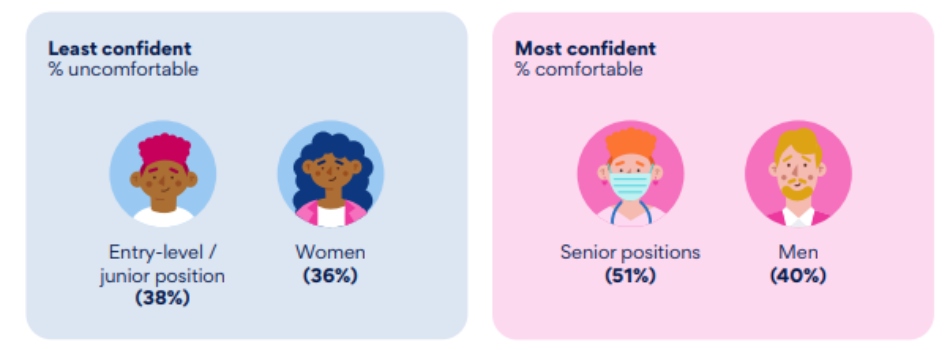
This could be due to hierarchical structures and social norms around proactively asking for pay increases, said the report.
The report also found that employees who ask for raises more frequently tend to feel more confident doing so over time and have a higher chance of being satisfied with their salary. Among repeat askers, 79 per cent said they feel comfortable asking for a pay rise, compared to 48 per cent of those who have only asked once.
It is also worth noting that workers in Indonesia and the Philippines — the two countries with the highest pay satisfaction — showed the most comfort in asking for a pay rise. Conversely, the bottom three countries, including Singapore, are the least comfortable in initiating a conversation on the topic.
That said, unsuccessful salary discussions can also negatively affect employee morale.
Among those who ask for a pay rise, 13 per cent have faced rejection. These employees tend to feel less valued and are less motivated to go above and beyond in their roles. It can also sometimes lead them to consider changing jobs.
Beyond hard rejections, increments that fell short of expectations can also fuel “quiet quitting”, where employees stop putting in extra effort and start performing only their required job duties, with 30 per cent reporting that they’d accept the raise but admit that their motivation would be affected
Meanwhile, 23 per cent expressed that unmet expectations would prompt them to seek a new role.
How do Singaporeans assess salary satisfaction?
According to the report, perceptions of fairness and salary satisfaction are linked with income, with higher earners more likely to feel well-paid and happier with their salary overall. Thus, senior-level employees are more likely to feel well-paid (42 per cent).
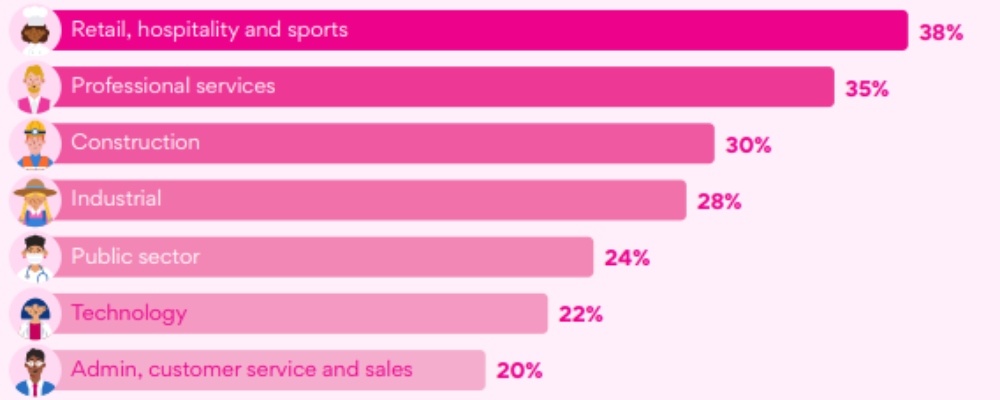
Workers in retail, hospitality and sports (38 per cent), and professional services (35 per cent) feel the most well-paid across industries, possibly due to clearer pay structures and the employees in these sectors being more proactive and comfortable when it comes to salary discussions and pay negotiations.
Transparency also emerged as an important factor, with 77 per cent of Singapore employees saying they want salary ranges of positions in a company disclosed, and 57 per cent reporting that they’d be less likely to apply for a job if the salary is not stated on a job listing.
The report also suggested that employees, particularly younger workers, don’t just want to know they are being paid fairly, but also want to feel meaningfully rewarded for their contributions.
Beyond benchmarking, employees also assess their salary based on factors such as workload and how well it supports their lifestyle.
This was most pronounced among Gen Z employees, where eight in 10 who viewed their salary as fair still reported feeling unsatisfied.
Younger workers appear more willing to act when dissatisfied with their pay — with only eight per cent of Gen Z employees saying they would simply accept a lower-than-expected pay raise, compared to 22 per cent of Gen X workers and 36 per cent of baby boomers.
They are more likely to reconsider their future with their employer if a pay rise falls short of their expectations, with 29 per cent saying that they would look for a new role, versus 20 per cent of Gen X and 13 per cent of baby boomers.
This suggests that for many younger employees, a poor pay outcome is a signal to reassess whether to stay in a job or not, while older generations prioritise stability and security.
Younger generations are also more open to extra income streams to boost their financial position, with majority (60 per cent) of Gen Zs reporting that they’re at least somewhat likely to consider a side hustle in the next 12 months, compared with just under half across other generations.
This highlights their greater willingness to respond to pressure by looking for alternative income streams rather than relying on their main role.
Workers prioritise pay, but not at all costs
According to the report, many workers are willing to make compromises for a higher pay, indicating job titles as the most acceptable sacrifice.
One in three employees (32 per cent) expressed willingness to consider accepting a lower job title or position for a 10 per cent increment.
However, only three per cent said they would work in a toxic culture for the same pay rise, and seven per cent are willing to work for a company that does not align with their values.
A significant number of people (31 per cent) also indicated that they wouldn’t make any sacrifices at all for a 10 per cent raise.
Movers and pay negotiators are rewarded
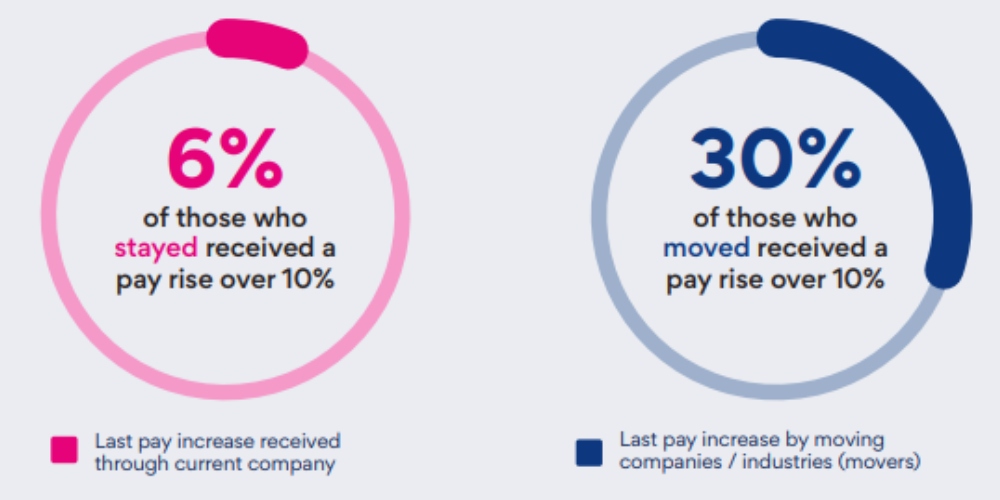
While most workers in Singapore (87 per cent) received their last increment from their current employer, those who moved jobs were five times more likely to receive a pay raise of more than 10 per cent, said the report, with 30 per cent of those who moved receiving an increment of over 10 per cent versus six per cent who did so by staying where they were.
Why pay satisfaction is important
Beyond influencing how workers feel about their jobs, salary satisfaction also affects motivation and employee retention in a company, as workers who are happy with their salary are 3.7 times more likely to feel motivated to go above and beyond than those who are unhappy with their pay, the report adds.
On the other hand, employees dissatisfied with their salary are 1.7 times more likely to think about changing jobs compared to workers who are satisfied with their pay.
The report also found that while recent pay raises are common, with more than half (53 per cent) of Singapore workers reported receiving an increment in the past year, they are often modest — most raises were five per cent or lower and driven by within-role increases instead of promotions.
Of those, pay increases were split between company-wide adjustments and performance-based pay rises, with employees receiving the latter reported to be more likely to feel happy with their salary (57 per cent) compared to those who only received a company-wide increment (36 per cent).
This shows that when leaders clearly tie increments to performance, the impact on pay satisfaction is significant.
Gen Zs feels fairly paid despite lower earnings
Despite earning less than other generations on average, with a fifth earning below $2,500 a month compared to the employment market average of 12 per cent, Gen Zs reported similar perceptions of pay fairness.
This could be due to the younger employees feeling that their salaries better match their experience and current stage of life, with fewer financial commitments such as mortgages or dependants.
The findings also suggest that Gen Zs are more likely to have had a pay rise in the last six months compared to older workers, at 35 per cent versus 25 per cent market average, which may contribute to stronger feelings of career progression and salary fairness despite being in lower income bands.
What can employers do?
To help employees feel more satisfied with their salaries, there are some things that employers can do.
Some examples include understanding how employees feel about their pay beyond “fair” salaries by checking on their pay satisfaction regularly and paying attention to groups that are more likely to feel underpaid, such as mid-level workers.
Beyond benchmarking salaries against market rates, employers should also build a culture of recognition for employees’ contributions, as feeling valued is a key driver of satisfaction.
Companies are also encouraged to consider the full reward picture to help retain employees, including benefits such as flexible work arrangements, additional leave and clearer career progression pathways when salary increases are not possible.
Employers should also review how pay is structured and consider rewarding employees based on skills and contributions rather than just qualifications
Companies should aim to be open and honest about pay, sharing salary ranges, listing salaries in job advertisements, communicate clearly about pay decisions and being realistic about short-term trade-offs.
Creating space for salary conversations is also important, and employers can do so by normalising pay discussions. As most employees find salary conversations uncomfortable, creating an environment where these conversations are expected and welcomed can make a real difference.
Finally, the report suggests that employers should reward loyalty instead of “taxing” it — as even the best employees may leave if they can earn significantly more by doing so.
Tips for employees
Employees don’t have to remain helpless either.
Some things that employees can do to improve their pay satisfaction is by understanding their own value by benchmarking their salary according to market rates, instead of relying on informal comparisons from friends and family before a pay discussion.
Workers are also encouraged to clearly understand and communicate the value they bring to the company, while considering alternatives such as flexible work arrangements, additional leave or goal-setting for career development opportunities if a pay raise is not immediately possible.
It’s also important to have conversations about salaries and increment despite the discomfort. With salary discussions, choosing the right moment helps. According to the report, nearly half (44 per cent) of workers bring up pay discussions in a scheduled review, while 34 per cent do it proactively.
If a pay raise is rejected, employees are encouraged to ask for clear feedback and a pathway forward, while reassessing their long-term career goals and options if needed.
It’s natural to feel frustrated or undervalued after a setback, but staying engaged and focused on development can help position workers for future success, said the report.
[[nid:729398]]
Read the full article here