



Austrian filmmaker Manuel Wetscher made a name for himself with such fiction shorts as 2018’s Four Seasons, 2021’s At Night When Mice Scream and 2022’s Magma. Then came the 2024 experimental short doc Richard, a particularly personal film.
“I only learnt the real reason for my father’s death 10 years after he died,” reads a synopsis for the film. “At first, I was told that he had died of pneumonia, then later of lung cancer. The truth finally came out from a drunken relative at a birthday party when I was 17 years old. Since then, I have known that my father died of AIDS in 1993 at the age of 40.”
Wetscher’s feature film debut Eklipse, which world premieres in the Horizons section of the 83rd edition of the Venice Film Festival on Sept. 5, is inspired by his experience of being kept in the dark on the details of his father’s situation by his family. And as the title, which means “eclipse,” suggests, the sun plays a role in the movie, just as it did in Magma. And yes, the title Eklipse is spelled with a “k” in both its German and English versions.
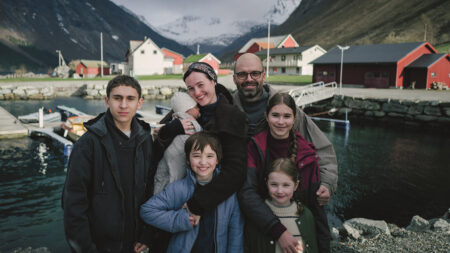
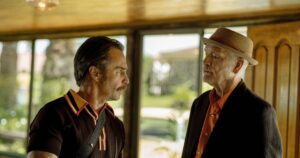
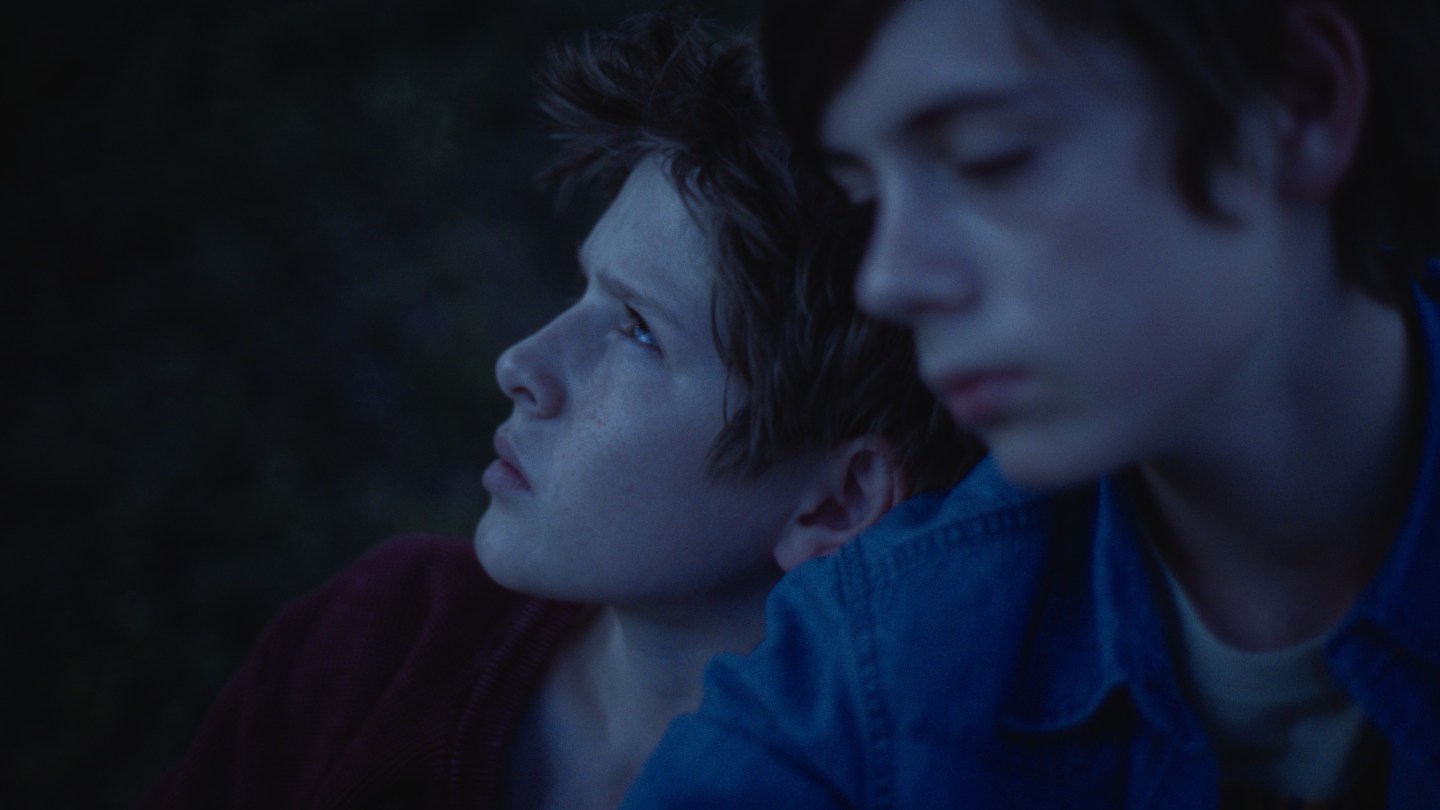
Eklipse, starring Moritz Hohlrieder as Tomy and Finley Brown as his best friend Chris, is set in the 1990s at an alpine dairy farm in Austria. The two teenagers spend a summer helping Tomy’s uncle, portrayed by Hannes Perkmann, with milking and other duties, as well as exploring the outdoors.
But as the title suggests, darkness overshadows their time together, while also leading to some revelations. After all, Tomy’s father is in hospital, and his mother decides to keep the real reason from her son in the film from production companies Eutopiafilm in Austria and Albolina Film in Italy. But then, Chris learns that Tomy’s father is in hospital with “the gay disease,” and he becomes frightened, leaving Tomy suddenly confronted with rejection and the silence of his loved ones.
Wetscher co-wrote the film with Bernhard Jarosch, with whom he also collaborated before on several short films. Simone Hart handled the cinematography, and Anna Kirst is the editor of Eklipse, which also features actors Lenz Moretti, Lisa Schützenberger and Barbara Romaner. Films Boutique is handling world sales on Eklipse, which comes from production companies Eutopiafilm in Austria and Albolina Film in Italy.
“Eklipse is a film about the taboos surrounding AIDS and the fear of social exclusion,” Wetscher says in a director’s statement. “It tells the story of how prejudice and ignorance affect the friendship between two boys, and how social contexts are mirrored within the microcosm of a family.” And he emphasizes: “With Eklipse, I want to create memories by exploring the sensory and tactile qualities of cinema.”
THR talked to Wetscher about mixing the autobiographical and the fictional in Eklipse, including his cameo in the film, how he found his young stars, how he and his team discussed Andrea Arnold and Alice Diop films, his efforts to transport audiences into the alpine environment, and the timeliness of the fear of AIDS and the unknown.
The film feels very intimate, and I understand that it is inspired by your and your family’s experiences. How much of what we see is autobiographical and how much is fictionalized?
It’s part [of a cinematic] game. I wrote the screenplay with a good friend of mine. The film draws a lot on the personal experience of losing my dad in 1993, when he died of Kaposi’s sarcoma, a cancer caused by AIDS, but then it also includes completely fictional things. Later on, seeing films and getting to know more about what people did [back when my father died] made me look at my family history differently. But many summers, I spent in Tirol working for my grandfather on a farm, so I knew these two elements. That is also where I actually experienced the 1999 eclipse, so these were all elements I had from the beginning.
But then, of course, writing the screenplay meant having to make it all into a story, something that keeps you interested and that works in itself. That’s a process I love, [during] which I also experienced a lot about myself and about the time back then. It allows you to reflect on how certain mechanics in society work and this dilemma of what you tell and what you don’t tell a kid.
I guess that is why the film feels so specific about its time and location but also very universal…
That’s something that interests me when watching films – when they make me understand the world or learn, experience, or feel something. So yeah, the goal from the beginning was to make a film that gives people who don’t know this background or specific location the experience of things that come with being and living there. For example, this experience of going into a stable with 50 cows.
It’s very tricky to translate that into cinema because when you go there, it’s so physical and it’s so sensorial. There are so many things going on, including the smell. It was a beautiful challenge to think about how to put that into cinema and what kind of ingredients we have to use to recreate that. Part of that is choosing the team that is able to go there, but then also later on in the sound design and with the musicians, we focused on recreating the sound, including with synthesizers and loops, to make sure you really have this feeling in the image but also in the sound. That’s much more direct of an experience.
How did you think about time?
One element that we decided on while editing was that we wanted to sometimes let things stand for a while and let you go through a process, because that is what our characters do in the film.
There are scenes that look like old home videos in Eklipse. Are they real?
Yes, that includes my cameo as a baby. And we have this material with the father, which is a home video that I have from my dad and me. There is also this image that the boys look at of the dad who is in the hospital. It’s an actual picture of my dad. I worked with personal material in creating this film. I was showing people [on the team] these images, so they could relate better. And because this is authentic material, it also has the emotion for me in it that I was searching for.
For cinema, you play with [such material and emotion] and then it becomes something else. In the film, it becomes the character’s memory. You asked about universal themes. We tried to tell the story in a very limited and small place, but through using the eclipse, which is very big and outside of our world, we also had the chance to fade to the bigger elements. When you look at the stars, the light that comes to the Earth has already been gone for a long time. In the edit, we realized that it was so beautiful to understand that this material that he sees or memory itself is far away. But then in the moment where you look at it, it’s there at the same time. So to use this element felt really right and made a lot of sense.
Did anybody on your creative team and crew have similar experiences?
Since this is my first feature, the idea was to have some newer people but also to have people who are more experienced and could bring stability for us. And these conversations were very interesting because some of the people who experienced the ’90s lost friends to AIDS or had someone in their family. Talking to them really made me understand in a different way my mother’s or my family’s position.
By coincidence, I also met a doctor who was working back then in the hospital in Innsbruck where my father was, and hearing how complicated it was and how scared people were and how impossible it was to talk about it, even within groups of friends who then suddenly wouldn’t talk to you anymore, helped me [understand that time] better. They did this out of fear. It also created a possibility for me after a long time to talk with my mother about it and to also see her point of view.
Has your family seen the finished film?
There will be the Austrian premiere, and my family will come there.
You probably started working on Eklipse before what feels like a backlash against queer people and LGBTQ+ rights…
I can see what you describe and what is happening politically at the moment. But yeah, we were not foreseeing that. I mean, I wish this would not be happening. I can see the dynamics, and that’s just scary how people who are different or live another way are being discriminated, and how populism is using that. But that is coming from the outside.
What we are looking at in the film is the friendship, the vulnerability of the people and the families. And the smaller the details we show, the more vulnerable we become, but through these small things, you understand so much about the dynamic and the universal issues and bonds.
How did you find your two young and excellent leads?
We started with online casting, and it went through schools. We were looking specifically in the region where we shot because it was important to have actors who had roots or a connection to this region that has a specific language and sound. We realized that to be authentic, you need to have the dialect.
We picked Moritz and Finley and did a casting with them together because they needed to match and make you feel a connection between the two of them. They could not just pretend to be friends. And then we also took Georg, who plays the uncle, to see the dynamic between all three. We went to the mountain because we also needed to know if they were able to play with the cows and not be afraid. So we put them there to work a bit and to experience all this, and then we felt they were great.
How early did you know the title for the film? And there is no English-language spelling version of it, correct?
We had it from the beginning. Of course, there were a lot of moments where everybody came to ask: Is it the right title or not? And we tried different things, but we always came back to it. There was the question of how to do the international title. And the final decision was to say it’s going to be in German and, also for international, always written with the K to make it a bit more unique or more recognizable.
Were there any films you watched when you worked on Eklipse or movies that may have been an influence?
For the cows and all these things, Cow by Andrea Arnold was a film we looked at. Also, Saint Omer by Alice Diop and [Céline Sciamma’s] Petite Maman were films that we talked a lot about in the making with the DOP to create authenticity and keep it simple but also [allow for] the bigger picture.
When the credits started rolling, I had an unusual feeling or idea…
It’s cutting to black at the end, like another eclipse.
Indeed! And I wondered if that also symbolically invites you as a viewer to think about what you just saw and heard…
It’s like the aftermath, the echo of what you just saw. How the images reappear and how you put them together. That’s one thing. There is something else. It’s called Eklipse because of the solar eclipse, but then you have the same term in virology, which you use when an infection goes into the body, but it has not infected the cells yet. That’s also called an eclipse, and for us, in the dramatography and in developing the story, this knowing and not knowing, what is visible and what is not visible also became important.
Read the full article here