




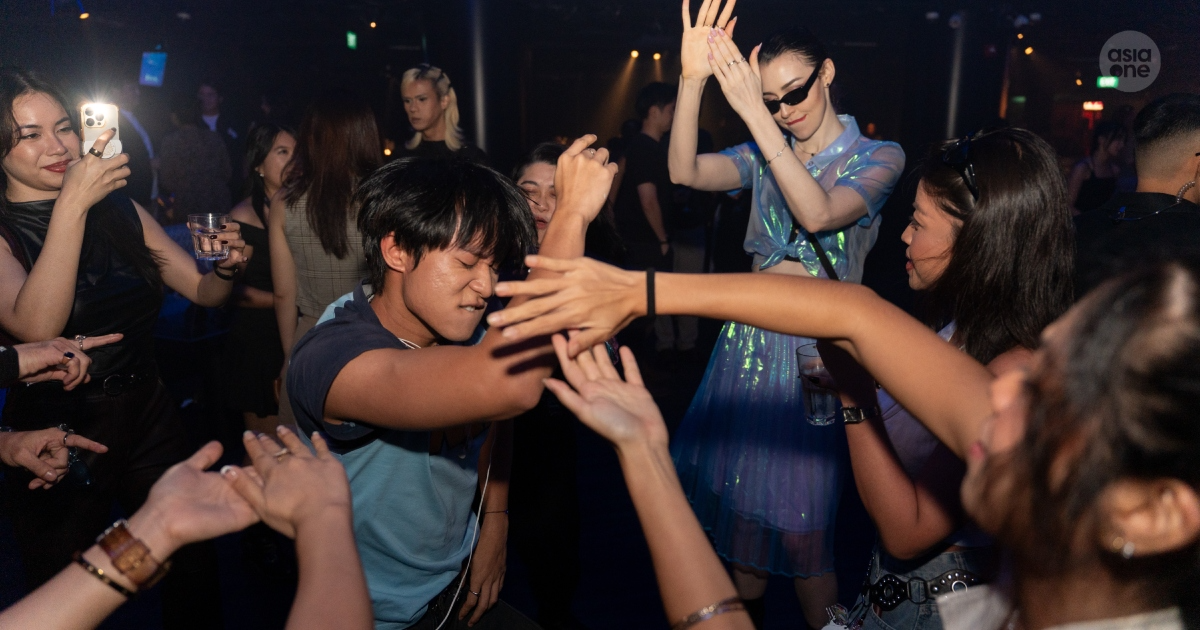

What does a Friday night out look like these days?
Does it still involve pre-drinking with friends before heading to the club until the crack of dawn? Or is it something more casual, ending earlier — perhaps not even involving alcohol?
For some, Singapore’s nightlife scene may feel quieter than it once did, as sober raves, running clubs and other trendier social activities become increasingly popular.
At the same time, some of the places most closely associated with the party scene are changing too — with traditional nightlife venues branching out to daytime events and ‘party precincts’ like Clarke Quay and Boat Quay broadening their mix beyond bars and clubs.
But do these changes mean that Singapore’s nightlife is fading? Or is it simply evolving?
For Amos Tan, who started partying frequently in 2012, a shift is noticeable.
At his peak, the 30-year-old would head out almost every Friday and Saturday for a night of drinking and partying. But these days, it has dropped to around once or twice a month.
Part of this was due to the usual “excuses” — getting older, working full-time and having less time to go out, the creative director and founder of Rising by Alexander Communications told AsiaOne in an interview.
A deeper reason, he said, could be because he feels the experience itself has changed too.
For one, it has become more expensive.
“It is not uncommon to spend close to $200 a person on an average night out, and the biggest difference is when you put places such as Thailand, Indonesia or Malaysia beside Singapore’s nightlife scene in comparison,” said Amos.
He added that Singapore’s drinking regulations have also made nights out feel more restrictive to him, with venues closing early and alcohol sales halting at 10.30pm at some places.
Looking back, Amos said he misses places such as the former Zouk at Jiak Kim Street, which he felt had a certain “charm” as a smaller club.
Recalling his memories of partying there, he said: “Those days, we were able to drink outside the bridges before we enter. I think it’s small things like that which make the experience better.”
Clarke Quay was a family-friendly precinct
But do these changes really mean that nightlife is fading in Singapore?
Not necessarily, some industry players say.
Among them is Clarke Quay — known to many as the heart of nightlife in Singapore.
While it has long been associated with bustling bars, busy clubs and late nights, the precinct has been expanding its offerings in recent years — adding into the mix more retail, fitness, wellness and other lifestyle concepts in addition to its established nightlife businesses such as Zouk.
Speaking to AsiaOne, Nicholas Lee, centre manager of CQ @ Clarke Quay, said the precinct has been adapting.
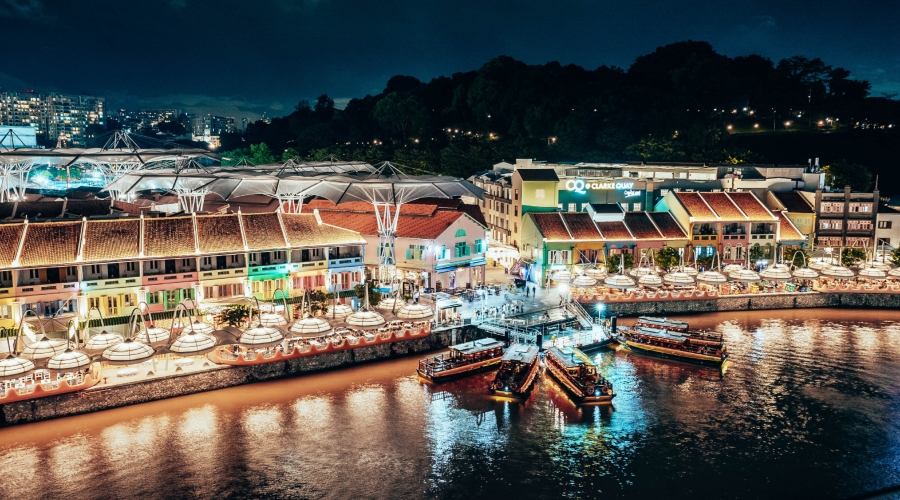
“Singapore’s nightlife scene has become more diverse over the years, with consumers seeking a wider range of experiences across dining, entertainment, wellness and lifestyle,” he said.
In fact, the area has always been evolving.
According to Nicholas, Clarke Quay first started as a family-friendly precinct with flea markets and family restaurants, before being repositioned as Singapore’s nightlife hub as demand grew.
https://www.instagram.com/p/DbuYZegDy9M/?hl=en
Today, that same malleability is showing again through the area’s latest transformation.
Its asset enhancement initiative, completed in April 2024, was designed to expand Clarke Quay’s appeal as a nightlife attraction into a broader lifestyle destination.
This is to complement the “changing character” of the precinct in tandem with the wider transformation of the area along the Singapore River.
Since the rejuvenation, Nicholas said footfall has “grown steadily”, with strong daytime and weekday visitation — highlighting the positive reception to tenants such as FairPrice Finest and music store Swee Lee as examples of the changing mix that give visitors more reason to visit Clarke Quay throughout the day.
Beyond its tenants, the precinct has also leaned into placemaking, including positioning CQ @ Clarke Quay as one of Singapore’s “most pet-friendly precincts” with “thoughtful amenities” and regular thematic pet programming to “bring the community together”, he said.
https://www.instagram.com/p/DZeXuD2lP8i/?hl=en
He added that CanningHill Piers, a mixed-use development slated for completion at the end of the year, will “further enrich the precinct” and support CQ @ Clarke Quay’s “continued evolution as a vibrant riverfront lifestyle destination” that caters to all.
Nightlife still crucial
But that does not mean nightlife is no longer relevant in the precinct’s story, nor has it taken a backseat.
“Nightlife remains an important part of CQ @ Clarke Quay’s identity, anchored by established operators such as Zouk and supported by year-round events and programming, as well as late-night transportation,” said Nicholas.
Last December, Clarke Quay launched the CQ Night Shuttle, a free shuttle bus service offering late-night transportation from the precinct.
It operates two shuttle services: a Town shuttle that loops back to Clarke Quay, and a home shuttle providing rides to Tampines MRT station and Jurong Westgate.
Some of Clarke Quay’s key tenants are adapting in their own way too.
Among them is Zouk, a major nightlife anchor in the area and one of Singapore’s most recognisable clubs.
In recent years, the club has started to branch out to hosting more than just traditional party nights — branching out to daytime, community and lifestyle events such as comedy nights and workshops, as well as MICE functions.
Its latest multimillion-dollar revamp, which was completed in June, was carried out with these expansions in mind — with the refreshed space now featuring a fully modular layout, complete with movable acoustic walls to allow areas to be expanded or sectioned off depending on the event format.
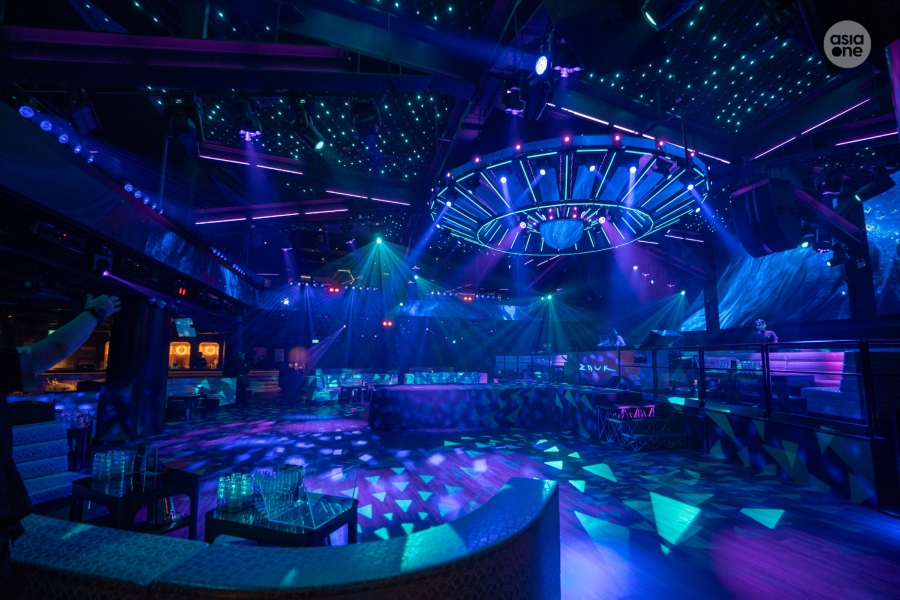
Speaking to AsiaOne following the rejuvenation, Andrew Li, CEO of Zouk Group said the revamp was not simply about refreshing the physical space but rethinking how people gather today and how the brand can continue to stay relevant amid changing landscapes.
“Nightlife remains at the heart of who we are, but people are looking for different experiences today. They want more variety, more flexibility and more reasons to come together beyond a traditional club night,’ he said.
‘Nightlife is still the foundation’
But to Andrew, the diversification does not mean that the brand is straying from its roots.
“Nightlife is the foundation of the brand and remains central to everything we do,” he said.
https://www.instagram.com/p/DZxPv_YylS7/?hl=en
“What is changing is not the importance of nightlife, but the number of ways people can engage with Zouk. We see opportunities across live entertainment, private events, brand partnerships, food and beverage experiences and community-driven initiatives.”
That wider definition of nightlife is echoed by Christine Tan, Head of Brand Marketing for Zouk Group.
“People don’t think in categories anymore. They think in experiences,” she said.
“A nightclub can host a conference. A cafe can host a listening party. A community space can become a live music venue.”
And while younger consumers — such as Gen Zs — are often seen as a group that’s slowly pivoting away from the traditional nightlife scene, Zouk does not define its audience by putting them into “neat little boxes”.
“The reality is much messier than that. On any given weekend, we might have someone who remembers Jiak Kim Street standing next to someone experiencing Zouk for the very first time,” said Christine, adding that the brand’s goal is not to pursue a certain demographic.
Instead, it is to stay relevant to multiple generations at the same time, she explained.
“That’s why we have different rooms, different music genres, different experiences and now different formats through spaces like Rally Clubhouse. People are at different stages of life, but they’re often looking for the same thing — connection, experiences and a reason to gather.”
As for the role that Zouk plays in Singapore’s changing nightlife scene, Christine feels that it goes beyond simply being a place to drink or party.
“For many Singaporeans, it’s tied to a period of their lives. It’s where they met loved ones, discovered music, celebrated milestones or created memories they’ll still talk about years later,” she said.
“That’s why I don’t think our role has changed very much. We’re still creating spaces where people can come together and experience something collectively.”
Beyond alcohol
What has changed however, is how people are approaching a night out — such as the way people drink.
While alcohol is still “an important part of nightlife”, Andrew told us that consumer behaviour has evolved.
“People are drinking more intentionally than before. Some guests still enjoy cocktails, spirits and bottle service, while others are prioritising the music, atmosphere and social experience,” he said.
For Zouk, that means the draw of a night out goes beyond the drinks.
“It’s about creating a complete experience. Great hospitality, strong programming, memorable moments and meaningful social connections what keep people coming back.”
Another nightlife establishment has also noticed the shift.
Over at Bartenders of Pony (BOP), a Korean-inspired cocktail bar that opened earlier this year, principal bartender Alan Teo has observed a change in drinking habits too.
“People are starting to drink less, but better — so they’re willing to indulge in one really good drink, as opposed to multiple options throughout the night,” he told AsiaOne.
https://www.instagram.com/p/DU71plmkphG/?hl=en
Another change, he noted, is the way spending habits have changed over the years, with the rising cost of living playing a part.
And while shifting patterns don’t necessarily mean that Singapore’s nightlife is fading, Alan believes establishments like theirs would have to adapt to the times.
“The nightlife scene definitely still exists — but it’s evolving. Consumers’ behaviours have changed over the years which has affected the nightlife scene and it shows,” he said.
“The new generation of adults have new habits and preferences, and we need to ensure we’re making the right adjustments to continue to welcome this new generation of experience seekers.”
According to Alan, BOP sees about 1,000 guests coming through its doors every week, with customers ranging largely from their mid-20s to mid-40s.
The bar also sees a fair share of Gen Z customers, which make up around 15 per cent of its clientele.
Noting the current situation in the F&B industry, where many businesses are expected to “take a hit”, Alan remains optimistic, saying that it gives businesses “room for creativity” and to explore ways to “capture potential guests”.
“I’m fairly confident that nightlife still has a certain demand, and as an industry, we’ll need to be flexible to adapt and forge a path ahead,” he said.
Broader night-time activities
The changing face of nightlife in the city is something the Singapore Nightlife Business Association (SNBA) has observed too.
Speaking to media on Monday (Aug 17) on the revitalisation of the Boat Quay, Upper Circular Road and Clarke Quay areas, Danny Loong, president of the association noted that trends are changing alongside mindsets.
The revitalisation included new measures formalised on Aug 18 to support Singapore’s nightlife, such as extending alcohol sale hours to 4am on Thursdays and Fridays, allowing applications for new bars, clubs and nightclubs within the Boat Quay district and resuming road closures at Circular Road for events and pedestrian-friendly activities.
Pointing to themed party nights as one example of how nightlife trends are changing, Danny noted people are now seeking “very specific” experiences.
Younger partygoers, he observed, are approaching nightlife differently too.
“It’s a lot more about community, a lot more about who they’re going out with,” he said, adding that the way parties are being promoted have also shifted, with most of them now on social media platforms such as TikTok.
For SNBA, these changes mean keeping track of these preferences and providing the appropriate advise and guidance to stakeholders to help them keep up with the times.
Danny also believes that nightlife today has evolved into something that does not revolve solely around bars and clubs.
“The night time is not just defined by one thing,” he said, pointing to other activities such as going for supper and watching football games as examples.
To him, these different activities all form part of the same ecosystem, with the broader aim of giving people more reasons to head out after dark.
According to Danny, SNBA is supporting Singapore River One — place manager for Clarke Quay, Boat Quay and Robertson Quay — across different types of events, whether that is a music festival, coffee party or something else entirely.
“We don’t really define it. As long as Singaporeans come out, enjoy the precinct, and also the businesses get to enjoy the footfall,” he said. “It’s really an overall collective strategy.”
And even as Singapore’s nightlife scene continues to evolve, the reasons why people enjoy it in the first place may not be all that different.
“I enjoy the company and the time spent, especially with good friends,” said Amos, adding that nights out also are a good excuse to indulge in some drinking while letting loose to good music.
For the 30-year-old busy professional, it’s one of the things that still helps him unwind in a stressful and fast-paced city like Singapore.
[[nid:738369]]
No part of this article can be reproduced without permission from AsiaOne.
Read the full article here