






Two years ago, music non-profit We Are Moving the Needle held its first-ever Resonator Awards, honoring the likes of Alanis Morissette, Caroline Polachek and Corinne Bailey Rae for an evening of purpose: to recognize the dearth of women in the industry working as producers and engineers.
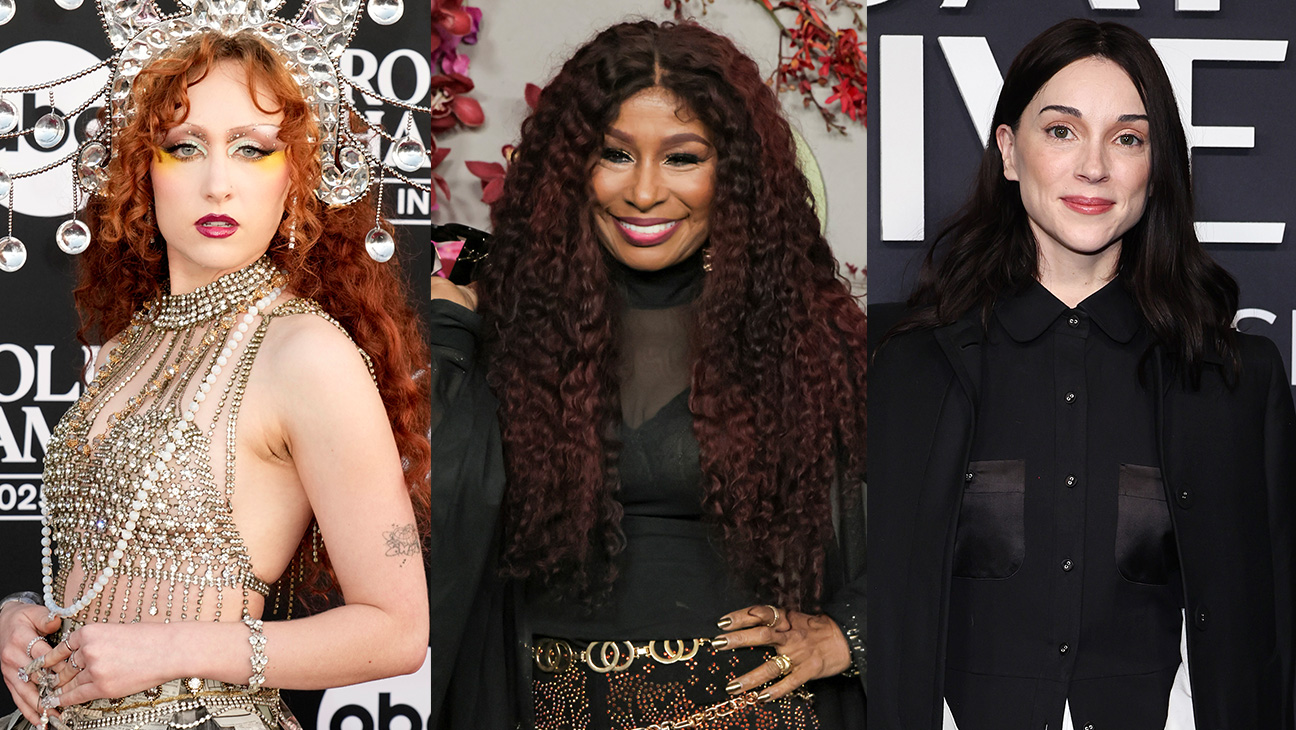
Two years and one cancellation later after the Palisades and Eaton Wildfires ended the bulk of the usual Grammy Week programming, the Resonators are back, and with the organization’s belated sophomore effort, the ceremony has quickly become one of the most star-studded events of the week. With Fred Armesan hosting, Chaka Khan, Chappell Roan, St. Vincent and Haim are all among Tuesday night’s honorees, with presenters including Sia, Anderson .Paak, Olivia Rodrigo, Laufey, and Addison Rae among many more.
As for how the Resonators are moving so quickly? Grammy-winning engineer and We are Moving The Needle founder Emily Lazar chalks it up to the mission.
“I didn’t go into trying to help this cause to create an award show, and I think that’s actually part of the answer,” she tells The Hollywood Reporter. “We want to highlight a problem in our industry and celebrate those who are making a difference. “The Resonator Awards are about celebrating creators. I’m a creator, so it makes sense to me to want to highlight, showcase, uplift, and celebrate other creators who are meaningful and impactful.”
The Awards themselves, which will be hosted at the newly-renamed Charlie Chaplin Studios in Hollywood, will serve as a marquee fundraiser for the foundation, Lazar didn’t give specifics on target fundraising goals for the evening, though she noted that to date, the organization has raised $875,000 in scholarships and grants alone.
Ahead of this evening’s awards, Lazar spoke about building out the ceremony, We are Moving The Needle’s efforts both in the industry and at the youth level, and the need for more women behind the board.
How did the Resonator Awards get to be so filled with stars so quickly? It’s not easy to get everyone to commit during an already busy week like this one.
The resonance of being in a room of your peers is very strong, and I think that’s part of what helped light the fire. There’s such an imbalance going on. It’s devastating, and we haven’t addressed it. When you see the statistics, it’s kind of shocking, and I think that also made people feel really strongly about supporting this event until it changes.
The imbalance you’re referring to is the lack of women producers and engineers, correct?
Correct. At its core, the awards are about creative excellence and the belief that when more voices are contributing to the creative process, the culture becomes richer. It’s more honest, it’s more powerful, and it’s more true. We have to lift the veil a little bit and see what’s going on.
This year, for example, across all of the projects that were nominated for the Grammys, only 3 percent had any women represented at all on their technical teams. That could be from an assistant to all the way through up to the album’s producer. Even more alarming is this year’s nominations for album of the year include credits for 58 producers and engineers across the category. Of those, three are women. Of those three, two are nominated as the artist as well. That leaves one woman credited solely as engineer. Laura Sisk.
I can also tell you that in the producer of the year category, there are no women nominated.
It’s more surprising when there are women in that category because there’s so few women who’ve ever been nominated. It’s famously bad.
It’s unbelievably bad. It’s really going to take the entire industry, to take responsibility and get involved in fixing this. We’ve made suggestions of our own and we’re definitely making great traction, but we need more help, and we need the buy-in from everyone. Our fix the mix report showed that men outnumber women 19 to one in production and engineering credits on top songs, yeah. It’s not just inequality. It’s a loss of creative potential. If you aren’t hearing from 50 percent of the population, you’re missing half the story.
It’s been this way for many years. It can be desensitizing after a while when you see these same disappointing stats year after year.
There’s some good news. We started the organization in March of 2021, since then we’ve raised $875,000 in scholarships and grants. what makes each of those scholarships so impactful is that each recipient is paired with a one to one mentor from our soundboard. That group includes titans in the industry, artists and engineers and producers who have volunteered their time to show up as fairy godmothers — that’s what we call them — to help bring the next generation of women up the ladder and connect them with opportunities.
We have 22 college chapters that we’ve started in the past few years, from Berklee College Music to Howard University to USC to UCLA to Northwestern University of Michigan. We’re still growing there, and I think that traction has definitely been felt.
I often hear that the lack of women in the room makes it harder for those who are coming up to feel welcome in these spaces. What else can the industry do to make women engineers and producers feel welcome?
You hit the nail on the head. You have to see it to know you can be it. You’re not born with this idea of being a music producer, and if you don’t see anyone who looks like you doing that when you’re young, it doesn’t resonate. And that’s why we need to start early with the youngest set, we do that with our Amplitude Youth Program.
It’s not actually rocket science. This is just about educating people, equipping them with mentorship and support and equipment and whatever they need to get through their education and then keeping them going and then hiring them.
It’s interesting you bring up starting that young. Often recruitment starts from the college level, but by then it can feel like it’s too late, these working-age young professionals already decided the paths they’re taking.
When you start this at the end of the chain, it just feels performative, it doesn’t feel real. I’m not always excited when somebody calls me up and says, “We wanted you to work on this because you’re a woman and we wanted a woman’s name on this album.” I want them to say, “We’re choosing you because you’re great.”
It’s hard to think about the future of this event when the second iteration hasn’t happened yet, but what are your goals for the resonator awards going forward?
Weirdly, the goal would be to not need a resonator. Of course, I hope we have one forever, we should always celebrate excellence. Hopefully it morphs into celebrating everyone in our accomplishments, and that we don’t have to highlight these underrepresented voices anymore because they’re not being seen and heard.
Read the full article here