


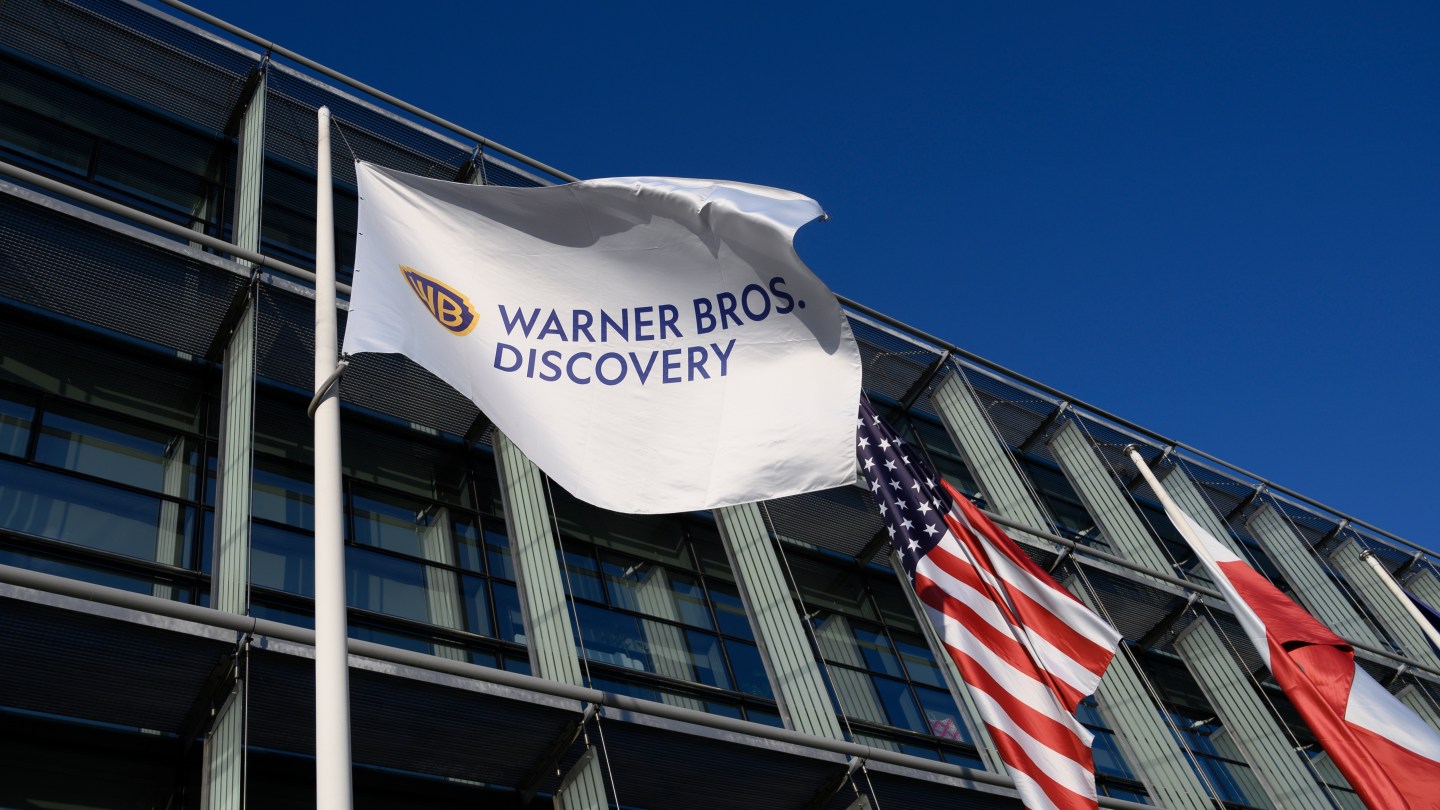

The board of Warner Bros. Discovery officially rejected David Ellison‘s $30 per share hostile bid for the company, telling shareholders that it remains “inferior” to the Netflix deal, and carries “numerous significant risks and costs on WBD.”
With the rejection official, Paramount will need to persuade WBD shareholders to tender their shares at that price, or to submit a higher bid than its $108 billion offer that would shift the outcome of the dealmaking.
“Following a careful evaluation of Paramount’s recently launched tender offer, the Board concluded that the offer’s value is inadequate, with significant risks and costs imposed on our shareholders,” said Samuel A. Di Piazza, Jr., chair of the Warner Bros. Discovery board of directors, in a statement. “This offer once again fails to address key concerns that we have consistently communicated to Paramount throughout our extensive engagement and review of their six previous proposals. We are confident that our merger with Netflix represents superior, more certain value for our shareholders and we look forward to delivering on the compelling benefits of our combination.”
The move had been expected, as the offer was effectively the same one that Paramount had submitted to WBD on Dec. 4, before it accepted Netflix’s offer. WBD had concerns around the foreign financing for the deal, as well as whether Oracle founder Ellison would fully backstop the deal, and Wednesday’s filing underscored those concerns.
WBD said that the backstop from Larry Ellison’s revocable trust is not sufficient, because the assets and liabilities aren’t disclosed, and because the assets within the trust can be moved or changed. The WBD board, in its filing, also suggested that the Middle East sovereign funds would carry risks, with Saudi Arabia’s Public Investment Fund contributing $10 billion, Abu Dhabi contributing $7 billion, and Qatar Investment Authority contributing $7 billion.
Concerns over $1 billion to be contributed by Tencent forced Paramount to remove the Chinese tech company from its last bid (Jared Kushner’s Affinity Partners had contributed $200 million, though that fund has backed out of the consortium).
WBD also said that it does not believe there is a material difference from a regulatory standpoint between the Netflix and Paramount deals.
The board also cited the Dec. 3 letter from Paramount attorneys at Quinn Emanuel, writing that the letter “suggests a highly litigious posture rather than a constructive attempt to achieve a negotiated agreement in the best interests of WBD stockholders. Indeed, representatives of PSKY’s legal and financial advisors reached out separately to WBD’s legal and financial advisors on December 3 and 4, 2025 to indicate that, in their respective views, the December 3 Quinn Emanuel Letter should not have been sent, and was ‘not helpful’ and a ‘mistake.’”
So what happens now? Sources say that Ellison and the Paramount team were waiting to see WBD’s response before deciding their next move. If Paramount comes back with a higher bid, Netflix will have the chance to match it, or respond with their own counter, effectively kicking off a new bidding war.
In a latter to shareholders of its own Wednesday, Netflix argued that its agreement “is the right deal, with the right partner, at the right time.”
“The Warner Bros. Discovery Board reinforced that Netflix’s merger agreement is superior and that our acquisition is in the best interest of stockholders,” said Ted Sarandos, Netflix’s co-CEO. “This was a competitive process that delivered the best outcome for consumers, creators, stockholders and the broader entertainment industry. Netflix and Warner Bros. complement each other, and we’re excited to combine our strengths with their theatrical film division, world-class television studio, and the iconic HBO brand, which will continue to focus on prestige television. We’re also fully committed to releasing Warner Bros. films in theaters, with a traditional window, so audiences everywhere can enjoy them on the big screen.”
Ellison already made it clear that he was willing to go higher than $30 per share in a text message to WBD CEO David Zaslav just a few hours before the Netflix deal was sealed.
“Please note importantly we did not include ‘best and final’ in our bid,” Ellison wrote.
That text message and regulatory confidence were likely top of mind for investors, with Ellison and some of his top deputies pitching Wall Street shareholders on the company’s prospects last week during a UBS conference in New York.
One attendee of those meetings told The Hollywood Reporter that they were left with the impression that Ellison is prepared to go higher, and wondered whether Netflix had the stomach to match given the trajectory of its stock price this week since the $83 billion deal was announced.
Indeed, the all-cash bid from Paramount is appealing to some significant shareholders, so if the offer gets raised, there is a chance that Wall Street pressure could rise on WBD to reconsider.
You don’t have to go back far to see where this leads: Disney’s acquisition of Fox saw a similar battle, with Comcast outbidding Disney, only for Disney to ultimately prevail after months of counters.
Ellison is likely to respond with his higher bid, but will Netflix keep the fight up? Or will it pull back and resign itself to being king of the streaming heap, with an extra $2.8 billion to help it along?
Or as WBD CEO David Zaslav told staff in an email Wednesday:”You may be asking: where does that leave us? We continue to have a signed transaction agreement with Netflix and we are working together to close the transaction, subject to regulatory approvals and other closing conditions.
The exec added, “That regulatory review process has already begun.”
Read the full article here