






After a surge in visitors and several instances of bad behaviour, Japan’s popular snow monkey park, Jigokudani Yaen-Koen, will be limiting visitor numbers.
To prevent overcrowding, the attraction will implement an online booking system in August, potentially capping attendance at 2,000 people a day, The Japan Times reported on Saturday (June 27).
In recent years, the number of tourists visiting the park has risen sharply, with around 3,000 to 4,000 visitors a day, a park official who declined to be named told the newspaper.
“We have been seeing incredibly long queues of visitors waiting outside the ticket booth,” the official said.
“To ease that, we will have them buy tickets in advance online.”
There has also been an increase in incidents of people harassing the primates.
Several have tried to feed or touch the animals, while others have even tried to bathe with them, the official said.
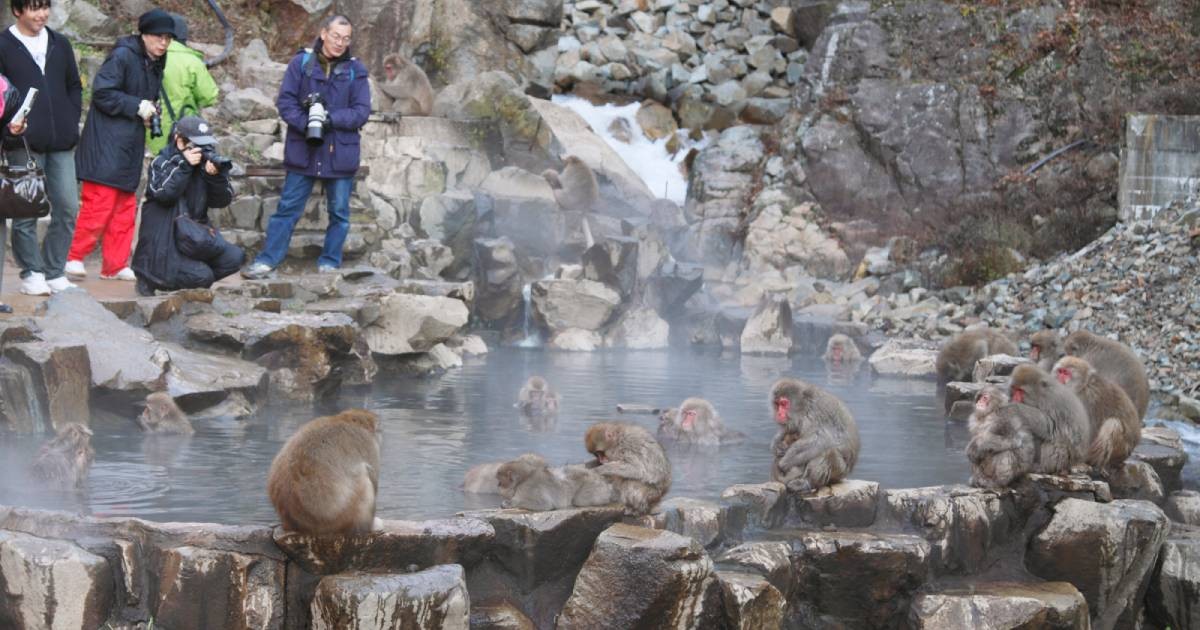
Jigokudani Yaen-Koen, located in a valley at an altitude of 850 metres in Japan’s Nagano prefecture, is home to wild Japanese macaques, also known as snow monkeys.
The attraction has been operating since 1964 and is buried in snow for almost one third of the year, creating conditions that allow the Japanese macaques to thrive, according to a write-up on the park’s website.
These primates are often seen soaking in the man-made open-air hot spring, and the park prides itself on being “the only place in the world where monkeys bathe in hot springs”.
Jigokudani Yaen-Koen gained popularity in 1970 after a photograph of the bathing monkeys appeared on the front page of Life magazine, and again during the Nagano Winter Olympics in 1988.
Overtourism in Japan
Over the past few years, Japan has seen a surge in visitors, including Singaporeans.
In 2024, a record-breaking 691,000 Singaporeans visited Japan, according to figures from Japan National Tourism Organisation.
The bulk of the travels (19.7 per cent) were made in December with 136,200 visitors recorded to have visited the country.
The figures from 2024 mark a 16.9 per cent increase from 2023, when 591,000 visitors from Singapore went.
Meanwhile, one of the biggest source markets for Japan, China, continues to see increasing visitors.
Visitors from China to Japan grew 10.4 per cent year-on-year in November, the country’s tourism board shared in December 2025. This is despite a diplomatic dispute which prompted China to urge its citizens not to travel to Japan last year.
While an uptick in tourists is good for an economic boost, some Japanese haven’t been too pleased about it, calling it “tourism pollution”.
Earlier this year during cherry blossom season, locals complained about traffic jams, piles of litter, ill-mannered foreigners knocking on doors of private homes to borrow toilets and tourists relieving themselves in front yards.
This got so bad that it prompted the city of Fujiyoshida to cancel their annual cherry blossom festival located near Mount Fuji this year.
“Tourism pollution” comes even as Japan confronts a rapidly growing population of foreign workers brought in as the country’s population dwindles and ages.
But even as the government promises to address overtourism concerns, they also want to boost the current level of 40 million inbound tourists to 60 million by 2030.
The overtourism has also caused divisions between residents. Some want peace and quiet, while others who have started businesses want to attract more tourists.
[[nid:736757]]
melissateo@asiaone.com
Read the full article here