




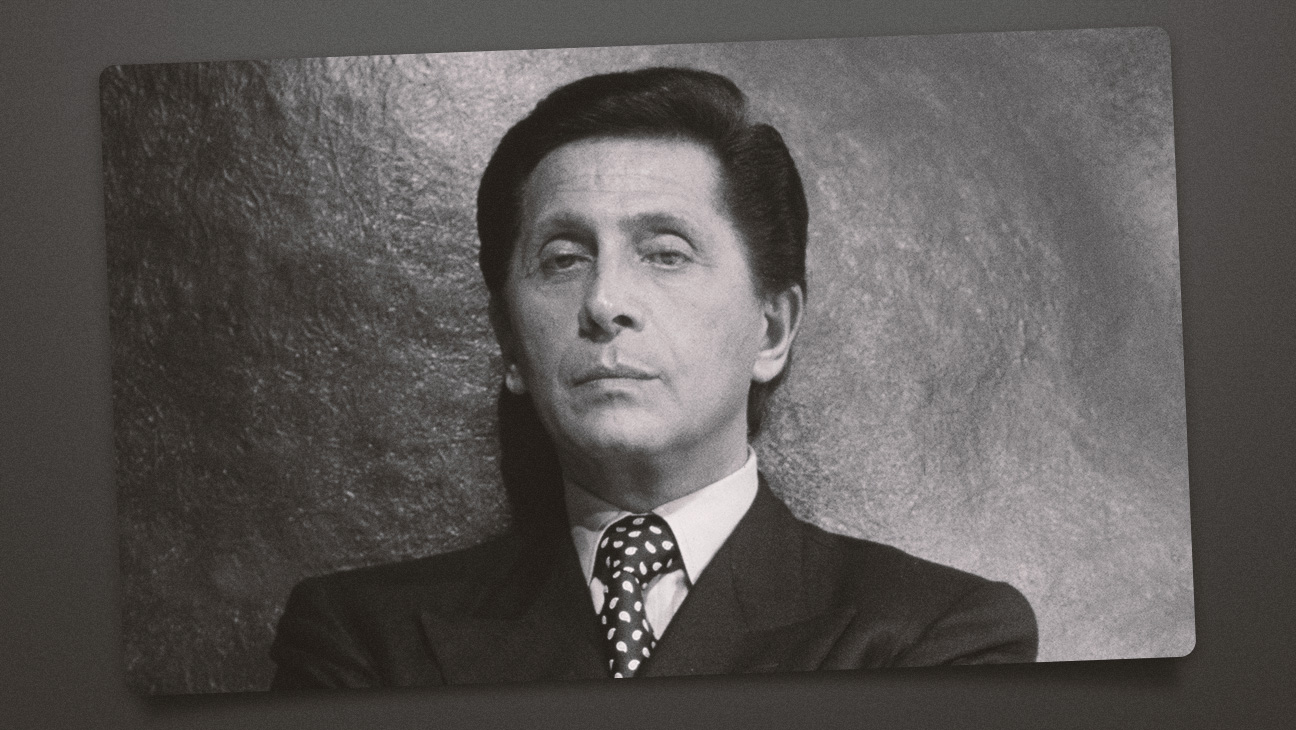


Valentino, the legendary Italian fashion designer who seamlessly blended opulence and high style to create clothes that delighted generations of high-profile women, died Monday at his Rome residence, Women’s Wear Daily reported. He was 93.
Throughout a 48-year career leading his eponymous house, the famed couturier — born Valentino Garavani — was known by his first name alone, one that came to symbolize elevated fashion design that was equal parts luxurious, ultra-feminine and decidedly Italian.
When asked to describe his aesthetic, he characteristically preferred to put the emphasis on the women he dressed. “The first and most important thing is that I try my hardest — with all my passion — to make a woman look beautiful and make dresses that are flattering to her body,” he told Elle magazine in 2007. “A woman must feel like she has a glow.”
That philosophy is undeniably the reason Valentino remained a red-carpet favorite throughout his storied career.
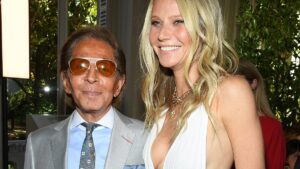
From the founding of his eponymous label in 1960 until his retirement in January 2008, he was known for dressing the world’s most famous women. From Princess Diana to Audrey Hepburn, Crown Princess Marie-Chantal of Greece to Meryl Streep, Oprah Winfrey to Gwyneth Paltrow — whose daughter, Apple, is Valentino’s goddaughter — his history of dressing the world’s best-known women was an integral element of his fame and success for almost a half-century.
Elizabeth Taylor was an early champion of the designer, wearing a Valentino gown to the 1960 premiere of Spartacus in Rome. More than a decade later, he designed a black taffeta gown embellished with lace and ruffles for her attendance at the 1971 Proust Ball, hosted by Marie-Hélène and Baron Guy de Rothschild in Paris, where Taylor famously was photographed in the design by Cecil Beaton.
Valentino designed the star’s wardrobe for the film Night Watch (1973), but having developed a close friendship, their collaborations ultimately focused on looks for Taylor’s personal milestones, including a pair of yellow Valentino gowns she wore for her 1991 wedding to Larry Fortensky and to the Academy Awards in 1993, when she received the Jean Hersholt Humanitarian Award.
Taylor was among the first, but far from the only high-profile woman, who favored Valentino for moments both public and private. Jacqueline Kennedy wore black dresses by Valentino during her year of mourning following John F. Kennedy’s November 1963 assassination; five years later, she wore a two-piece, knee-length ensemble in cream from Valentino’s famed 1968 Collezione Bianca, or “White Collection,” when she married Aristotle Onassis that year.
Another much-photographed design seen on the former first lady was the green one-shoulder caftan-style gown edged in beading that she donned during a 1967 trip to Cambodia. Valentino would reinterpret that famous gown for Jennifer Lopez’s appearance at the 2003 Academy Awards.
Other notable Valentino Oscar night designs included Cate Blanchett’s yellow one-shoulder gown, worn in 2005 when she won her Academy Award for best supporting actress in The Aviator, and a delicate black gown embellished with beading and black lace that Reese Witherspoon sported in 2002 when attending the Oscars for the first time.
However, Valentino’s most celebrated Academy Awards design was seen in 2001, when Julia Roberts accepted the best actress Oscar for Erin Brockovich while wearing a black Valentino gown embellished with wide white satin piping that ran down the center front of the dress and fanned out on its tulle train. An archive piece from a 1992 couture collection, the gown drew raves as the perfect look for Roberts’ triumphant evening.
Valentino called the moment a highlight of his career. “I have to be very sincere, the person that makes me feel very happy, also because [she] chose vintage, was Julia Roberts in Erin Brockovich when she got the Academy Award,” he said during a news conference at the 2008 Venice Film Festival, where a documentary about his life, Valentino: The Last Emperor, premiered. “I was very excited. I was not in Los Angeles, but I saw on television, and I really was excited to see her when she appeared with my dress.”
Valentino Clemente Ludovico Garavani was born on May 11, 1932, in Voghera, Italy, a small Lombardy town located between Milan and Genoa. His first name was chosen by his mother, Teresa, who loved the silent film star Rudolph Valentino, though she could not have known then that her son would grow up to be both adored and surrounded by many of the most famous women in entertainment — or that he was destined to appear in two Hollywood films, both times as himself: The Devil Wears Prada (2006) and Zoolander 2 (2016).
Cinema indeed served as an early influence in Garavani’s life, as he explained in a scene in the documentary. “I was always so attracted by magazines, by films,” he said. “I had a sister, she took me for the first time to see some films, and to me the dream of my life was to see the beautiful ladies of the silver screen. I remember [1941’s] Ziegfeld Girl: Hedy Lamarr, Lana Turner, Judy Garland, Jimmy Stewart. You know for me, to see this sort of beauty, I think from that moment I decide I want to create clothes for ladies.”
Interested in fashion and art in his youth, with illustration emerging as an early passion, Garavani at age 17 enrolled in courses to study fashion sketching at Milan’s Santa Maria Institute, and soon after he moved to Paris to study at the illustrious Ecole des Beaux-Arts.
His talent attracted enough notice to win a design competition, which led to a position with Jean Dessès, among the most celebrated Paris couturiers of the post-World War II era.
Among Garavani’s colleagues at Jean Dessès was designer Guy Laroche, who launched his own label in 1957 and asked Garavani to work for him. Two years later, with financial backing from his father, Garavani presented his own collection in an apartment on Rome’s famed Via Condotti, and in 1960 Maison Valentino was born. (Today, Valentino’s Rome flagship is located just around the corner on Piazza di Spagna, just steps from that original Via Condotti location.)
Also in 1960, Garavani would meet the man who became his longtime partner in both life and business: Giancarlo Giammetti, at the time an architecture student who joined the house of Valentino to run the business side, enabling Garavani to focus on design. The pair became inseparable and were considered among the most glamorous and popular couples in Milan, especially as the Valentino label skyrocketed to success.
The premiere of Federico Fellini’s La Dolce Vita (1960) placed a high-wattage spotlight on the “sweet life” of cosmopolitan Italy, and the duo quickly found themselves within a social circle that included actors Anita Ekberg, Sophia Loren and Marcello Mastroianni.
Garavani and Giammetti likewise exuded their own innate glamour, cutting dashing figures at parties in tailored suits and sporting thick, wavy hair elegantly brushed back. Together they built the Valentino empire, which extended to a glamorous personal life of multiple homes in Rome, New York, Capri and points beyond, as well as an envious art collection and a reputation as jet-setters who often traveled the globe with their beloved dogs.
With Giammetti minding the books, Valentino was free to indulge his creative impulses. From his first collection, he favored the color red, and a specific hue — bright, with the slightest tinge of orange — became essential to the brand’s DNA, with at least one dress in that color in every collection.
“Red is life, passion, love; it’s the cure for sadness,” he said in a 2018 interview with Italian Esquire. “I think that a woman dressed in red, especially in the evening, is splendid. Among the crowd, it’s the perfect image of a heroine.”
For his final collection in 2008, following a spring/summer haute-couture collection teeming in ultra-feminine pastel shades and a bounty of floral details, Valentino honored his favorite color, presenting all 40 models in a finale of identical silk gowns, bias-cut and featuring asymmetrical necklines, and all in Valentino red.
Now, the Pantone Color Institute recognizes that same shade — a blend of 100 percent magenta, 100 percent yellow and 10-percent black — as “Valentino Red.”
He had decided, at the age of 75 and while celebrating the 45th anniversary of his career, that January 2008 was the right time to retire, as he wanted to go out on a high note. Following that final haute-couture collection, Alessandra Facchinetti succeeded Valentino as creative director, but she stayed in the role for only a year, with Maria Grazia Chiuri and Pierpaolo Piccioli, at the time the house’s accessories designers, stepping into a dual role as co-creative directors.
Chiuri departed to become creative director of Dior in 2016, while Piccioli remained with the house until spring 2024, when Alessandro Michele, following an eight-year stint as Gucci’s creative director, took over at Valentino, where he remains today.
Amid the musical chairs that have become the prevailing trend among high-end fashion houses, Valentino was content to explore his passions in retirement. While he and Giammetti ended their romantic relationship in 1972, they remained lifelong business partners and friends, and in 2011 the pair launched the Valentino Garavani Virtual Museum, a detailed, high-tech online exploration of the designer’s archives, while concurrently developing a retrospective exhibition that toured the world.
In 2012, he designed 25 costumes for the New York City Ballet’s Fall Gala, and in 2016, he and Giammetti realized a long-held dream of establishing the Fondazione Valentino Garavani and Giancarlo Giammetti, a Rome-based foundation that raises funds and awareness for a variety of initiatives, from serving the needs of underprivileged children and the elderly to PM23, a hub for cultural programs that opened to the public in May.
Even with his couturier role behind him, Valentino never abstained from his devotion to elegance and joie de vivre; he also never strayed from the love he had for making women feel beautiful.
When in September 2007 he announced his intention to retire the following January, he included in his statement: “Even as a young boy, my passion was to design, and I have been very lucky to be able to do what I have loved all my life,” he said. “There can be few greater gifts than that.”
Read the full article here