




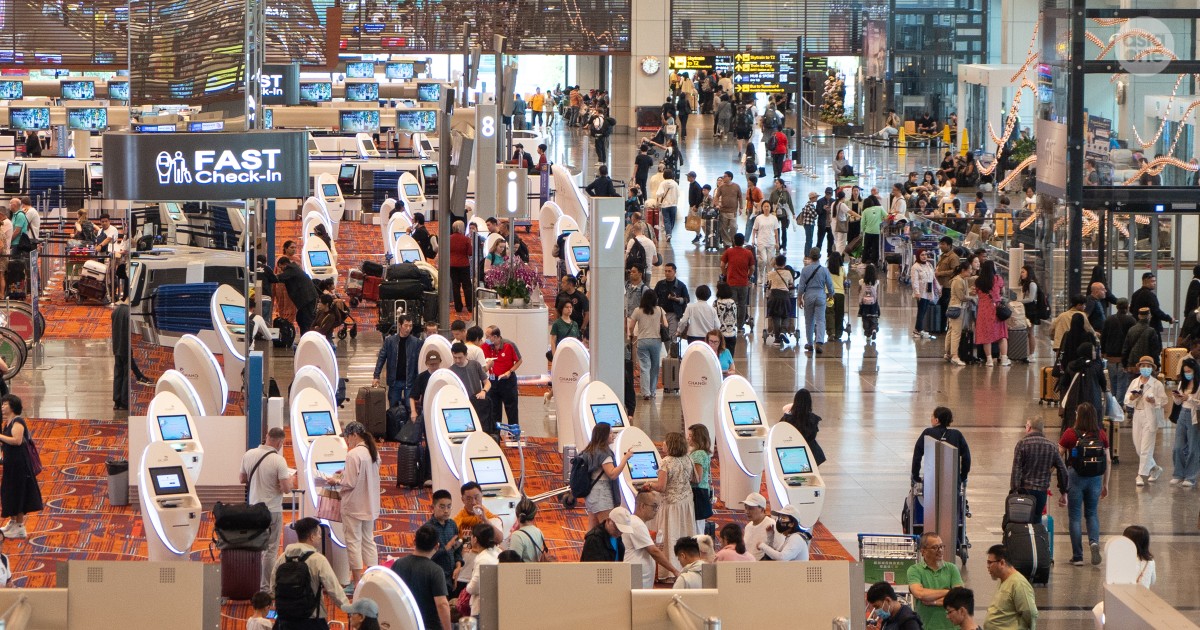


Chinese New Year celebrations are usually rooted in reunion dinners and ‘bai nian’ – visiting friends and family to pay respects and exchange blessings. But recent search trends on online tour agency Booking.com show that more Singaporeans are choosing to spend the holiday overseas instead.
Rather than signalling a break from tradition, these travel patterns point to a shift in how Singaporeans are choosing to celebrate the festive period.
Where Singaporeans are travelling this Chinese New Year
Booking.com took search data made by travellers from Singapore between Oct 1, 2025 to Jan 15, 2026 for check-in dates from Feb 14 to 22 to find the top travel destination of interest.
Here are the top 10 places travellers from Singapore were searching for:
- Singapore
- Tokyo, Japan
- Bangkok, Thailand
- Kuala Lumpur, Malaysia
- Johor Bahru, Malaysia
- Dubai, United Arab Emirates
- Osaka, Japan
- Seoul, South Korea
- New York, U.S.
- Los Angeles, U.S.
The results show a clear preference for short-haul, familiar destinations, with a few long-haul outliers.
The findings are quite similar to AsiaOne’s travel pulse on international travel conducted between Aug to Oct 2025. AsiaOne found that China, Japan, Malaysia, Australia, Thailand, Taiwan, Indonesia, Vietnam and Hong Kong were the top 10 destinations readers were planning on visiting in the next 12 months.
The lack of China, Taiwan and Hong Kong from Booking.com’s list may be tied to one simple reason: many businesses in these places close for two weeks during the Chinese New Year holiday, which could dampen travel plans for tourists.
As for Singapore topping the list of searches, this could be due to the overlap of Chinese New Year with Valentine’s Day in 2026, where couples may be looking for hotels for a romantic staycation getaway.
Regional travel still leads the way
Ultimately, regional travel remains king, with nearby destinations like Malaysia, Thailand, Japan and South Korea appearing on both lists.
Laura Houldsworth, Managing Director, Asia Pacific, of Booking.com shared that these destinations reflect Singaporean travellers’ priority for family-friendly destinations. Family-friendly infrastructure continues to play a key role in destination choice. Using Johor Bahru as an example, Laura highlighted that LEGOLAND, a theme park just 20 minutes from Tuas Checkpoint, consistently remains a key driver for families to travel across the border.
“These destinations consistently appeal to Singapore families, as they offer a balance of flight accessibility, a wide range of accommodation options, and attractions that cater to multiple age groups,” she said.
But three destinations stand out on Booking.com’s list: Dubai, New York, and Los Angeles, which Laura attributes to the longer holiday window that Chinese New Year affords, “particularly when travellers extend the public holidays with annual leave”.
A new era of celebrating CNY
It may seem that Singaporeans are trading traditions for plane tickets, but Laura says that it’s just a shift in how traditions are being practised. “Chinese New Year continues to revolve around family, but families today are showing greater flexibility in where and how they come together during the festive period,” commented Laura.
This is reflected in Booking.com’s Gen.Voyage! white paper that researched intergenerational travel in Asia Pacific. “Reunions and milestone moments remain core drivers of travel,” said Laura, who also shared that their research found that 27 per cent of APAC families travel specifically for reunions or special occasions.
While the setting of Chinese New Year celebrations may be changing, the spirit behind them remains firmly intact. As longer holiday windows give Singaporeans more flexibility to travel, families are finding new ways to gather, reconnect, and mark the occasion together, whether at home or abroad.
“Seen through this lens, travel is not replacing traditions, but reshaping them, giving families new ways to stay connected and celebrate together in an increasingly mobile and geographically dispersed world,” remarked Laura.
raewyn.koh@asiaone.com
Read the full article here