






During a meal service at New York-based Singapore Social — which is unrelated with the controversial Netflix show of the same name — co-founder Nur Suriane spotted a Singaporean shedding a tear while eating the restaurant’s chicken rice.
“I asked him if he was okay and if the food was too spicy, and he told me: ‘No, I was homesick. Thank you so much for opening here’,” she recounted.
28-year-old Suriane recently launched Singapore Social in New York’s East Village with her co-founder and co-owner, Jonathan Lim, 38, on May 2.
During an interview with AsiaOne on May 22, the pair shared that the decision was a spontaneous one.
“It was almost an overnight vision. We felt that Singaporean and Southeast Asian food is underrated in New York, especially compared to other major Asian cuisines,” Suriane explained.
“So we saw an opportunity to represent these flavours authentically, while we create fun and approachable dining experiences for New Yorkers.”
Jonathan, who is the Executive Chef of Singapore Social and visits New York frequently, chimed in to say that many of the eateries selling Singapore-style dishes there are considered Malaysian restaurants.
The name Singapore Social came about because the duo wanted to represent Singapore food at heart while including dishes from the country’s neighbours, Malaysia and Indonesia.
“It has nothing to do with the Netflix series. I personally only learned about the Netflix series after we came up with the name,” Suriane shared with a laugh.
The city that never sleeps
Prior to opening Singapore Social, Suriane and Jonathan, who are both Singaporean, worked together at Roberta’s Singapore, a local outpost of the popular pizzeria that’s first founded in Brooklyn, New York.
Jonathan was also part of Roberta’s opening team when the brand launched its first store in Singapore in 2022.
“After bringing a little bit of New York to Singapore through Roberta’s, we thought it was finally time to bring a little bit of Singapore to New York with Singapore Social,” said Suriane.
They also chose to open the brand in New York because it has many similarities to sunny Singapore.
“New York is a melting pot. There are so many people in New York with different cultures, which is the same as Singapore,” said Jonathan.
“There’s a lot of races and different kinds of foods. And New Yorkers, they are quite accepting of new foods, they’re very willing to try.”
The pair decided to open Singapore Social in the East Village, despite it being a pricier location, because they loved the neighbourhood’s energy and demographic.
“It’s a very cool place. There are a lot of young people, as well as crowds from the nearby New York University (NYU),” said Jonathan.
He added that their main target group was the NYU students, particularly those from Asia, because he and Suriane understand that being so far away from home can get lonely.
“Those who study abroad may or may not have a lot of friends at first and they may be spending a lot of time eating by themselves. So, we wanted to make Singapore Social a safe space where these students can come in, get food they’re familiar with, and maybe along the way, get to know other Singaporeans and Malaysians,” he explained.
The conceptualisation of Singapore Social — including the logo design, menu and merchandise — started back in December 2025 when the pair first had the idea.
They later secured the restaurant unit that same month without physically viewing the space.
“We knew the [East Village] area well and everything can be done online nowadays, you can do Zoom meetings, you can call. And I’ve been to the neighbourhood and know it well,” Jonathan explained.
He then flew down at the end of February to manage the business, while Suriane joined him in March.
After two months of preparations, Singapore Social had its soft opening on April 18 and grand opening on May 2.
The challenges of opening an F&B business overseas
While the response to Singapore Social has been fantastic, Suriane and Jonathan were faced with numerous challenges while launching the business.
“It is very, very difficult to open a restaurant in New York,” said Jonathan, who declined to share how much money they pumped into the business.
He explained that from contractors to suppliers, they had to source everything from scratch.
“It’s not like Singapore, when you are in the F&B industry and we have our own contractors. This was not like opening another new outlet, it was about going overseas and doing a whole new project.”
Suriane added that hiring service staff in New York was also more difficult compared to Singapore because the work styles were different.
“It’s definitely easier in Singapore because we know how things work as compared to New York. Everything here is new to us,” she said.
And while it was easier for them to hire kitchen staff because there were many people looking for kitchen jobs, it came with its own set of challenges.
“Because although they are New Yorkers, some of them are from Colombia and Mexico, and the English menu is a challenge for them,” Jonathan shared.
While he tries to write his recipes as simply as possible, some points get lost in translation.
He added that it is also difficult to teach them how to cook things like sambal.
“It’s not just teaching them on paper. It is a technique that they need to know when they fry off sambal,” said Jonathan.
“I really need to watch over them and make sure that the heat is not too strong so it doesn’t burn. The moment it is burned, the whole pot of sambal is wasted.”
Currently, their team of service and kitchen staff consists entirely of New Yorkers.
But they also have a team of 10 Singaporeans, including themselves, who will fly into New York to oversee restaurant operations and do quality checks on a rotational basis.
While they are still finalising the schedule, Jonathan shared that the ideal situation would be to always have a Singaporean there taking care of the restaurant for one to two months.
“Our food has to have a Singaporean touch so we must make sure the recipe isn’t changed and the technique has to be the Singaporean way,” he said.
The biggest struggle for Jonathan was sourcing for local ingredients.
Apart from the coffee and tea, which are imported from Singapore, the duo tried their best to find as many ingredients as possible from New York.
“It was very hard to source local ingredients. Thankfully, I found two suppliers who do that. We also had to use some ingredient substitutes,” Jonathan said.
For instance, they were unable to source Singapore dried chili in New York, and could only find chillies from Thailand and China.
“Calamansi is something we take for granted. I cannot buy calamansi in New York,” said Jonathan, adding that he substitutes this with vinegar and lime.
And while there are pandan leaves, these are only available in frozen form and are not as fragrant as the ones found in Singapore. So, to make up for this, they have to use more pandan in each recipe.
This in turn has made coming up with recipes a lot harder.
“I know the recipe works. But tasting every component by itself and trying to think of a substitution is challenging,” shared Jonathan.
What’s on the menu?
When conceptualising the menu for Singapore Social, Jonathan and Suriane wanted the countries — Singapore, Malaysia and Indonesia — to be represented by at least one dish each.
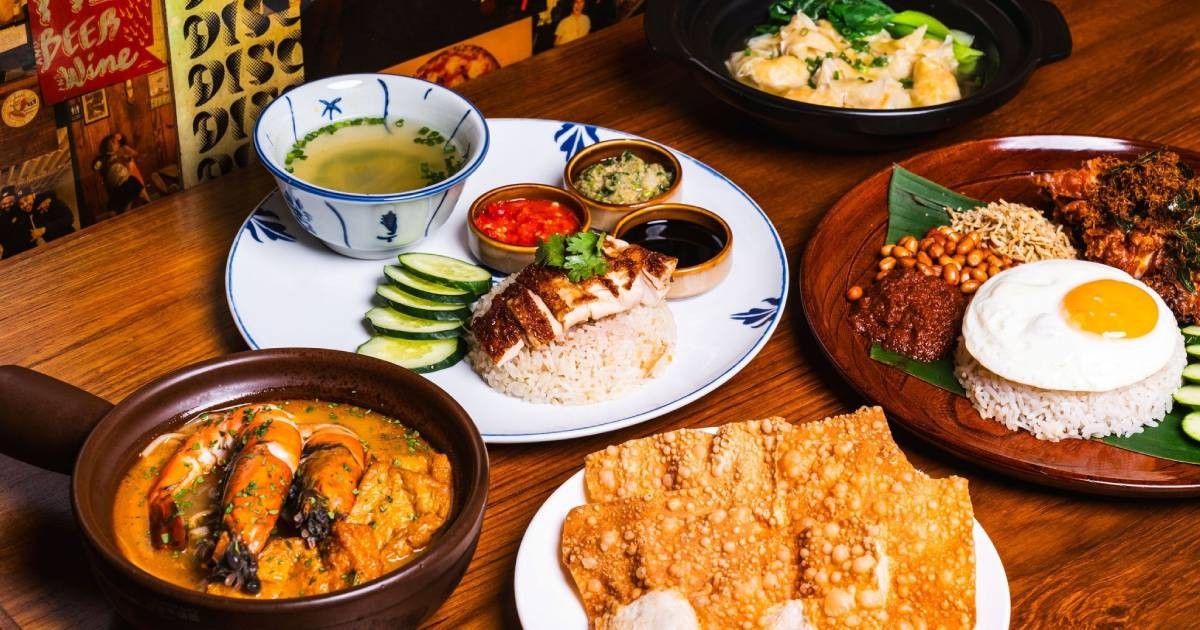
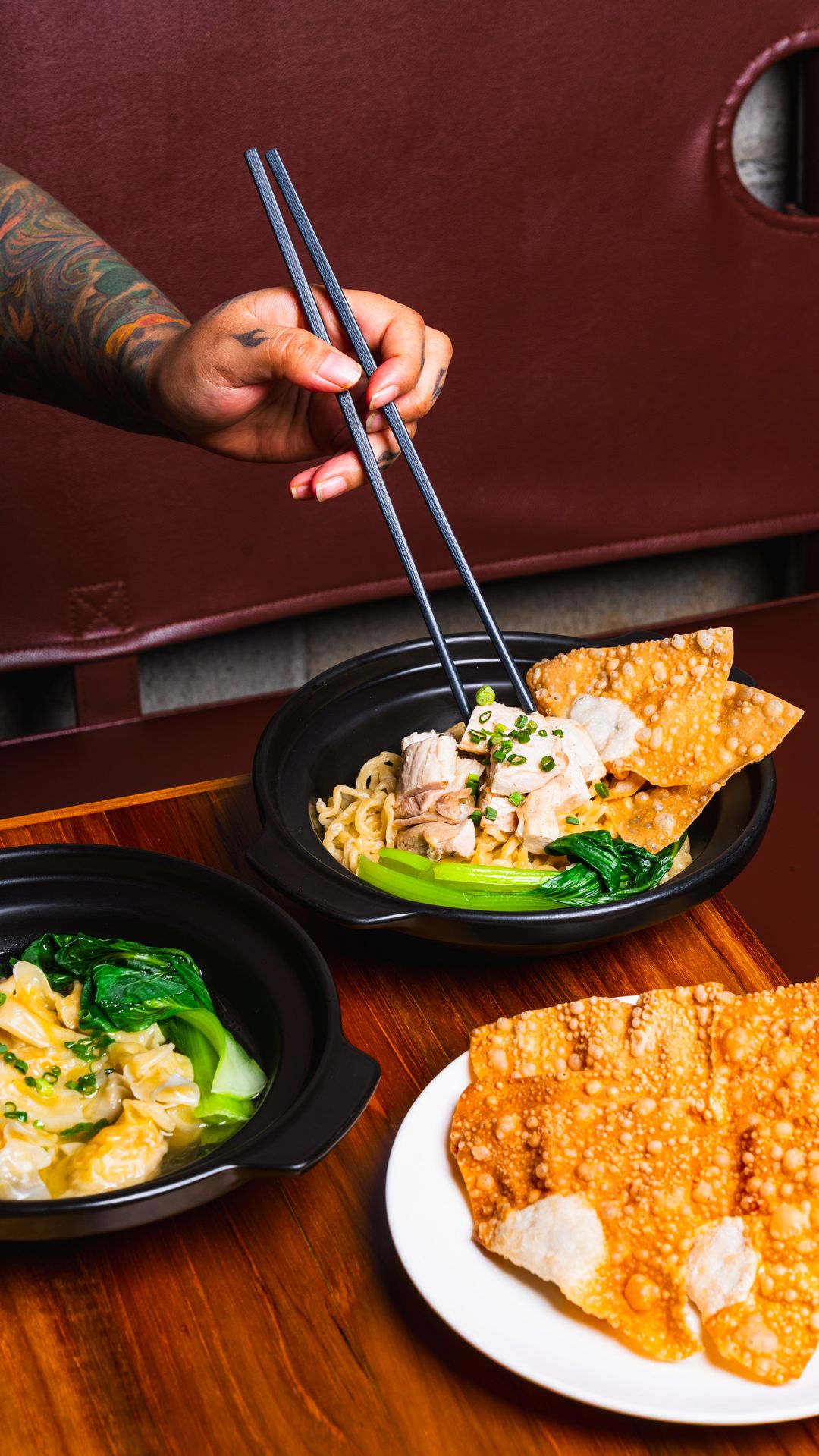
Singapore’s dish is Roasted Chicken Rice (US$23; S$29), Malaysia’s includes Nasi Lemak Ayam Berempah (US$25), Nasi Lemak Oxtail Rendang (US$34), and Nasi Lemak Sambal Goreng (US$18) and Indonesia’s is Bakmi Keriting (US$18).
There are also other familiar items like Kaya Toast (US$6) and Laksa (US$24) on the menu. And for drinks, kopi and teh in their various permutations (US$4-US$6) are available.
Jonathan shared that they didn’t want to have a very big menu for Singapore Social at the start.
“Because it was our first time working in New York, we didn’t know the culture yet. So we started with something small, work on the tastes and once the staff have settled down and understand the pace and situation, we will slowly teach them and expand the menu. So that is why I wanted to just roll with the basics,” he said.

He and Suriane also wanted the menu to stay true to its roots.
“The food is more labour intensive because we make everything from scratch. For example, our Pandan Chiffon Cake is homemade, our sambal, our kaya even, everything is made in-house. We don’t buy it from stores and we hope to maintain it that way,” Suriane shared.
To ensure their Malaysian and Indonesian dishes were as authentic as they could make them, they did plenty of R&D.
For instance, to perfect their Bakmi Keriting (US$18), they flew to Jakarta for a day to research and do taste tests.
“We went to a lot of bak mi places just to understand the technique, the textures, the flavours.
“We had a ‘bak mi coma’ after that one day. It was a lot of carbs,” Suriane recounted with a laugh, adding that they visited seven different bak mi spots.
Their efforts have paid off as well because many diners have told the pair that their Bakmi Keriting brings them back to Indonesia.
“We were so humbled by the feedback,” Suriane said.
Jonathan, who is currently back in Singapore, shared that the next time he is back in New York, he hopes to introduce new menu items such as black and white carrot cake.
“It is not difficult to make and we have all the ingredients,” he said.
There have also been requests for chilli crab, which Jonathan said is a challenge because crab in New York is seasonal.
On top of that, only Dungeness crab is available New York, which doesn’t work as well with the recipe as Sri Lankan crab.
So far, Singapore Social’s customers are mostly Singaporeans, Malaysians and Indonesians, but Jonathan and Suriane do see more New Yorkers come in on the weekends.
New Yorkers who were previously based in Singapore have also visited the restaurant and praised their food.
“New Yorkers mostly eat bread and bagels. So when they tasted our food, it’s like a burst of flavour for them,” Suriane shared.
“Everyone has been so accepting. It’s really interesting and exciting when we see their reactions after they taste their first bite of our food.”
If all things go well, the duo plan to open more Singapore Social outlets in New York, Toronto or Los Angeles.
It’s been a tiring few months for them because they are currently working on opening Roberta’s fourth branch in Singapore, all while running Singapore Social.
But the experience has been rewarding.
“It’s been satisfying for me,” said Suriane. “You don’t feel tired when you do something you’re passionate about, to be honest. That’s why it makes me want to do more, it never ends, it’s an ongoing thing every time.”
[[nid:676950]]
melissateo@asiaone.com
Read the full article here