






This article is produced in partnership with Republic Polytechnic as part of its Diploma in Mass Communication’s Media Practicum module.
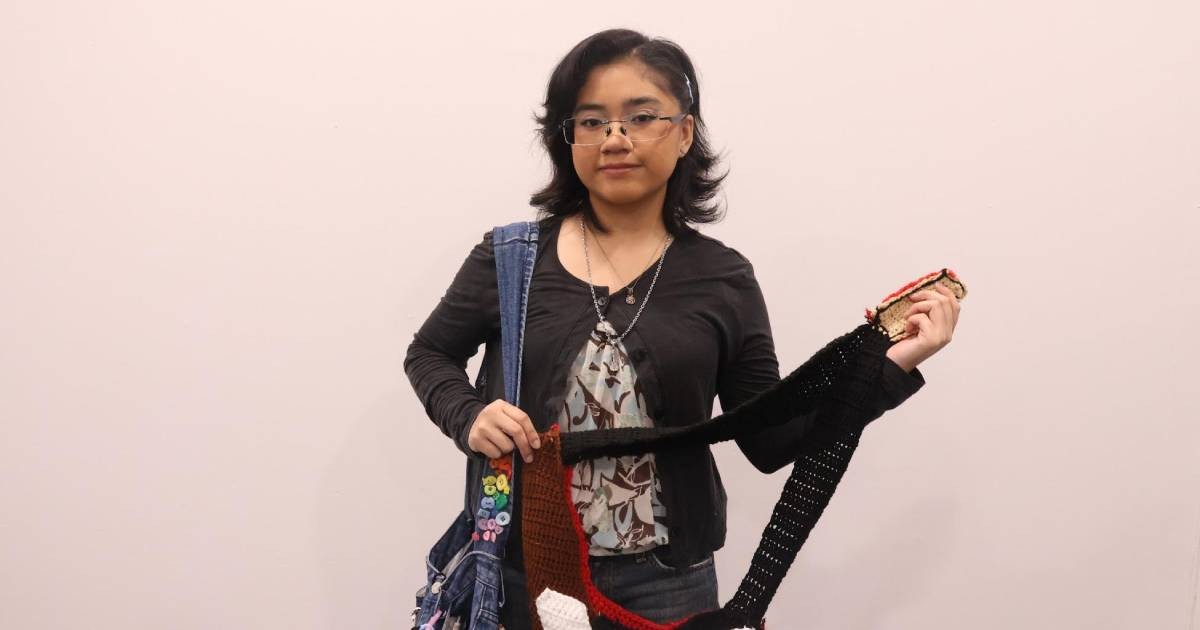
In a world where cheap clothing is just a tap away, Nurul Fadhilah Kamal is choosing to create and recycle instead of overbuying.
A pair of sharp fabric scissors, a frayed denim mini skirt, an old sewing machine passed down from her grandmother, some needles, and her Pinterest board. That’s all the 21-year-old Singapore Polytechnic student needed to sew together a bag she proudly calls her own.
In 2024, the National Environment Agency (NEA) reported that 206,000 tonnes of clothing and textiles were discarded, and only 3 per cent (7,000 tonnes) of that figure were recycled.
Against that backdrop, Fadhilah’s story stands out.
Through upcycling and crafting her own pieces from scratch, she challenges the fast-fashion culture.
Finding beauty in the unwanted
Fadhilah’s grandmother kept noticing the same bolster falling apart at the seams, threadbare after years of use.
Feeling frustrated, she turned to her granddaughter: “Can you help me sew? I cannot see clearly anymore.”
That simple request sparked the beginning of Fadhilah’s quiet foray into sewing and crafting.
Sitting cross-legged in the corner of her room, surrounded by spools of thread and faded fabric, she found comfort in the small rhythm of a needle passing through cloth.
Fadhilah’s first proper creation was a crocheted bag for Hari Raya.
“I was so proud of it… and it was so cute. It’s just that it was too long, so when I put things inside, it just sank in the middle,” she laughs, recalling the floppy baguette-shaped bag she designed herself.
Even if it wasn’t perfect, it was hers.
Encouraged by that first attempt, accompanied by the nagging of her parents and grandmother to donate her underused clothes, she began upcycling clothes from her own wardrobe and experimenting with old fabric scraps.
The bedroom that she shares with her grandmother and older sister slowly transformed into a mini workshop, with endless threads tangled beside a patchwork of materials waiting to be reborn.
Much of her inspiration comes from TikTok creator I_ThriftFlip.
“Most of her stuff is very grungy… It’s very alternative. It’s different from everywhere else,” Fadhilah shares.
She browses through racks of clothing at Refash, thrift stores, and even Telegram channels selling pre-loved gems to find what fits her vision best.
Perfecting her craft
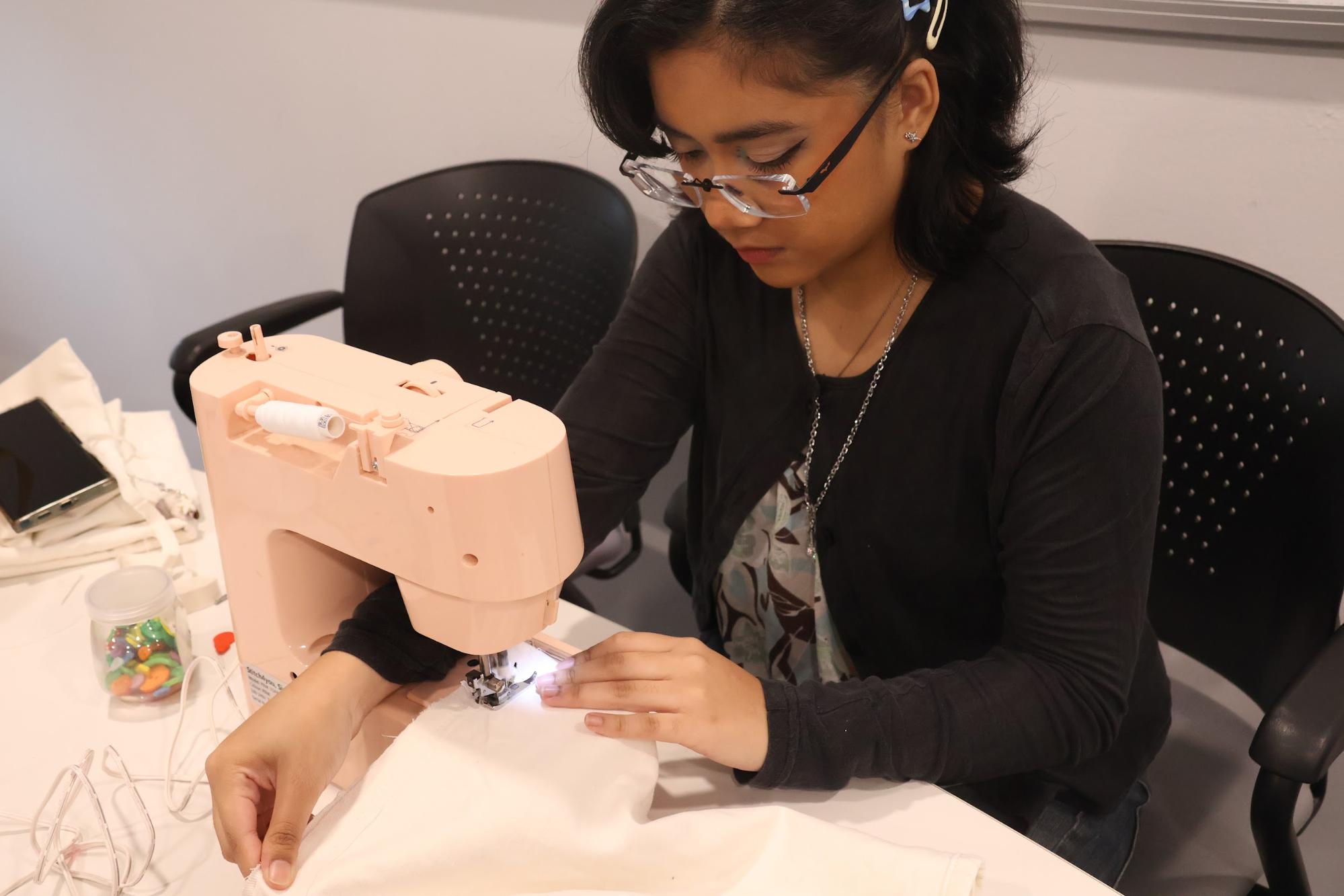

For Fadhilah, creativity has always been familiar yet uncertain.
“I’m crafty in terms of pen, paper, and stuff like that. I just don’t feel crafty enough when it comes to making my own designs or anything,” she shares.
Getting to a point where she’s comfortable and confident in her own skills was not easy. She started pursuing art at a relatively late age, something that often made her feel a few steps behind.
Those feelings of self-doubt soon grew heavier. The pressure to “catch up” began to chip away at her joy for designing, leading to burnout, which she describes as an “art block”.
“I think that I beat myself down a lot for not being creative enough when I know that I am creative,” Fadhilah admits.
For her, perfecting her craft isn’t just about improving technique; it’s about practising a slower, more mindful way of making and owning clothes.
Fadhilah often gives her pieces away because it warms her heart to hear compliments about her work.
“When you give someone a gift, they get so happy when you say, ‘Hey, this thing reminds me of you.’ I want to give people that feeling when giving them my crafts,” she beams.
There’s tenderness in the way she talks about her creations, not as objects, but as vessels of her hard work and love.
“One day, I’d love to sell my creations, but giving [them] to friends and family is very dear to me.”
Fadhilah isn’t in a rush to turn her hobby into a business. She prefers to create without the stress of the dollars and cents.
When asked what she would say to others starting their creative journey, she keeps it simple: “Don’t give up. It’s okay to take breaks, and it’s okay to ask for opinions or validation.”
The hidden costs of overconsumption
As thrifting grows trendy, circular fashion social enterprise Cloop’s co-founder, Jasmine Tuan, reminds us that overconsumption remains “very real”.
Jasmine sees the aftermath of overconsumption every week. Her team sorts through one tonne of clothing weekly from three Cloop bins, which only accept items in clean and good condition. Their recycling partner also handles 60 tonnes from over 450 bins for textile recycling across Singapore.
“We will have donations pile up like a mountain,” Jasmine says.
Some thrifted items are products of fast fashion, while others may be a marketing tactic used to attract customers to “shop green”.
“You must be wise about it. As a wise consumer, you research, right? If you feel something is suspicious, don’t buy,” Jasmine advises.
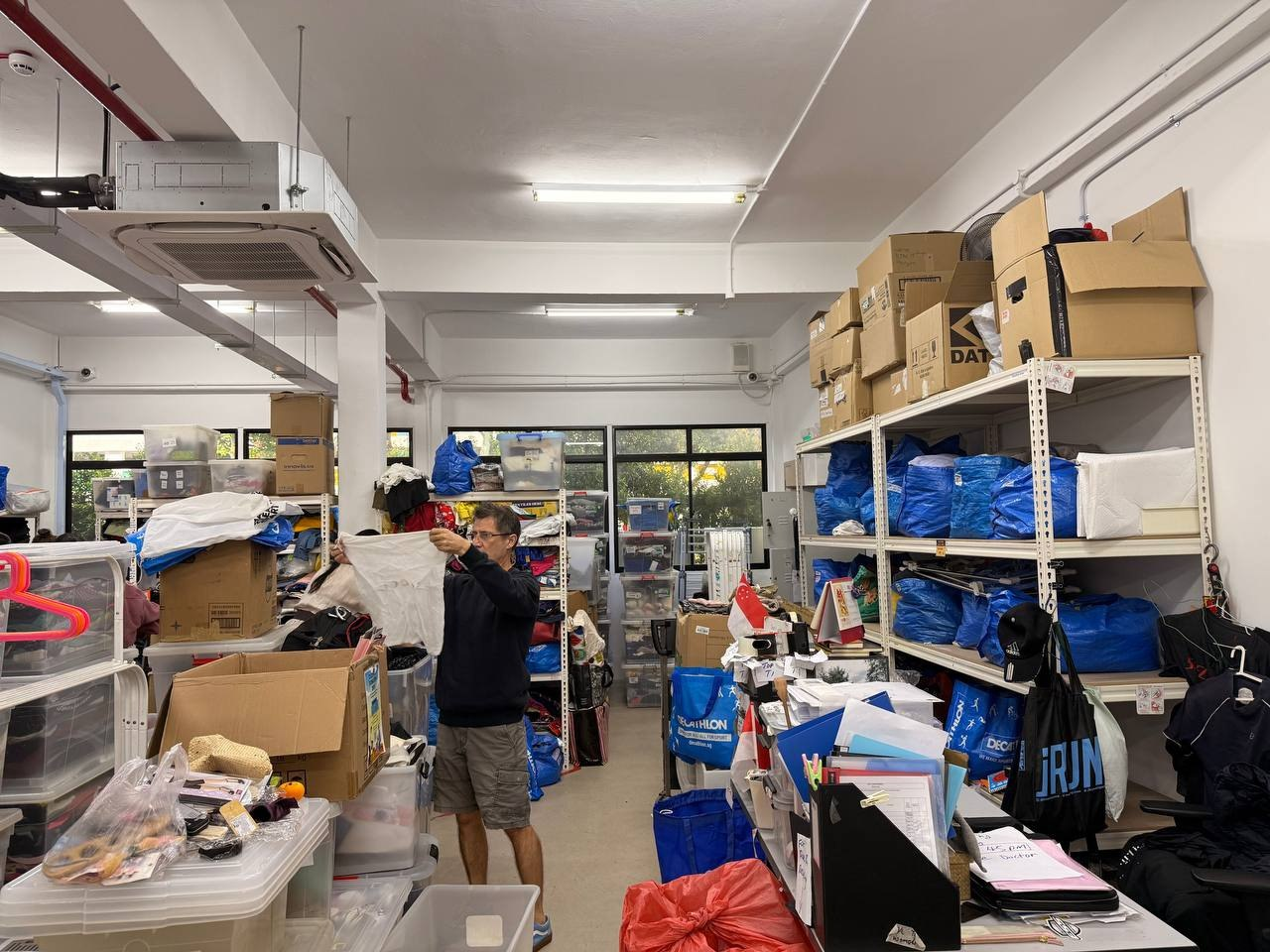

According to a documentary by CNA, Singaporeans buy 34 new clothing items and throw away 27 every year, often after a few wears.
Textile waste increased by over 60 per cent between 2008 and 2016, based on NEA statistics, showing how quickly clothes are bought and discarded.
Behind these piles is an industry built on speed and microtrends. Fast-fashion companies release thousands of new styles daily, driven by algorithms that track online behaviour.
“We lost connection with how things are made, where they are from, and who put them together,” Jasmine says.
She believes the solution starts with slowing down. “If we stop feeding the monster, it will die,” she says.
[[nid:730562]]
editor@asiaone.com
Read the full article here