




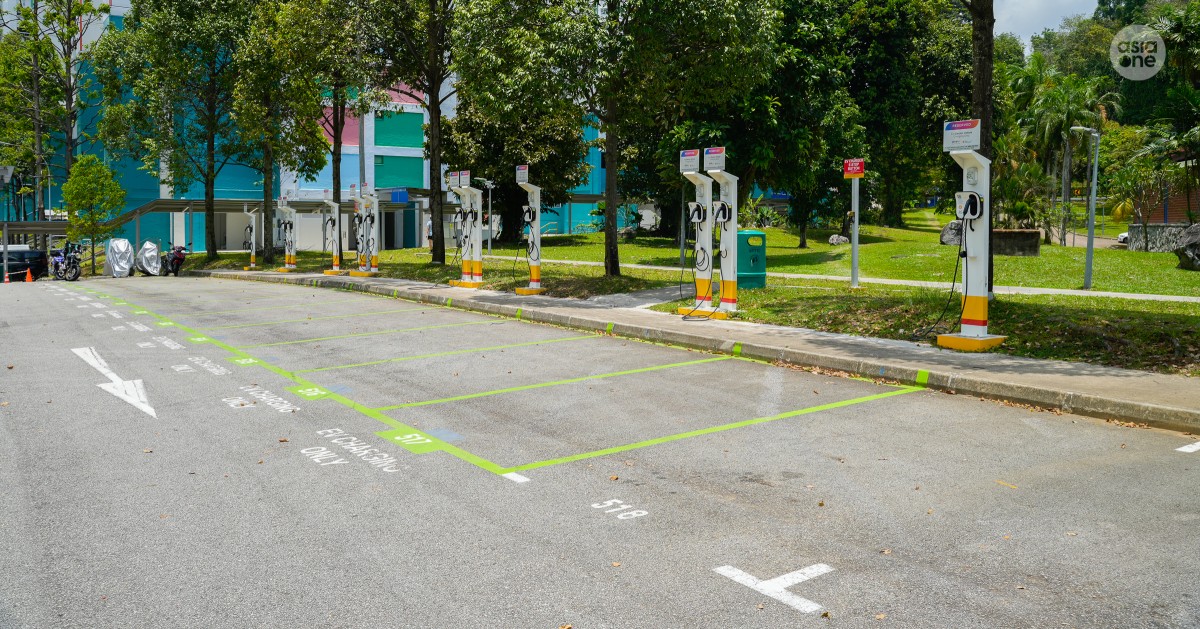


As Singapore accelerates toward its goal of 60,000 EV charging points by 2030, the technology under the hood and inside the charging pile is evolving at breakneck speed.
For years, the industry relied on TR 25 (Technical Reference 25) as the baseline for safety.
However, as of July 2026, the industry has fully transitioned to SS 722:2022 (Singapore Standard 722).
If you are an EV owner, a condo resident, or a business owner looking to install a charger, SS 722 isn’t just a technical document it is the regulatory framework that ensures your car charges safely, your building’s grid remains stable, and your vehicle is ready for the Vehicle-to-Grid (V2G) future.
From TR 25 to SS 722: Why the change?
When TR 25 was first introduced in 2010, EVs were a rarity on our roads. It was a “technical reference” designed as a starting point for basic electrical safety.
By 2022, the arrival of high-power DC fast chargers (up to 350kW) and the need for massive fleet management meant that TR 25 was no longer sufficient.
SS 722:2022 was developed by Enterprise Singapore (EnterpriseSG), the Land Transport Authority (LTA), and industry experts to bring Singapore in line with the latest international standards (IEC 61851). It shifts the focus from simple power delivery to intelligent energy management.
The 3 pillars of the SS 722 standard
Pillar A: Enhanced Electrical Safety
In Singapore’s humid, tropical environment, heat is the primary enemy of electrical systems. SS 722 introduces:
- Mandatory Thermal Sensing: Chargers must be able to detect overheating at the plug/socket interface and throttle power before a hazard occurs.
- Advanced RCD Requirements: Mandates specific Type B RCDs that can detect both AC and DC leakage currents. This is critical because EV batteries operate on DC, and a standard home RCD may not trip during a DC fault.
Mandatory Thermal Sensing: Chargers must be able to detect overheating at the plug/socket interface and throttle power before a hazard occurs.
Advanced RCD Requirements: Mandates specific Type B RCDs that can detect both AC and DC leakage currents. This is critical because EV batteries operate on DC, and a standard home RCD may not trip during a DC fault.
Pillar B: Smart Charging & Load Management
If 500 EVs in one HDB car park all began charging at 7:00 PM, the local transformer could fail.
- Load Balancing: SS 722 requires chargers to support communication protocols (like OCPP) that allow for dynamic load management. This allows chargers to “slow down” during peak building demand and “speed up” late at night when the grid is underutilized.
Load Balancing: SS 722 requires chargers to support communication protocols (like OCPP) that allow for dynamic load management. This allows chargers to “slow down” during peak building demand and “speed up” late at night when the grid is underutilized.
Pillar C: Bidirectional Charging (V2G/V2X)
SS 722 prepares Singapore for a future where your EV battery acts as a “PowerBank” for the nation. Bidirectional charging allows vehicles to sell energy back to the grid during peak hours when prices are high, helping to balance national energy demand.
What SS 722 means for you
- For EV Owners: Peace of mind. It ensures that any “SS 722 Compliant” charger won’t damage your car’s expensive Battery Management System (BMS) or pose a risk to your home.
- For Condo & Landed Owners: If you are installing a private charger, your Licensed Electrical Worker (LEW) must certify it to SS 722. Avoid “grey market” chargers; if they aren’t compliant, your insurance claim for a fire could be rejected.
- For Property Managers (MCSTs): SS 722 is your legal shield, ensuring that third-party charging operators do not compromise the building’s electrical infrastructure.
For EV Owners: Peace of mind. It ensures that any “SS 722 Compliant” charger won’t damage your car’s expensive Battery Management System (BMS) or pose a risk to your home.
For Condo & Landed Owners: If you are installing a private charger, your Licensed Electrical Worker (LEW) must certify it to SS 722. Avoid “grey market” chargers; if they aren’t compliant, your insurance claim for a fire could be rejected.
For Property Managers (MCSTs): SS 722 is your legal shield, ensuring that third-party charging operators do not compromise the building’s electrical infrastructure.
Technical breakdown: AC versus DC under SS 722
| Feature | AC charging (SS 722) | DC charging (SS 722) |
| Typical Power | 7.4kW / 11kW / 22kW | 50kW to 350kW |
| Socket Type | Type 2 (Mandatory) | CCS 2 (Mandatory) |
| Safety Device | Type B RCD or 6mA RDC-DD | Advanced Insulation Monitoring |
| Best For | Overnight / Residential | Rapid “Top-ups” / Public Hubs |
Future-proofing Singapore’s roads
The SS 722 charging standard is the foundation of a safe, intelligent energy network. By enforcing strict safety protocols and mandating smart grid communication, Singapore is ensuring the EV transition is permanent and sustainable.
Whether you are charging a BYD at an HDB hub or a Tesla at a Supercharger, SS 722 is the silent guardian keeping you and your property safe.
FAQ: Frequently asked questions about SS 722
Q: Is my old TR 25 charger now illegal?
A: No. Existing chargers are “grandfathered” in. However, any new installations or major repairs must now meet SS 722 standards to be legally certified.
Q: Can I install a non-SS 722 charger at my landed house?
A: It is highly discouraged. An LEW will likely refuse to certify it, and you may face significant issues with property insurance claims and LTA compliance.
Q: How do I know if a public charger is SS 722 compliant?
A: All major providers in Singapore (SP Group, Shell, Charge+, CDG Engie, etc.) must adhere to SS 722 to operate legally.
[[nid:741023]]
This article was first published in Motorist.
Read the full article here