




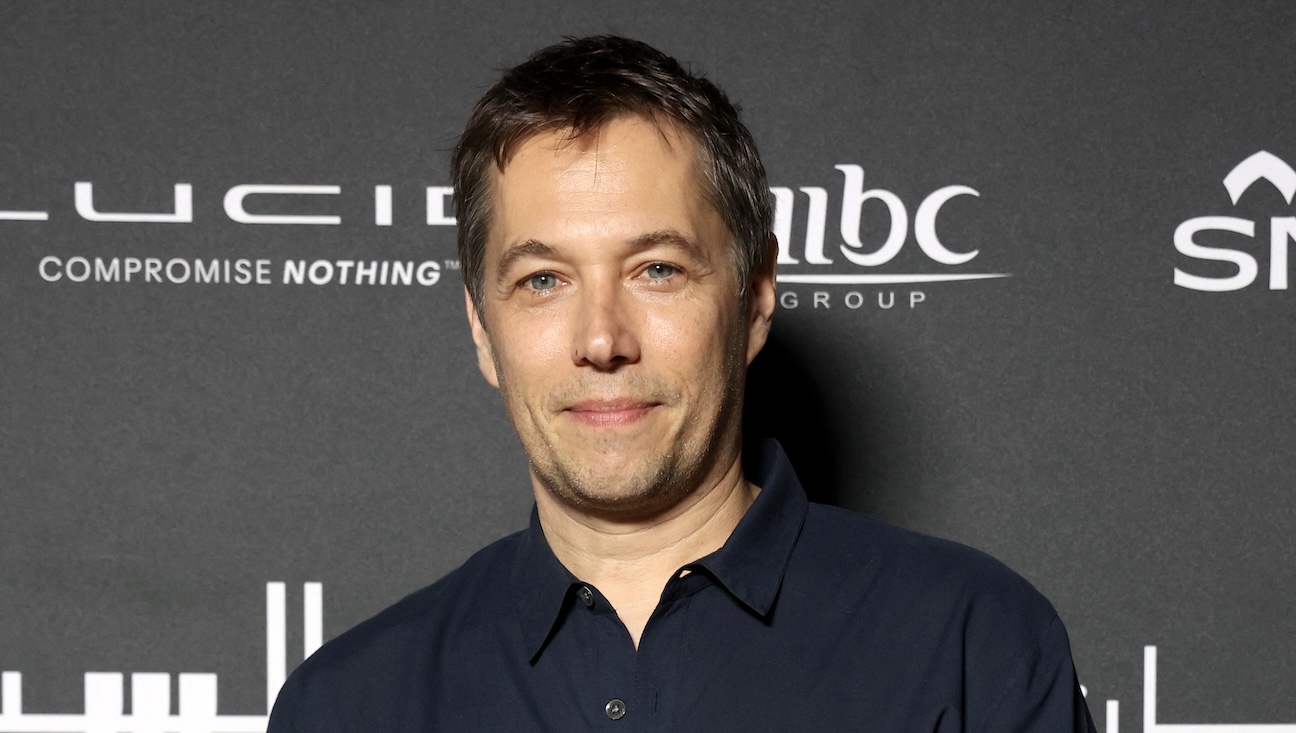


Multi-Oscar winner Sean Baker has some straightforward structural advice for how the film industry should respond to Netflix’s seismic acquisition of Warner Bros.
“We should actually be expanding theatrical windows, not shortening them,” Baker said Sunday during a public appearance at Saudi Arabia’s Red Sea International Film Festival, where he is serving as head of the event’s competition jury this week.
“I mean, you can’t wait an extra three months to get your streaming money or your VOD money?” he added. “Filmmakers have to put our foot down.”
Baker appeared at a packed career conversation event in Jeddah on Sunday night, drawing an enthusiastic crowd of festival attendees and regional filmmakers.
The director was responding to a moderator’s question about how he thought the Netflix–Warner Bros. deal might affect the future of the movie business and what support was necessary for theatrical filmgoing. He declined to comment directly on the acquisition, saying he didn’t yet know the details of Netflix’s plan or “how the deal is going to play out.” But he was unambiguous about the importance of movies getting a healthy run on big screens.
“When you’re going directly to streaming, or day-and-date, it diminishes the importance of a film,” he said. “The theatrical experience elevates that importance. The way you present it to the world is a very important thing.”
Baker said he intends to insist on an exclusive 100-day theatrical window for the distribution of his next movie, suggesting other directors should do the same.
“That’s a little bit over three months, and I think that feels like a good amount at this moment,” he said.
The filmmaker also suggested that film lovers shouldn’t take the existence of movie screens for granted.
“We have to actually support it. Audiences have to be reminded that they will lose their theaters if they don’t go,” he urged.
Netflix’s planned $72 billion takeover of Warner Bros. has sent shockwaves through Hollywood, promising to consolidate vast industry power under a single streaming giant. Following co-CEO Ted Sarandos’ recent dismissive comments about the value of theatrical windows — in April, he called movie theaters “an outmoded idea” — the move has raised urgent questions about the future of the collective big-screen experience and how traditional Hollywood businesses will function in the shadow of a vertically integrated streamer of such immense scale.
Despite the widespread gloom in the industry about what Netflix’s swallowing of Warner Bros. might portend for cinema, Baker said he’s feeling hopeful about the form’s future. He noted that Anora, his four-time Oscar winner, drew its biggest audience among Gen Z — contradicting recent assumptions about young people’s lack of interest in moviegoing.
“It’s just not true,” he added. “In L.A., when I go to movies, it’s usually Gen Z that I see. I love that younger people are seeing the value in a communal experience — and also one in which their focus is entirely on the film and not being distracted by everything else in the room.”
Baker, who is widely viewed as an indie-cinema hero for his consistently low-budget, auteurist approach, also said he has no intention of changing the way he works in the wake of Anora’s historic critical and commercial success earlier this year. The film finished its theatrical run with a worldwide box office total of about $57.4 million, including roughly $20.5 million domestically and $36.9 million internationally.
“The opportunities are there — whether I take them or not, that’s the question,” he said when asked whether he was seeing more generous financing offers as a newly minted Oscar recipient.
While acknowledging that some of his filmmaker friends truly need large budgets to tell the stories they want to tell, he said he didn’t expect to “go for the $150 million studio thing.”
Instead, Baker said he plans to return to working at roughly the same scale as his previous feature, which was famously made for just $6 million.
“We got to a place with Anora where I was working with such an incredible team that gave it their all and believed in the guerrilla way of making a film,” he said. “And the outcome was incredible, so why not just try to repeat that?”
Read the full article here