


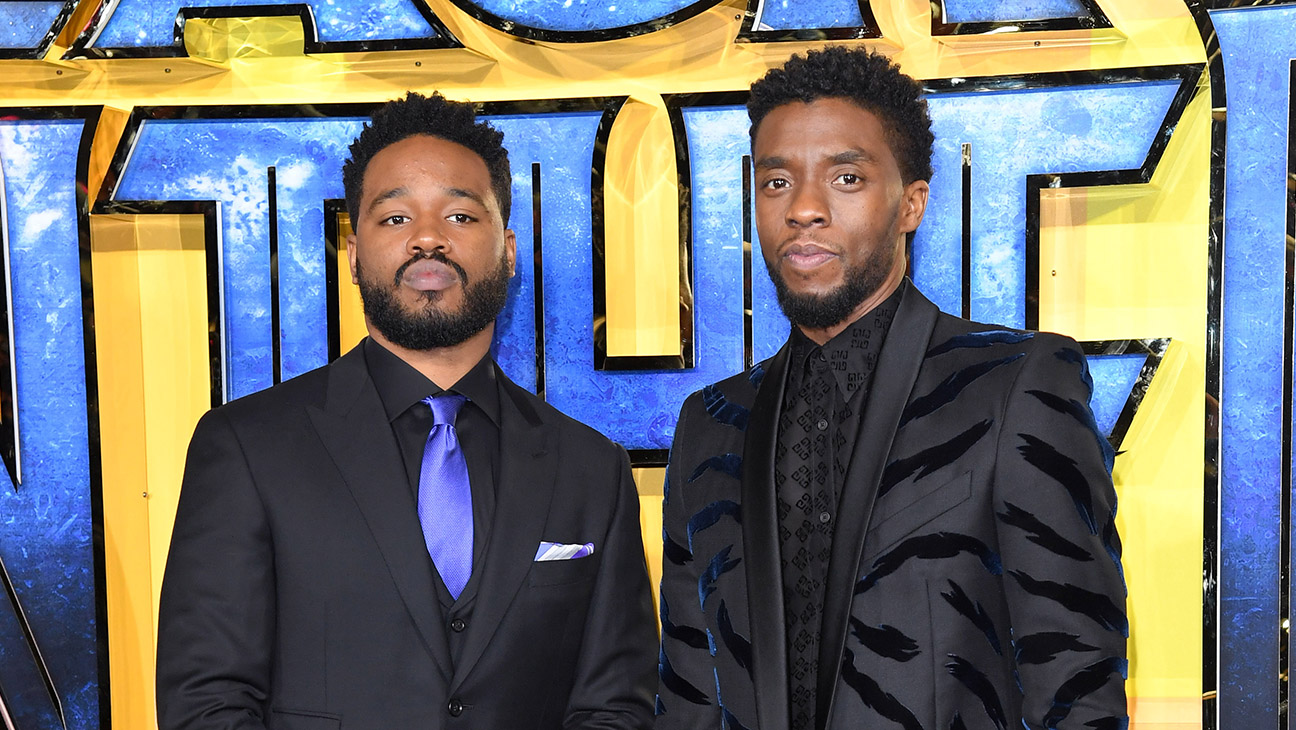


Ryan Coogler’s first meeting with Black Panther star Chadwick Boseman was a literally a surprise. “I was doing press for Creed. And he kinda pulled up, he snuck in, and we sat, and we were feeling each other out,” the Sinners filmmaker recently recalled to The Hollywood Reporter.
It was November 2015, just days before Creed’s Thanksgiving release, and there were reports that talks had cooled between the Bay Area filmmaker and Marvel Studios about directing Black Panther. Even so, it seemed Boseman wanted to get to know the filmmaker.
Boseman had already filmed his role as T’Challa, the Black Panther, for the 2016 MCU film Captain America: Civil War. Coogler and Boseman had plenty of common ground, including a connection through Creed star Phylicia Rashad — Boseman’s one-time teacher at Howard University, one of the most storied Historically Black Colleges and Universities (HBCUs), where she famously arranged for Denzel Washington to fund an Oxford acting program Boseman and other students were accepted into.
Fruitvale Station, Coogler’s debut 2013 film starring Michael B. Jordan in his first leading role about Oscar Grant being killed by a transit policeman in the Bay Area in 2009, wasn’t like any Marvel film. But it spoke to a unique experience many Black men shared or feared. Coogler connected with Boseman through a similar incident at Boseman’s alma mater.
“I asked him about a bunch of people who I knew went to Howard at the same time as him,” Coogler recalled. Key among them were Bradford Young, the first Black cinematographer to receive an Oscar nomination, and renowned journalist, author, activist and now Howard professor Ta-Nehisi Coates, whom Coogler counts as “a big brother.” In his then recently released book Between the World and Me, Coates wrote about his friend and Howard classmate Prince Jones whom Boseman also knew who was killed by an off-duty police officer.
As they spoke about Jones and other matters, Boseman told Coogler that he “felt like I could talk to you about things I can’t normally talk to people in this industry about.” Coogler felt the same. As they shook hands, the filmmaker knew he had to work with the 42 star. He just didn’t know it would be on Black Panther. (Soon after Creed became a hit, he and Marvel signed a deal for him to officially direct.)
Coogler shared these memories with THR during a whirlwind trip to D.C. in November, where he allowed seven students crowd into the green room of the historic Howard Theatre to listen in on the interview. He was there to receive the inaugural ‘I Aspire’ Global Impact Award presented in partnership with Howard University’s Chadwick A. Boseman School of Fine Arts during the Cafe Mocha Radio Salute THEM Awards. His appearance also helped kick off the 3rd HBCU First Look Film Festival held on Howard University’s campus, a fest that gained attention when the Obamas screened their Netflix film Rustin during the festival’s inaugural year.
“I had no idea the work that we would do would impact the world as it did, but crazy enough, he did,” said Coogler, wearing a chain with Boseman’s picture that he would also wear during the Black Panther star’s posthumous Hollywood Walk of Fame ceremony two weeks later. “He would talk about it all the time and I think a lot of it has to do with the time that he spent at Howard. It gave him that specific yet global perspective. Our stories are global stories. They’re for us but, when told well, everybody can enjoy them.”
Coogler credited Boseman, who also starred in Marshall as Howard University Law School alum and first Black Supreme Court Justice Thurgood Marshall months before their culture-changing Wakanda phenomenon, for helping “to shape me and define the man and the artist that I’ve become in these past few years.”
Coogler’s stop came amid a particularly busy time. He had to leave immediately after accepting his award to catch a flight to London to promote Sinners with his stars Michael B. Jordan and Miles Caton.
On the red carpet outside the historic Howard Theatre — where Duke Ellington, Billie Holiday, Louis Armstrong, James Brown (whom Boseman portrayed in Get On Up in 2014) and Aretha Franklin once performed — Coogler spoke with HBCU press and took selfies with filmmakers. Inside, he met with Raquel Monroe, Dean of the Chadwick A. Boseman School of Fine Arts who helped present his award, and some of her Boseman Fine Arts students
“I remember being a new kid with a short and a lot of energy, more than I have now, just looking for myself, looking for my community, looking for a way into the industry,” Coogler said.
Encouragement from classmates, family and friends pushed him to keep going in those early years.
Going into Sinners after Black Panther: Wakanda Forever, however, he said he had “less doubt” than on previous projects, but still had “a lot of doubt.”
Explaining his optimistic trepidation for his fifth film, which has received six Golden Globe nominations, including his first best director nod, he got vulnerable: “All my other jobs it felt like a ‘if it doesn’t work, I’ll never work in this town again’ kind of thing and a pressure that was maybe irrational, but maybe also possible. There was a lot of high potential for failure on all those projects. If they didn’t work, [I had] the fear of what that could mean for my future in this business. Whereas with Sinners, I wasn’t thinking like that no more because I had made quite a bit of movies.”
Something happened with his latest film that he didn’t expect. “On Sinners, I felt like it was my actual job. I didn’t feel that I was getting over on somebody,” he said with a laugh. “The imposter syndrome was a little bit lessened.”
Although Coogler’s personal connection to his great uncle James from Mississippi who loved the blues has been reported as inspiring Sinners, Coogler has a personal connection with his previous films as well. Creed is inspired by the ritual of his father watching Rocky films with his own mother as a kid and continuing that tradition with his own kids. Coogler became familiar with Black Panther frequenting comic book shops in his youth. That personal perspective, he shared with the students, is essential to filmmaking.
“Because the work is so hard, you can’t come from an outside place, or the audience will feel it or you’ll just give up. Because when it gets hard, it’s like, ‘Why am I even doing this?’ So, yeah, that was the technique I learned in film school and I kind of kept rolling with that,” he explained.
Coogler also shared how his own leap of faith has emboldened him as he preps to make his second Black Panther sequel. “Sinners has taught me a lot about process, a lot about myself and a lot about my crew and these are lessons you can’t take for granted. As a filmmaker, you got to take the lessons into each new project,” he advised. “That’s how you can continue to grow and continue to push it forward.”
And later on at the podium as he accepted his award, he assured the filmmakers in the audience “the world needs your perspective.” Reflecting on his time with Boseman, who passed away of cancer at just age 43 in 2020, he also urged them “to just cherish each other, cherish those times you spend on set.”
Read the full article here