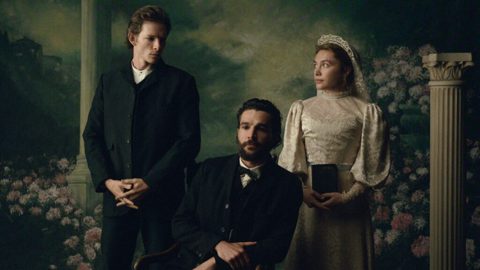

Harlem Renaissance documentary Once Upon a Time in Harlem has been selected as the winner of the Library of Congress Lavine/Ken Burns Prize for Film.
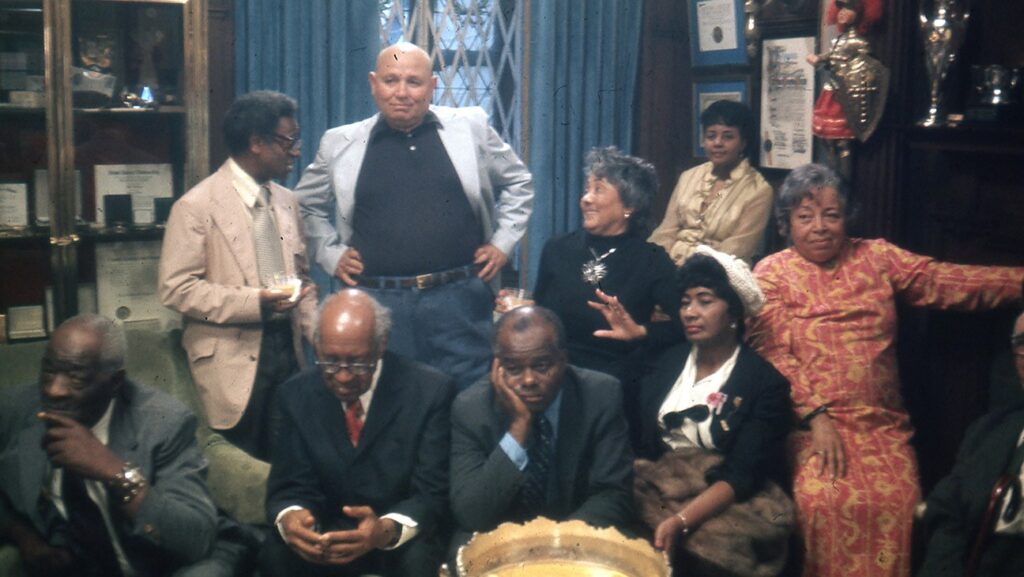
The film documents a 1972 cocktail party inside Duke Ellington’s townhouse shot by William Greaves, who invited every surviving creator of the Harlem Renaissance that he could locate and filmed what happened as they reminisced, argued and explored how culture survives across generations. The film was finished and restored, 50 years later, by William Greaves’ son David Greaves.
Once Upon a Time in Harlem will receive a $200,000 prize as part of the film award providing recognition and resources to documentary filmmakers that tell compelling stories about U.S. history.
The prize, established in 2019 and presented annually by the Library of Congress and The Better Angels Society, is underwritten by Jeannie and Jonathan Lavine through the Crimson Lion/Lavine Family Foundation. The runner-up, Romare Bearden: A Life in Collage, directed by Deborah Riley Draper, will receive a $50,000 prize, with four other finalists each getting a $25,000 prize.
Once Upon a Time in Harlem was recognized by the jury for the prize as a stunning, seminal work that will be written about for decades with jurors noting the importance of the Harlem Renaissance in U.S. history and praising how the film conveyed various complexities and legacies of the time period, including capturing living icons reflecting on and debating their roles in shaping American culture. The film screened at the Sundance, Cannes, Telluride and Toronto Film Festivals and will play the 2026 New York Film Festival on Sept. 29 and be released in select theaters starting Oct. 16.
“I was won over from the moment the camera started rolling,” Ken Burns said in a statement. “It’s literally the best party I have ever been to, a festive time travel through the memory of these extraordinary individuals. Once Upon a Time in Harlem is a celebration of the Harlem Renaissance but just as important — and riveting — it’s an intimate conversation about the meaning of art and life and how we share ideas across generations. We are all indebted to William Greaves for curating and capturing this moment and to David Greaves for bringing to life what his father so lovingly started more than 50 years ago.”
Runner-up Romare Bearden: A Life in Collage also highlights the Harlem Renaissance and its influence through its visually layered intimate portrait of the artist and author, who transformed Black life into a new visual language.
This year’s jury, which selected six finalists for the prize in August, is made up of documentarians Yoruba Richen, Betsy West and Peter Yost; Tenement Museum president Annie Polland; University of Virginia history professor and film director Claudrena Harold; DOC NYC artistic director Jaie Laplante; Harvard’s Black Film Project executive director Jacqueline Glover; and chief of the Library of Congress national audio-visual conservation center Rachael Stoeltje. Acting Librarian of Congress Robert R. Newlen, in consultation with Burns, selected the winner and runner-up.
“Once Upon a Time in Harlem is a revelation,” Newlen said in a statement. “It reintroduces us to a range of personalities and perspectives and invites us to participate. It embodies how compelling archival footage can be — not only does it make this history feel alive in the present, but it is a great deal of fun to watch. The runner-up, Romare Bearden: A Life in Collage, is a beautiful film that captures how the practice of this extraordinary artist was fully integrated into his life. Bearden’s personality shines through as the arc of his life exemplifies perseverance and vision.”
Both the winner and runner-up will be recognized at a ceremony in New York with Burns on Oct. 22.
“With overlapping stories and distinct styles, this year’s winner, Once Upon a Time in Harlem, and runner-up, Romare Bearden: A Life in Collage, illuminate the Harlem Renaissance and its enduring impact on American culture,” Better Angels Society president and CEO Katherine Malone-France said. “Each film captures the humanity of this remarkable period of artistic and cultural expression, bringing vividly to life the writers, artists, musicians and thinkers who shaped it. At the same time, the breadth of this year’s six finalists in both storytelling and subject matter demonstrates the tremendous power of documentary film to educate, inspire and connect.”
Jeannie and Jonathan Lavine added, “We are proud to support filmmakers who use the power of documentary storytelling to bring American history to life. These films give audiences the opportunity to encounter history through the people who lived it, the communities who shaped it, and the stories that too often go untold. This year’s exceptional winner, runner-up and finalists are reminders of how much there is to discover about our shared history, and we are thrilled to help support their work. We look forward to celebrating each of these films in New York.”
More information about this year’s finalists, provided by the Library of Congress Lavine/Ken Burns Prize for Film, follows:
THE ANIMATED MIND OF OLIVER SACKS, directed by Dempsey Rice
The Animated Mind of Oliver Sacks draws on immersive animation and a newly uncovered trove of personal recordings to trace the young neurologist’s early work with patients alongside the private conflicts shaping his inner life. It reveals how a brilliant, humane, yet flawed man challenged prevailing medical culture and found in his patients a mirror for himself.
BARRIO TELEVISION, directed by Christina DiPasquale
Barrio Television uncovers how Puerto Rican activists in 1970s New York disrupted live television to launch “Realidades,” the first bilingual Latino series in U.S. history—expanding the public in public television. With original creators and never-before-seen materials, it reveals the rise, rupture, and return of a series that shattered expectations and refused to stay buried.
THE DAY FREEDOM DIED, directed by Joseph Dorman and Kelly Williams
In 1873 in Colfax, Louisiana, more than 60 Black men were murdered because they dared
to vote. The Day Freedom Died is a journey to the dark heart of American racial
history—the single bloodiest day of violence during Reconstruction and the Supreme
Court decision that followed, which spurred more violence and undermined the country’s
attempt at racial equality.
ZENÓN AND THE REBEL BOATS, directed by Juan C. Dávila Santiago
Zenón and the Rebel Boats tells the untold story of Carlos “Taso” Zenón, a Puerto Rican fisherman and unsung hero who led the struggle against the U.S. Navy’s prolonged occupation of his native island of Vieques, which began in 1941 and lasted over six decades. Narrated by Zenón himself before his death, the documentary weaves together his voice with never-before-seen archival footage that reveals the strategies implemented by fearless fishermen to defy warships and inspire an environmental and anti-War movement.
Read the full article here