






Northern lights 2026: when to go
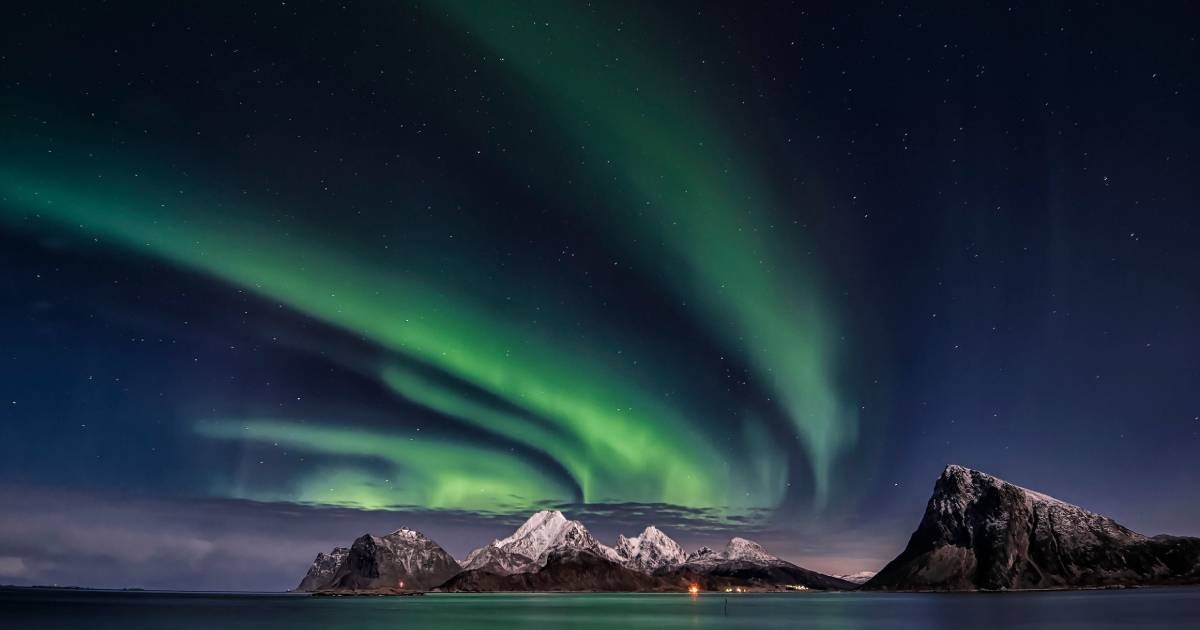
The 2026-27 aurora season runs from late September 2026 to late March or early April 2027, because the aurora is only visible once the sky is properly dark.
A few destinations, including Finnish Lapland and Canada’s Yukon, can pick up sightings as early as mid to late August.
Two windows tend to stand out within that season:
- The equinox months (late September to October, and late February to March): geomagnetic activity often rises around the equinoxes, and skies are dark enough while temperatures stay more bearable.
- Deep winter (November to January): the longest, darkest nights give you the widest viewing window each night, though weather can be harsher.
On any given night, the sweet spot is usually around local midnight, roughly between 10pm and 2am, with displays arriving in bursts of a few minutes to over an hour.
Plan at least three to four nights in one place, since patience and a backup night both pay off.
Where to see the northern lights: Top destinations for 2026-27
The reliable places sit under the auroral oval, the ring around the magnetic pole where the lights appear most nights during the season. Here are the standout bases for this winter.
| Destination | Best months | Conditions | Why go |
| Tromsø, Norway (about 69°N) | Sep to Oct and Feb to Mar | Milder coastal air, some cloud; polar night late Nov to mid-Jan | In the auroral oval, easy access, plenty of tours |
| Reykjavik and Iceland (about 64°N) | Sep to Oct and Feb to Mar | Mild but very changeable weather | Easy access, dramatic scenery; drive out from city lights |
| Rovaniemi and Finnish Lapland (about 66°N) | Late Aug to early Apr; peak Sep to Mar | Cold, dry inland air, clearer skies | Up to ~200 aurora nights a year in the far north; glass igloos |
| Abisko, Swedish Lapland (about 68°N) | Late Sep to late Mar | Very cold and dry; famous “blue hole” clear skies | Statistically clearest skies in the region; Aurora Sky Station |
| Yukon, Canada (about 61°N) | Mid-Aug to mid-Apr; peak Dec to Mar | Very cold, dry, often clear | Dark wilderness, low light pollution, dedicated camps |
Tromsø, Norway
At about 69 degrees north, Tromsø sits squarely under the auroral oval and is one of the most accessible aurora hubs, with a large choice of tours and warm-up bases. Its polar night, when the sun stays below the horizon from late November to mid-January, means dark skies around the clock.
The coastal setting brings milder temperatures and, at times, more cloud, so a chase tour that drives to clearer skies helps. Compare flights to Tromsø and browse hotels in Tromsø to start planning.
Reykjavik and Iceland
Iceland pairs the aurora with waterfalls, geothermal spas and volcanic scenery, and it is an easy hop from both Europe and North America. Reykjavik itself has too much light for the best shows, so head out to darker spots such as Thingvellir National Park or the Grotta lighthouse.
Iceland’s weather is famously changeable, so keep your plans flexible and watch the cloud forecast. Look at flights to Reykjavik and hotels in Reykjavik as your gateway.
Rovaniemi and Finnish Lapland
In the far north of Finnish Lapland the northern lights appear on up to around 200 nights a year, and Rovaniemi, the regional capital on the Arctic Circle, sees them on roughly one night in three. The dry inland air often means clearer skies than the coast, and glass igloos let you watch from a warm bed.
It is also the self-styled home of Santa, which makes it a family favourite. Check flights to Rovaniemi and hotels in Rovaniemi.
Abisko and Swedish Lapland
Abisko is famous for its “blue hole,” a patch of persistently clear sky created by the rain shadow of the surrounding mountains. That microclimate gives Abisko statistically clearer nights than most of the region, which is why many photographers rate it the single best aurora spot in Scandinavia.
The Aurora Sky Station, reached by chairlift, adds an elevated, dark viewing platform. Most travellers fly into nearby Kiruna; browse hotels in Kiruna and base yourself close to the national park.
Yukon, Canada
For a North American option, Canada’s Yukon offers vast, dark wilderness and cold, dry, often clear nights. The season runs from about mid-August to mid-April, with the long nights of December to March especially rewarding.
Whitehorse makes a practical base with tours out to purpose-built viewing camps. See flights to Whitehorse and hotels in Whitehorse.
How to maximise your chances
Being in the right place at the right time is most of the battle. These habits do the rest:
- Get away from light pollution. Even a modest drive out of town makes faint aurora visible. Seek an open view toward the northern horizon.
- Chase clear skies. Cloud is the aurora hunter’s biggest enemy. Check a local cloud forecast each evening and be ready to move.
- Learn the Kp index. This zero to nine scale rates global geomagnetic activity; higher numbers push the lights further from the poles. When you are already in the auroral zone, even Kp two to three can deliver a show.
- Use aurora forecast apps. Short-term forecasts from NOAA’s Space Weather Prediction Center and popular apps flag when activity is picking up.
- Give it time. Let your eyes adjust for 15 to 20 minutes, stay out around local midnight, and plan several nights so a single cloudy evening does not sink your trip.
| Kp index | What it means |
| Kp zero to two | Quiet; aurora sits over the far north (Tromsø, Abisko, Lapland, Yukon) |
| Kp three to four | Active; strong shows across Iceland and Scandinavia |
| Kp five and up | Geomagnetic storm; aurora reaches lower latitudes |
Will the northern lights in 2026 still be worth chasing?
Yes. NASA and NOAA announced on Oct 15, 2024 that the Sun had reached solar maximum, the busiest point of its roughly 11-year cycle.
Solar activity is now easing as Solar Cycle 25 heads toward its close, with the next cycle expected to begin somewhere between 2029 and 2032, but the years right after a solar peak still bring frequent, powerful geomagnetic storms.
That means the 2026-27 winter remains inside a strong window for the aurora, even if displays are less relentless than at the 2024 peak.
Frequently asked questions
Where is the best place to see the Northern Lights?
Bases under the auroral oval are most reliable: Tromsø, Abisko, Finnish Lapland, Iceland and Canada’s Yukon. Abisko stands out for its “blue hole” microclimate, which delivers statistically clearer skies than most of the region.
How many nights should I plan for?
Give yourself at least three to four nights in one location. Weather and solar activity both vary night to night, so more evenings mean better odds of a clear, active sky.
Plan your 2026-27 aurora trip
The 2026-27 season lines up a rare combination: still-elevated solar activity and the reliable dark skies of the Arctic winter. Pick a base under the auroral oval, build in a few nights of flexibility, and chase the clear weather.
When you are ready, compare fares and stays to Tromsø, Reykjavik, Rovaniemi, Kiruna and Whitehorse on Wego and lock in your aurora winter.
[[nid:739472]]
This article was first published in Wego.
Read the full article here