





Air travel may be a flex for some, but few can claim the flex of “time travelling” with flights.
No, we aren’t talking about using a time machine to travel into the past or future, or how Doctor Strange uses the time stone to view alternate futures or loop brief moments.
Instead, we are talking long-haul flights which collide with times zones and the International Date Line.
The imaginary line extends between the North Pole and the South Pole, arbitrarily demarcating one calendar day from the next.
Think about it as welcoming 2026 onboard a flight, 35,000ft in the air with a glass of champagne, and landing in 2025 to join yet another New Year countdown – all within a day.
According to data published by aviation data platform OAG, 14 passengers flights had published schedules to depart on Jan 1, 2026, and arriving on Dec 31, 2025.
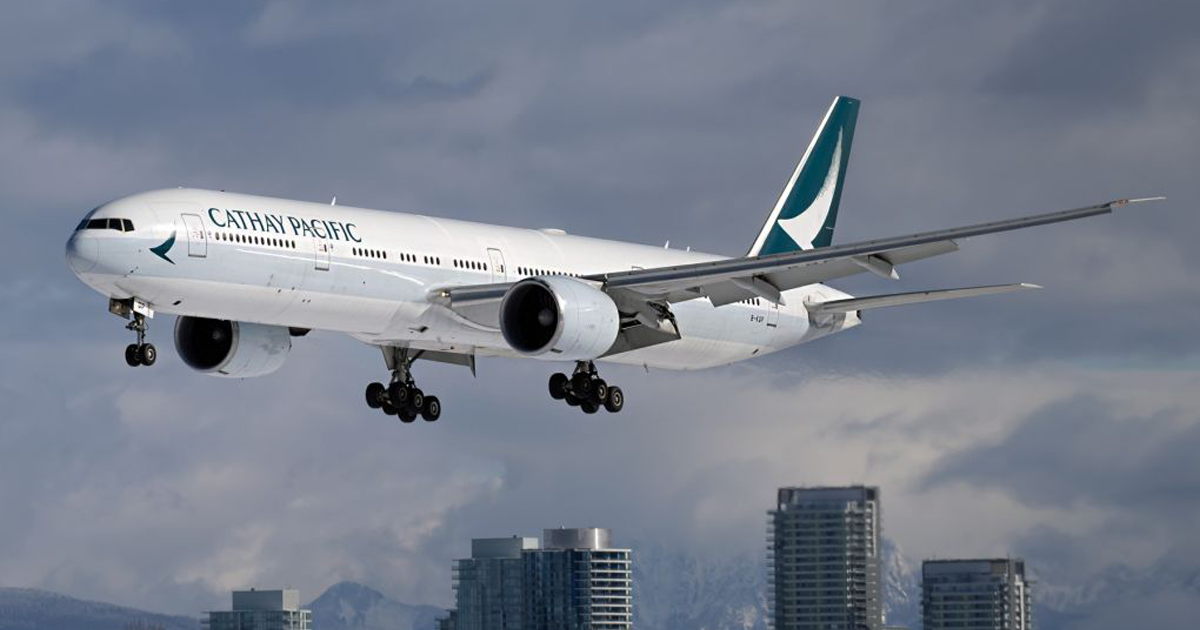
The list includes Cathay Pacific’s Flight CX880, a Boeing 777, which took off at 12.34am on Jan 1 from Hong Kong, and landed in Los Angeles at 9.28pm on Dec 31, 2025.
Joining the Hong Kong carrier are All Nippon Airways’ Tokyo Haneda-Los Angeles Flight NH106, Starlux Airlines’ Taipei-San Francisco Flight JX012, and Hainan Airlines’ Shenzhen-Vancouver Flight HU7959.
In case you are wondering about Singapore’s national carrier, Singapore Airlines may not be part of this double countdown flex, but offers a unique experience of their own.
It’s US-Singapore flights – SQ023, SQ035, SQ037 and SQ033 – all took off on the night of New Year’s Eve to land in Singapore on Jan 2.
This means that passengers onboard these flights counted down to the New Year 35,000 ft up in the air, putting the past behind them, almost literally.
Such “time travel” flights are a novelty given the capacity of each flight and the challenges it pose to airline operations, especially in crew duty planning, aircraft rotations and maintenance.
So, are you planning for your own flex soon?
@aaronrheins Takeoff in 2026… Land in 2025 #newyear #aviation #midnight ♬ original sound – Aaron Rheins
[[nid:725652]]
Read the full article here