




How much do good intentions count? If a film — like say, documentarian Kim Bartley’s debut narrative feature, Lemonade — has its heart and its sociopolitical care in the right place, can audiences overlook or excuse its glaring clichés, its generic plotting?
Such a question faces us upon watching Lemonade, about an Irish teenager from a rough background who is struggling to handle a variety of adult concerns as they all come rushing at him (quite conveniently, for the movie’s purposes) at the same time. It means well, this wholly predictable indie, but its cookie-cutter form aggravates as a matter of art.
Lemonade
The Bottom Line
A story of hardscrabble living we’ve seen a dozen times before.
Venue: Toronto International Film Festival (Centrepiece)
Cast: Lewis Brophy, Barry Keoghan, Carla Tous, Eileen Walsh
Director and writer: Kim Bartley
1 hour 52 minutes
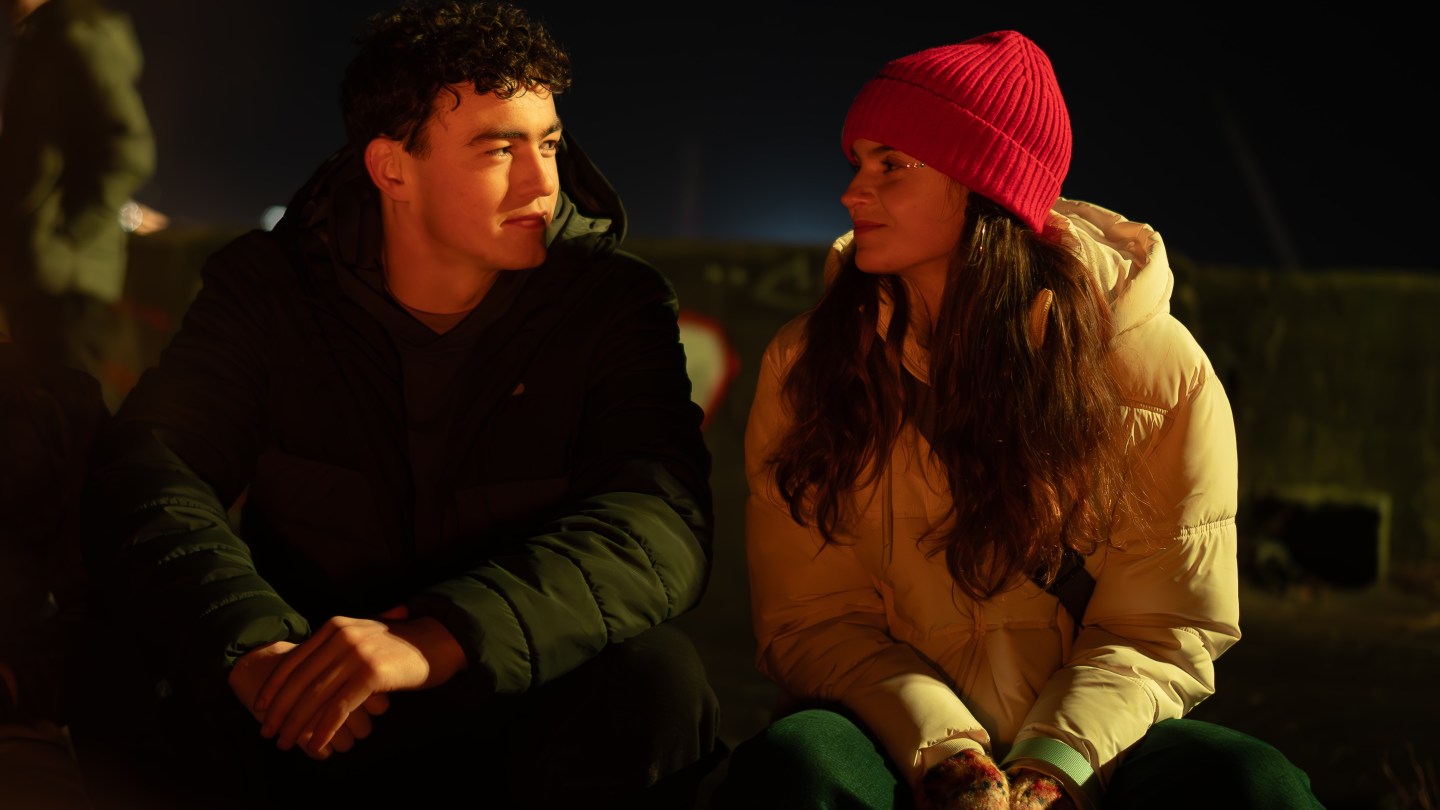
Rising young actor Lewis Brophy plays Danny, a boy raised in foster care until he entered the juvenile detention system for a crime he only passively abetted. (While his rowdy friends merrily mess around in a stolen car, Danny is shown in the backseat caring for a kitten he’s just rescued; don’t worry, the movie reassures us, he’s not really one of the bad ones.) Danny landed in a halfway home that he now must leave, having just turned 18 and thus becoming an adult in the eyes of the law. He may well yet face actual prison time for the car incident, but while he awaits a crucial court date he must try to keep his life on the straight and narrow.
Danny misses his younger brother, whose foster parents have barred him from visiting, he’s got a lot of grief and anger toward his drug-addicted mother (who’s in prison), and he begins warily reconciling with his former social worker, Josh (Barry Keoghan), who Danny thinks let him down in the past. That’s already a lot to contend with, but Danny has to also manage the dangerous (if casual) solicitations of a drug-dealing frenemy and his attraction to a Spanish girl who lives quite literally next door. What’s an 18-year-old character to do when a bunch of grownups behind the camera have put so much on his plate?
Yes, Lemonade is meant as an act of sensitivity, and yes plenty of real kids in circumstances like Danny’s often have to grapple with heaps of difficulties and challenges at once. But Bartley sets up these obstacles quite programmatically, as if it’s all been constructed from a Social Drama About Young Man Caught in the System starter kit.
All the basic, wholly expected parts are there. Josh, the great carer to others, of course has family problems of his own back home, which he can’t manage as well. Danny’s girlfriend helpfully explains the movie’s title with a whimsical tattoo. (She also wears light-up roller skates, because I guess those add interesting visual texture to a nighttime scene.) Conflict arises from people not telling other people vital information, strictly for narrative convenience. The drug dealer friend is turned to (oh no, Danny! Not with your big court date so soon!) in a moment of need. If one has any familiarity with this subgenre, one could almost recite the plot of Lemonade down to the minute, sight unseen.
The roteness of it all does undermine those good intentions considerably. When these socioeconomic ills are given such boilerplate treatment, it can occlude the actual humanity of the people to whom a film is meant to pay tribute. Without particular detail, without nuance, without any real allowance for genuine character flaws, a film like Lemonade begins to seem not actually that curious about these individual lives at all. It comes across as a glancing, almost smug kind of tourism — even if, sure, we ought to trust that a dedicated documentarian like Bartley really does have virtuous aims, informed by what she’s learned as a filmmaker. If only any of what she witnessed in her real-world investigations was palpably manifest in Lemonade.
In the decade and a half since Short Term 12, myriad movies like it — the wandering camerawork, the hushed naturalism, the whispery-wistful music, the somber-hued digital photography — have come rolling out on the festival conveyor belt. They’ve had awfully diminishing returns, save for a few standouts: films with unique perspective and technical invention like A.V. Rockwell’s A Thousand and One and Harris Dickinson’s Urchin. Taken on its own, Lemonade does not deserve much ire, but it is nonetheless representative of an increasingly thoughtless and tiresome trend.
On the positive side, Brophy is a compelling actor, doing what he can to individuate the sketch of a character provided to him. Keoghan, with a wild shag do, finds the right sensitive notes to play. Really, every actor involved seems committed to the cause, and good for them for that. But those delicate performances — and Bartley’s noble goals — can’t make up for the galling impersonality of Lemonade, its refusal to dig any deeper than what would be gleaned from casually skimming a news article: a general understanding gained, but nothing really known.
Read the full article here