


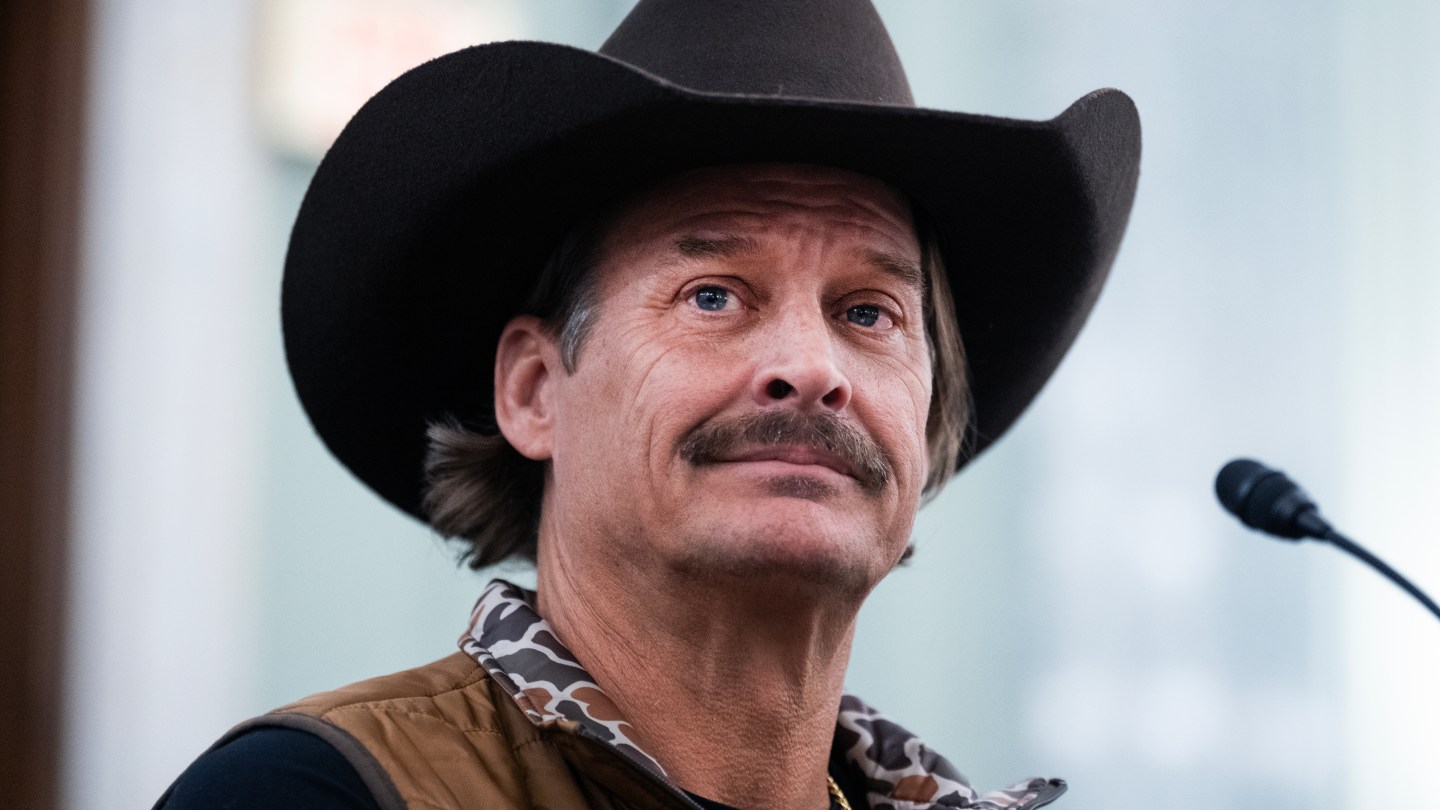


Kid Rock returned to Capitol Hill on Wednesday afternoon to testify before Congress on behalf of artists on the skyrocketing costs of concert and event ticketing, sharing with lawmakers his ideas on how to combat the corporations and scammers driving up ticket costs and leaving fans shut out and providing no benefit to the artists.
Wednesday’s subcommittee hearing, led by U.S. Senator Marsha Blackburn (R-Tennessee), examines the live performance industry and ticket sale practices, the fees charged by primary and secondary sellers, and the prevalence of automated bots that rapidly buy up tickets. Kid Rock, whose real name is Robert Ritchie, opened his testimony by telling lawmakers that he has been packing arenas for 25 years and that, more importantly, he is a capitalist and a lone wolf.
“‘I’m in a unique position to testify, because unlike most of my peers, I am beholden to no one, no record companies, no managers, no corporate endorsements or deals,” Ritchie told the committee. “To put it plainly, I ain’t scared, like many artists, managers and agents are, for fear of biting the hand that feeds them.”
Ritchie then reminded the committee that members of the grunge band Pearl Jam sat before Congress 30 years ago in their Sisyphean battle against Ticketmaster and that in 2009, Congress was told under oath that merging Live Nation and Ticketmaster would benefit artists and fans. The CEO of Live Nation, he reminded the committee, called the merger “an experiment” and promised it would “increase competition and power artists and lower costs.”
“The economic foundation that supported artists in the past is crumbling. Piracy is threatening their livelihood. Secondary ticketing is driving up prices for the fans with absolutely no benefit to the artist,” he added. “Needless to say, that experiment has failed miserably. Independent venues have been crushed. Artists have lost leverage. Fans are paying more than ever and getting blamed for it.”
Ritchie implored Congress to subpoena the contracts and deals between artists, promoters, venues, ticketing companies, agencies, and vendors, telling lawmakers that they “will find mountains of fraud and abuse.” He offered multiple solutions to the dilemma: allowing artists to control who sells their tickets and how; capping resale ticket prices to protect real fans. Number three; enforce the Bots Act to stop brokers and bad actors, to ensure they will face serious penalties and consequences.
“The problem is the ticketing lobbyists push these reforms as cover while fighting to keep tickets in an open market and let them exploit fans under the guise of capitalism,” Ritchie said.
In 2025, the Senate Commerce Committee approved the TICKET Act, bipartisan legislation that would require all event ticket sellers to display the total ticket price — including all required fees — up front in any advertisement or marketing materials. The bill, which passed in the House in April, also bans speculative ticket sales and mandates clear disclosures on ticket ownership and requires refunds for canceled events, with enforcement by the FTC.
Speculative ticketing is when ticket and event resellers list tickets they don’t own, and often before official on-sale dates. In these cases, they are betting that they can acquire them at a later date.
In addition to Kid Rock, witnesses that appeared in Congress on Wednesday included Brian Berry, the executive director of Ticket Policy Forum; Dan Wall, executive vice president of corporate and regulatory affairs for Live Nation Entertainment; and David Weingarden, chair & co-founder of the Colorado Independent Venue Association.
The hearing came a year and a half after the Department of Justice and a coalition of 30 state and district attorneys general filed an antitrust lawsuit to break up Live Nation Entertainment, the parent company of Ticketmaster. The Justice Department argues that Live Nation maintains an illegal monopoly, using a “flywheel” model that locks venues into exclusive long-term contracts while retaliating against those that use rival ticketing services. Live Nation has called these charges “absurd” and countered that ticket prices are set by the artist. The suit is currently working its way through the federal courts.
In September, the Federal Trade Commission and seven U.S. states filed a lawsuit against Ticketmaster and Live Nation for deceptive pricing schemes and illegal ticket resale tactics. The complaint alleges that the companies added high fees at checkout, allowed brokers to bypass purchase limits to buy in bulk and accuses them, by allowing brokers to resell tickets on their platform at inflated prices, of making nearly $1 billion in fees over five years.
Read the full article here