



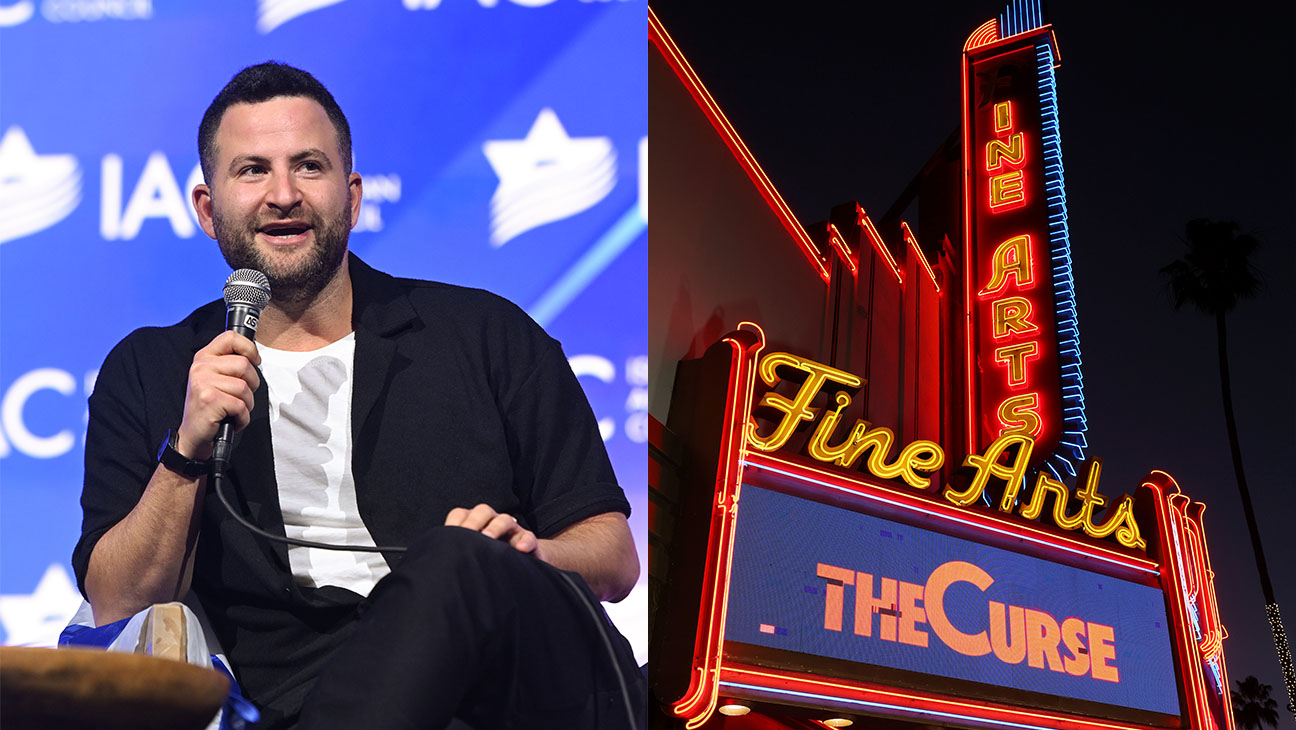

When a scheduled appearance by Israeli stand-up comedian Guy Hochman was abruptly canceled at a Beverly Hills screening venue this week, the decision initially appeared to be another protest-driven disruption tied to the war in Gaza.
But the venue’s own public statements became the center of the controversy, drawing criticism from Jewish organizations, free speech advocates and industry figures who described the original response as discriminatory and antisemitic.
In a statement signed by Screening Services Group president Michael S. Hall, the venue said it had rented its Fine Arts Theatre to a promoter without prior knowledge of the performer and later received complaints about Hochman’s alleged conduct.
“We began receiving complaints about the performer Guy Hochman on Wednesday,” the statement read. “We researched online and could not find any proof of the accusations other than from the original accuser.”
The statement went on to say that Hochman had been given the opportunity, through the promoter, “to refute the allegations and to release a press release and post on his social media that he did not support the genocide, rape, starvation, and torture of Palestinian civilians.” It added, “He declined to do so. He is now banned from our facility.”
Hall concluded by stating that the company was “not political” and did not ask renters about their beliefs, while also declaring opposition to genocide against any group.
The statement immediately drew fierce backlash, not only for banning a performer despite acknowledging a lack of verified evidence, but for what critics said amounted to a political and religious double standard.
Jewish groups and individual commenters argued that singling out an Israeli Jewish performer and demanding a public denunciation of alleged atrocities functioned as a collective moral test that would not typically be applied to artists from other national or ethnic backgrounds.
Critics described the language as antisemitic, pointing to the implication that Hochman bore responsibility to publicly disavow acts attributed to a state or military he did not control. Others noted that the statement’s framing appeared to presume guilt by association, treating Hochman’s refusal to issue a specific political declaration as evidence of moral complicity.
Free speech advocates also criticized the venue for conflating safety concerns with ideological enforcement, arguing that the demand for a public statement crossed into compelled speech.
On Saturday afternoon, Hall has issued a second statement to The Hollywood Reporter that sharply reversed course.
“I want to apologize, especially to the Jewish community, for my statement and for how this situation was handled,” Hall writes. “I understand that my decision caused harm and distress to many people in the community, and I take responsibility for that.”
Hall acknowledged that both he and the theater received “a large volume of messages, including threats of violence,” and said that under that pressure he canceled the show “without giving the matter the careful thought and judgment it required.”
“That was my mistake,” he wrote.
He also explicitly disavowed the request made to Hochman in the original statement. “While I do not necessarily agree with the viewpoints of every performer who appears at the theatre, it was wrong to ask any artist to make political or ideological statements as a condition of appearing,” Hall said. “Imposing a litmus test of any kind was a mistake and should never have happened.”
Hall added that he had contacted Hochman’s representatives and was open to rescheduling the performance “provided it can be done safely.”
When reached by THR, Hochman dismissed Hall’s apology as “insincere” and the result of pressure placed upon him by powerful Israeli advocates in Los Angeles like Saban Entertainment founder Haim Saban.
Hochman also says he refuses Hall’s invitation to return to the Fine Arts Theatre.
“I don’t want to perform there because he subjected me to a test,” he says. “It was loyalty test. I prefer my people above my career. And I will never say untrue things about my people — say we rape and starve and commit genocide. This is not the story. I don’t believe it. And it’s cynical.”
Hochman says he is open to returning to L.A. before his tour wraps, and is currently looking into other venues around the city.
The firestorm shifted attention to Hall himself, a longtime figure in Hollywood exhibition and screening circles who had largely operated outside public view.
Hall is the president and founder of Screening Services Group and the Wilshire Screening Room and Art Gallery, a Beverly Hills facility used extensively by studios, guilds and film festivals.
Over his career, Hall has served as chief projectionist or engineer for organizations including the Academy of Motion Picture Arts and Sciences and the Academy of Television Arts and Sciences. He has worked major festivals including Sundance and the American Film Market.
Hochman’s broader tour has drawn protests in multiple cities and included a six-hour detention by Canadian border officials in January following a legal complaint filed by a pro-Palestinian advocacy group.
“They asked me about everything,” Hochman says of the interrogation, during which he was not offered any food or water. “They asked what I did in the army. They asked about my parents and my family about my life and about the things I do. I didn’t understand.”
He was released without charges. “But I got a letter from Canada that my visa is over and revoked,” Hochman says. “So if I want to come back to Canada, maybe not.”
Read the full article here