



[This story contains spoilers up to episode four of The Shards.]
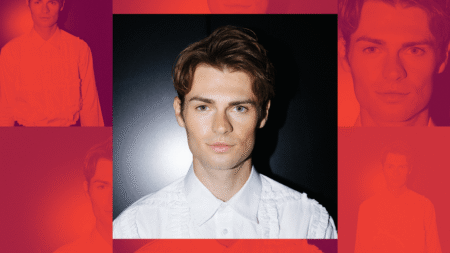
Igby Rigney was a big Ryan Murphy fan when the audition came to him for the lead role in The Shards. The process took a couple of months and, after landing the pivotal part, he dove head first into the book by Bret Easton Ellis on which the FX adaptation is based.
Rigney still hasn’t met Ellis, who co-wrote the first two episodes with Murphy and then took a step back in what has been described as a “godfather-y approach” with the nine-episode adaptation that Murphy and Ellis plan to turn into a multi-year series. But Rigney has heard that Ellis is enjoying his take on Bret, the 17-year-old protagonist and narrator who is a fictionalized version of Ellis in his autofiction classic.
“Obviously, the book has a very specific ending, but we’re deviating from the source material a little bit in bringing it to the screen, so I’m not sure how any of that is going to play out,” Rigney tells The Hollywood Reporter of Murphy adding in new storylines and characters to extend the show into three or four seasons. But by the end of season one, “people are going to be very split between the characters of Bret and Robert,” Rigney says. “We do get to a point of picking sides.”
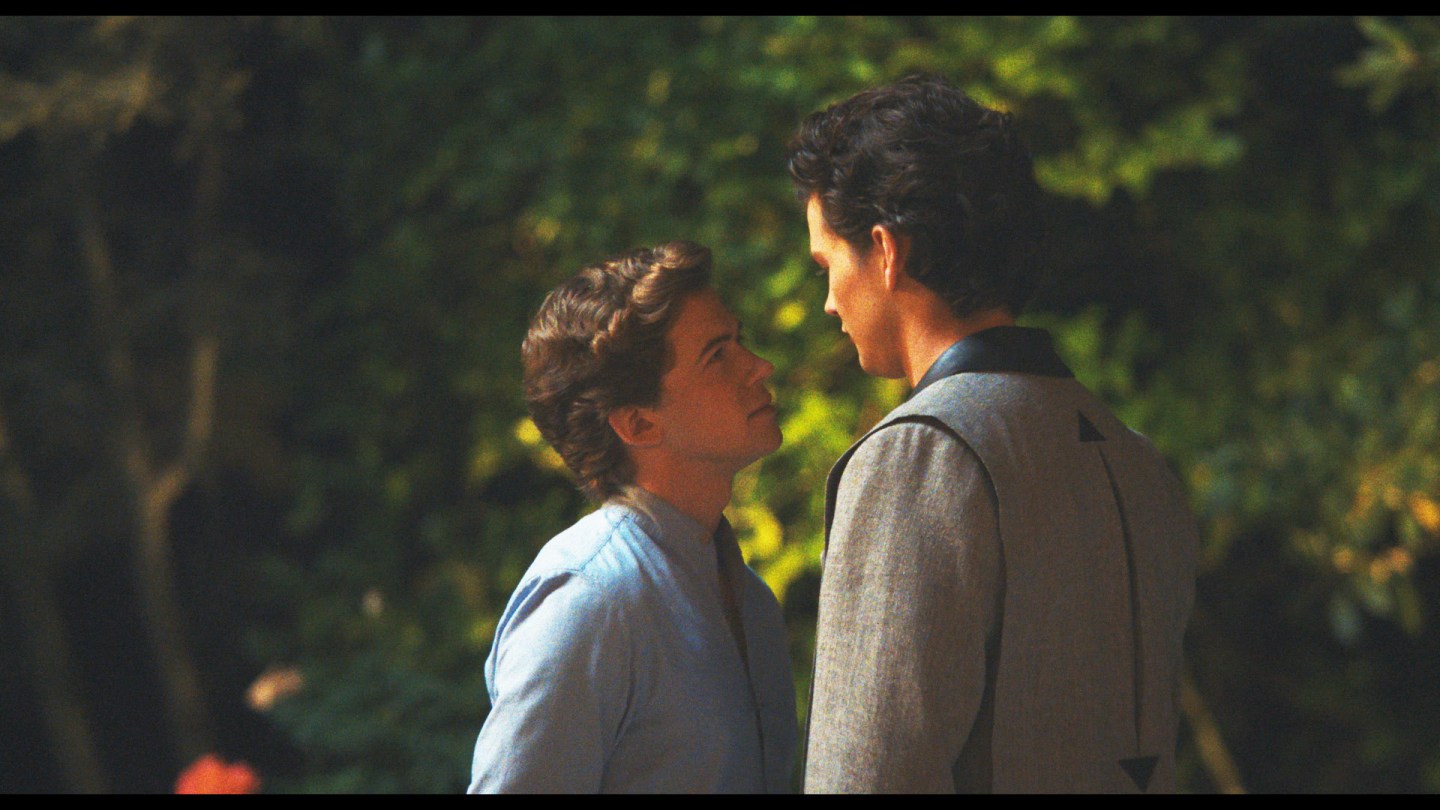
The most recently released fourth episode, “Robert’s Party,” brought Bret and Robert, the latter who is played by Homer Gere, to their most antagonistic point yet. Over the course of a debaucherous party thrown at the Hollywood Hills mansion belonging to Kaia Gerber’s character Susan Reynolds’ father, a handful of the main characters were involved in a near-attack by a local cult leader, and Robert ends up needing to be resuscitated after hurling himself into the pool to cap off an erratic-turned-violent dance number that Rigney says Gere rehearsed “at least 100 times.”
“There is definitely a pre-dance Homer and post-dance Homer — like his whole personality has changed since doing that in front [of everyone],” says Rigney, whose Bret was the one who sent Robert drinking — and then dancing — after telling the new kid in town that he heard the rumor that Robert may or may not have killed his mother.
Below, Rigney shares his casting story as he dives into his approach to playing Bret, details what it’s like to play in the world of The Shards on a recreated 1981 Los Angeles set where he’s chain-smoking chamomile cigarettes (“I would not recommend anybody picking up that particular habit,” he says) and talks about the future of the adaptation.
***
Ryan Murphy told THR they saw 500 actors for The Shards. How familiar were you with Bret Easton Ellis and his book The Shards when you went out for the part of Bret, and what was your audition process like?
I wasn’t familiar with Bret beyond American Psycho, to be honest. I hadn’t read any of his stuff. I was familiar with Ryan, so when I got that audition in my inbox, I was freaking out. It was also a special audition because it was the first one I had done in person in almost a year, after the strikes and COVID moved everything over to Zoom or tapes. That was exciting and a whole different experience.
Being in the room, you get to be with a casting person who knows what they’re looking for and who is reading with you. Ryan was also there. I went to New York. That was the first question he had for me: “Have you read the book?” I said no. I intentionally didn’t try to jam the book in before that initial meeting, because I wanted to focus on the script and the sides in front of me and not get overwhelmed with extraneous information that may or may not end up being in the show or a part of the character. So that went well. He told me to read the book before he saw me again in L.A.
Then I did my chemistry reads with Graham [Campbell, who plays Thom] and Homer [Gere, who plays Robert], and Hayes [Warner, who plays Debbie] was there. It was really fun, and a long process. I think it was a couple of months.
Have we seen the scenes you auditioned with yet in the show?
Yes. We saw one of them in the stables, and we saw one of them at the mall. Homer and I, that was our scene that we did together [at the mall]. The “Yeah, you don’t like being followed?” scene. Super fun.
Bret wrote the first two episodes with Ryan, and then handed off the torch, so to speak. Do you know if Bret was involved in your casting, and if he had a say in who played Bret?
I have no clue. I have no idea. I have heard him, through other people, say very kind things about me, and I’m excited that I’m being received positively in that particular arena. But besides that, I don’t really know anything more.
Have you met Bret yet?
No, not yet.
It’s interesting because you’re playing Bret, but it’s a fictionalized version. So did not being in touch with the real Bret, in ways, help you create this character you’re bringing to the show?
Probably. I think it lends itself to a lot of clarity in the performance, because my point of contact for who the character of Bret is is really Ryan. It’s Ryan’s vision, and Ryan is very clear about where this was going, how he wanted it. Obviously, we discovered it along the way a little bit, especially with the voiceover in post and figuring out how that was going to sit with the show. So I think it has been a good thing.
Now having read Bret’s books — I’m a huge fan! I think it’d be awesome to meet him! I’d be fan-girling out.
Is there one thing you’d want to ask Bret now?
If he really wore his pants that tight. Because, man, how did you sit at the typewriter and work on your novel in those fucking tight pants? (Laughs.) Or did you take the pants off before you sat at the typewriter? That would actually be a really interesting character detail, if you unbuckle. (Laughs.)
How did you find your narrative voice for the voiceover, and how you wanted to speak?
In the initial audition, I was taking a stab at the idea of insane privilege and a bit of a mask; having a duality where it’s almost as if he is untouchable. But in reality, he is touched so much deeper than everybody else in the room. I was playing with general concepts when I initially auditioned.
Then after listening to the book, I wanted to respect some of the intention and tone. He has such a specific feeling of how he read his work, so I wanted to at least allude to that, and still be on track with what Ryan was hoping for.
We actually started the voiceover very early on to sketch it into the edits. We were filming the scene at the Westwood Theater, and I was between takes going to a temporary booth and recording that opening monologue. And it has changed so much. Early on, I was pulling from the vibe of the book — then as we built the visuals, we changed the voiceover. Then the soundtrack came in, and we changed the voiceover; then there were more edits, and we changed the voiceover. I’ve done a lot [of work on it], and I don’t think we’re going to have to do that next season. We found the tone. Ryan was very, very specific that it needs to be this, now that we’ve added in the other elements. As all the departments came together, it really fed the voiceover.
How did you approach the unreliable narrator of it all? Did that prompt deep discussions with Ryan?
They weren’t super deep discussions, but we’ve gotten to play in an interesting world where we all do takes in so many different ways. And actually, as an actor, it’s the best because you never feel like you’ve done a bad or a wrong take, because you never know if we’re going to use part of that in the edit to create a red herring or a strange interaction that doesn’t feel very comfortable. We were always playing with: What was the intention behind, “Hey, I’m the killer. Hey, I’m not the killer. I have no idea what’s going on.” And constantly shifting that on set with all of the characters.
I can’t believe that he’s unreliable. What is he lying about? Everything that comes out of Bret’s mouth is factually true, in a way that is not the case for the character of Robert. I don’t think a little embellishment here and there to make the story or bring home a point, especially when nobody’s paying attention to you, is unwarranted. I guess that’s how I feel about it.
That rears its head in these third and fourth episodes, where you see some of Bret’s friends calling him out because he’s so overtly against Robert. How did you approach how the audience should feel about Bret as the episodes go?
I’m not 100 percent sure. I think that’s a very liquid and live thing. I would say that Ryan is definitely very aware of where that’s landing. But at least playing the character, I didn’t want to hint at that at all. I wanted him to be genuine and true, and I think he is. I think it’s heartbreaking when you have had friends for so long who don’t trust you enough to listen to your instincts about a really unknown factor. They’re so accepting of this exciting, shiny new thing [Robert]. But they’re not taking the time to really suss out what’s underneath.
What was it like filming this fourth episode? There is so much going on at this party — between Debbie being attacked by the cult leader upstairs, to Robert having a manic dance episode downstairs, leading to him to jump into the pool and needing to be saved by Susan and Thom. Bret, meanwhile, talks about being an observer of it all. How long did it take to film that party?
It was four or five overnight shoots. It was brutal. We were exhausted! But it was also very, very fun. It’s almost like us, as a cast, went on a real bender, and really stayed up for five nights in a row — except it was for work. But I do think that lends itself to the energy and everything later in the season, potentially, of just having that experience of being really strung out. But yeah, it was crazy.
What Max [Minghella, director] did with the party scene with the fluid camera was so cool and interesting. We have that follow shot; then it comes around and reveals the staircase; then we’re pulling back into Susan and Robert. Having that constant movement feels so fluid. Then being on set and doing that, those are sometimes hard shots to pull off because everything has to line up and everybody has to be dead on the mark. Our poor crew was walking backwards really quickly! It was a really magical experience. We were all trying to support each other and make sure that we got through the night, that we had enough coffee and were warm enough. We had an amazing crew. I would shout out Henry, who always kept us warm and had the heating or the cooling tents, depending on the day.
How many times did Homer Gere do that dance?
At least 100 times. For some of it, I wasn’t even there, because his coverage was tight and circling. I remember sitting in the green room and hearing the crowd go wilder and wilder over the course of the night. I think he started a little shy and then he was like, “Oh shit, people really dig this.” There is definitely a pre-dance Homer and post-dance Homer — like his whole personality has changed since doing that in front [of everyone], because, what an insane experience to be working in an art form dance that is not his primary thing in front of 100 people? Doing it from 11 o’clock at night to one in the morning, over and over again, and just getting more and more into it. In some ways, I wish I was playing Robert and got to have that experience, because that sounds crazy.
Between the costumes, props and production design, this show plops you right into a wild 1981 L.A. party. Then hearing you say you were pulling all nighters, did it feel a bit method? Especially knowing how close you are as a cast.
It always kind of feels like, not a party, but like a good group hang on set. We’re all excited to be there. I think the excitement helps to at least keep the energy up for that kind of scene. Obviously, every character is going through their own emotional journey and oftentimes, I’m not aligned with the rest of the group, so that can be a little frustrating. But yes, there is something nice about having the drink and the cigarette, and feeling all of that around you. You don’t have to do as much imaginary work. We’re just standing in 1981. They are a group of young people acting very mature, but there is still that young element where this hasn’t entirely become their normal. They’re not completely over this level of debauchery.
What are the cigarettes made out of that you’re smoking?
[My character] smokes quite a bit. The on-set cigarettes are like herbal cigarettes made of chamomile tea. They… are horrible. (Laughs.) I would not recommend anybody picking up that particular habit.
You said that Bret isn’t always in sync with everyone else. As episodes go, do you feel like you get more insular?
We filmed in such an interesting [non-chronological] order. But, yes, I do remember a lot of times where the rest of the group wasn’t around, and it was just me, like with the scenes with Terry [played by Wes Bentley]. It certainly ebbs and flows as the season goes, but some of the episodes took a while to do. So a lot of times, we were doing split days where I would spend half the day with them and then I would do half the day by myself.
The end of episode four is the most antagonistic we’ve seen Bret be with and Robert. How have you gotten into Bret’s head in terms of why — especially thinking now that he maybe killed his mom and could be dangerous — Bret pushes Robert’s buttons. Is it a fearlessness? Is it ego?
I think it’s an internal calculation coming from somebody who is also masking a part of themselves. I think he’s trying to poke the buttons enough to have that exposed. It’s a very careful balance, where he’s trying to expose Robert and make Robert show everybody who Bret knows him to be so he’s validated by the friend group to say, “See, this is the guy I met. This whole other thing is bullshit. This is who he is.”
But obviously, he doesn’t want to push hard enough for Robert to actually genuinely snap. Because I do think he has a strong feeling about what happened to Matt and Rhonda [the teens who are missing played by Owen Painter and Ivy Wolk, respectively]. But there’s not enough evidence to really put that nail in the coffin yet.
Ryan said he and Bret did not talk about the identity of the serial killer, “the Trawler.” Did you all discuss it together as a cast, or with Ryan?
I mean, yeah, we all have theories. [Smiles.] Ryan’s been such a great friend and mentor. He’s really been super open with us, and sometimes when we all have dinner, he’s like, “Guess. Guess.” We all guess, and he gives away nothing. I would be terrified to play poker against that guy!
He did mention that during filming he held cast dinners and talked to you about what it was like in 1981 and his own life experiences. How did what he shared help you play Bret?
He’s bringing so much of his own experience of 1981 to the script, so it’s very personal. In the way that sharing anything about yourself is vulnerable, it’s vulnerable, and we feel very blessed that he trusted us with some of those experiences and stories he’s imparted. I think it was specifically his experience with being queer in 1981 and his friends, and the terror of the AIDS epidemic. Just that looming fear, that existential dread. Is it hopeless? Is it not hopeless? Will I ever get to be myself? It was more of a tonal thing.
As a cast, you all look like you have been having fun promoting the show. Are you hanging out in real life? Do you have a group chat?
Yes. We do have a group chat, and the group chat is very active. (Laughs.) We are hanging out in real life as much as possible. We are split between cities right now, unfortunately. It’s been so fun and the press tour was a blast, where I feel a little sad that it’s over. But I think I get to see a lot of them next week at another event.
Ryan said he and Bret are planning a three- or four-season show. He said they expanded the story and added in new characters so the entirety of the show can still take place over the course of the year. I guess that means we are not getting to the end of the book by the end of season one.
I fear not.
Have you talked about the book’s ending as a cast or with Ryan, and shared opinions?
We’ve talked about the ending, and obviously the book has a very specific ending, but we’re deviating from the source material a little bit in bringing it to the screen, so I’m not sure how any of that is going to play out. There are some really fun scenes at the end of the book that I would love to get to film, but I have no idea how it’s gonna shake out.
How would you say, in non-spoiler terms, people will feel by the end of season one?
I think people are going to be very split between the characters of Bret and Robert. I think we do get to a point of picking sides a little bit.
Team Bret or Team Robert.
That’s the big thing. And then we are left with the mystery of what actually happened.
Are you and Homer rooting for each of your characters?
Yes. One of the fun things about working with Homer is that we have a similar ethos. He believes Robert. He genuinely believes that Robert is just a new guy from a different city who has a hard past that he’s trying to get away from, and he’s really working on showing up as a genuine individual in this new school, and trying to be nice to everybody.
And he just had a bad reaction to mixing his meds with alcohol.
Right. And I personally don’t think that’s true!
Was there a moment in the script or an episode coming up that you prepped the most for?
The scenes with Terry [played by Bentley] and that dynamic. Working with Wes Bentley, you better show up knowing your stuff. That made me initially a little nervous, especially going into that hot tub scene in the pilot. That was the first time we had interacted. Terry and Brett have a really interesting dynamic where he admires Terry, but he’s aware of this looming queerness. That is both a push and pull, because he knows it’s directed towards him, but he’s trying to navigate that particular experience. Terry could potentially be an artistic mentor and a queer mentor in 1981. And then he’s also living out a mini version of Terry’s marriage with Debbie, where Bret is obviously out gallivanting with other partners and Terry is accused of doing the same thing. I thought that dynamic was really interesting.
Will we find out more about the mysterious van and the cult leader (Bruce, played by Gus Halper) with a knife, who we saw earlier and who seems to know Thom?
We saw him in episode one around the fire, with all the girls. He’s a very interesting character. I didn’t spend a lot of time with him on set, because we don’t have a ton of time together [on the show]. Graham [who plays Thom] and him have scenes. He was genuinely terrifying in that room. Seeing that interaction was so uncomfortable. It was really hard to watch. They really nailed that.
Are you someone who reads reviews and/or are you on social media following the response to the show?
No, and I may at some point. But right now, I’m enjoying the ride and having the episodes come out weekly. But the general vibe feels very positive, and I would hate to be exposed to something that ruins that particular high right now!
Initially, the show was described as being not as erotic as the book, questioning if it was toned down. But the violence is not toned down from the start, and you are in many sex scenes. What was more of a challenge for you, filming the violence or the sex in the show?
I mean, seeing the school mascot statue [in the pilot] — because I walked into that — was jarring. It looked pretty gnarly and real, even in real life. Seeing some of the violent stuff is definitely hard, because they do such a great job. The sex stuff was very easy. We have intimacy coordinators and everything is so choreographed and very clear. It feels almost sterile in a way. It’s not an exciting day on set. It’s like, “Oh man, haven’t eaten or had any water today because we’re taking clothes off!” So I’m a little tired and a little thirsty, and we’re doing this dance for the next couple of hours. I do give myself a little treat afterwards, some candy or something.
Ryan Murphy tends to keep actors around after they’ve been in a show of his. He recently spoke about considering bringing back Glee, which I read you grew up watching. Is there another Ryan Murphy show or franchise you would want to be a part of?
So many. I would love to do Glee, American Horror Story. More recently, I think doing an episode of All’s Fair would be so insane because of the incredible and miraculous cast. It’s so, so, so fun to play in the world of Ryan Murphy. What is really cool is that he has so many worlds going at once. I couldn’t imagine being bored jumping between all of them.
Has playing Bret or playing around in the world of The Shards rubbed off on you in terms of going down rabbit holes about Hollywood’s history around cults and serial killers?
Personally, no, absolutely not. I think there’s so much real-life horror and real-life negativity in the world that that we don’t have to go searching for it. But playing the character of Bret, being aware of who Joan Didion is… I don’t know if the shot ever made it into the show, but we referenced a photo of her. We were just trying to play into Bret’s interests a little bit as well.
Is there anything from the book you didn’t get to film in season one that you’re dying to do? And anything you can tease coming up in the show that you’re excited for people to see?
There are so many [book scenes]. There is an amazing, amazing scene in the book between Bret and Ryan [played by Daniel Dale in the show] that I really love, and I think it’s so beautifully written and so powerful. I think that would be really fun, if that if that aligns with where our story is going.
Graham and I have a great one-on-one coming up in the show that I’m excited for people to see — Tom and Bret have a fun scene together.
Does it involve kissing?
Who knows, you never know!
***
The Shards releases new episodes Wednesdays on FX and Hulu at 9 p.m. ET from now through Sept. 9. Read more of THR‘s show coverage, including an interview with Ryan Murphy.
Read the full article here