




In 2006, O.J. Simpson starred in a hidden-camera prank show along the lines of Punk’d, hoping it would kickstart a career comeback. It was called Juiced.
That fever dream-sounding couple of sentences actually describes a real thing. Juiced, however, never really saw the light of day — at least not in the way its creator intended. A leak of the show’s details led to outrage from the families of murder victims Nicole Brown Simpson and Ron Goldman and the public, derailing a planned DVD release. Juiced was briefly available via video on demand, but a decade after being acquitted of killing his ex-wife and Goldman, Simpson would not re-enter the spotlight via hidden camera hijinks.
A few (mostly lightly watched) copies and clips of Juiced exist on YouTube, but it’s mostly a relic of an earlier era of anything-goes reality TV. Or was a relic, anyway: ID‘s docuseries O.J. Unseen: Exploitation of Evil tells the story of Juiced through a trove of behind-the-scenes footage from the making of the show and interviews with cast and crew members, who express varying degrees of remorse — ranging from none at all to quite a lot — about their involvement.
“This was an untouched time capsule of a moment in pop culture history,” executive producer Eric Day tells The Hollywood Reporter, “including 60-plus hours of behind the scenes of it all getting made and a sit-down interview with O.J.”
Day and Mark Koops executive produced the four-part series, which premieres Monday night, via their INE Entertainment (Jim Thorpe: Lit by Lightning). Rebecca Halpern (Love, Charlie: The Rise and Fall of Chef Charlie Trotter) directed and executive produced.
Simpson’s 1995 murder trial had been a massive TV news event, fueling the rise of Court TV. By the mid-2000s, reality TV was ascendant, with American Idol and Survivor among the biggest shows on TV. But the reality boom also featured a huge number of exploitative shows like Are You Hot? and The Swan — “the Mike Darnelian times of unscripted television and pushing the envelope,” as Koops puts it, referring to Fox’s long-time reality boss.
The era also spawned a spate of straight-to-video series like Girls Gone Wild and The Best of Backyard Wrestling, advertised heavily on the outer fringes of cable and late night TV. The Backyard Wrestling DVDs were produced by Rick Mahr, who had a well-established business selling those and other “ruckus”-style videos when he hit on the idea of Juiced and brought Simpson aboard.
Mahr and Juiced director Todd Lewis are key talking heads in O.J. Unseen, and Mahr licensed the footage from the show for the documentary. Lewis expresses remorse for his role on Juiced and says now that part of him hoped he would catch Simpson in an on-camera confession of his role in the murders. Mahr is cagier, acknowledging both that he thought Juiced would do big business and, in retrospect, wondering if he crossed a line.
“The spark was for us was how this came together, how it was made, and then how it fell apart,” Day says. “We started looking at two things: the behind the scenes, where you really get to watch the interaction with O.J. and members of the crew and other members of the cast, and see how pranks came alive, pranks fell apart, pranks were impossible to pull off. That said more about the medium and more about O.J. and why people were there, and that’s where stories started to come up.
“Then the fact that we had a lot of the folks that were involved in this 20 years ago. They have carried that with them, and a lot of baggage comes with that. … They were all willing to sit down and have conversations about where they were then in the context of this, and provide that testimony. I think that gave us a really complete story.”
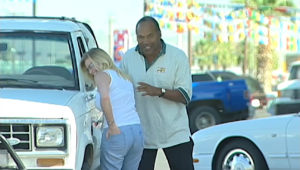
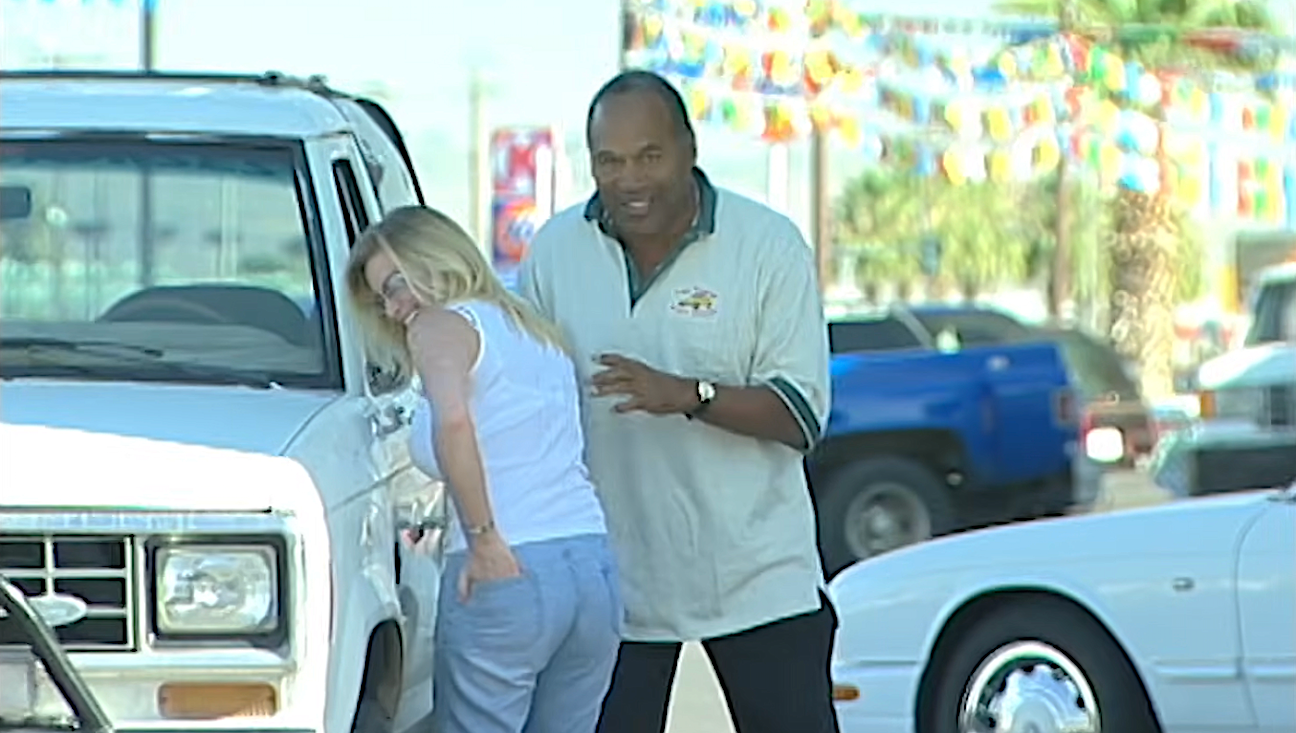
As a finished TV product, Juiced doesn’t have much juice. Most of the pranks come down to unwitting people realizing O.J. Simpson is in front of them, which produces mostly bemused looks and uncomfortable laughs from the marks. One segment, where Simpson poses as a used car salesman and tries to make deals on a white Ford Bronco, comes off as truly tone-deaf. Pranks are intercut with Simpson talking to the camera and an even more tasteless rap video, where Simpson, dressed like a stereotypical pimp, is surrounded by topless dancers.
It’s in the behind-the-scenes footage that O.J. Unseen really comes to life. There are a number of “what were they thinking?” moments — like the Bronco sketch — and a few surreal scenes, including one teased in the show’s trailer where it appears Simpson is about to tell the crew what happened the night his ex-wife and Goldman were killed.
Koops describes the scene: “[Simpson is] being driven in the car with Todd. He’s probably a couple, if not more, drinks in, and he begins to talk about the trial and about his whole background. That’s the moment for me where true crime, reality television and celebrity culture collided, and it was fascinating. It felt like we were as close to finding out the truth as we’re ever going to be. [As a viewer] I’m like, ‘Todd, why didn’t you ask him this? Why didn’t you hang in there on this?’”
Another moment has stuck in Day’s mind: Simpson is being put into prosthetic makeup to look like an older white man … while Court TV plays on a set in front of him. “He’s sitting there watching Court TV, and he has very informed opinions on what it means to be a good celebrity and a bad celebrity in terms of your ability to get a conviction or be exonerated,” Day says. “Love or hate him, he has an informed opinion and insight that’s unique to him, because he experienced all sides of that celebrity culture and running through the court system like nobody else has.”
Simpson never regained the level of fame and goodwill he had before the murder trial, but he also never really left the public consciousness. A year after Juiced, he was involved in an armed robbery case in Las Vegas and served nearly nine years in prison after being convicted. A host of documentaries — including the Oscar- and Emmy-winning O.J.: Made in America — and the first season of Ryan Murphy’s American Crime Story anthology have delved into Simpson’s life.
Juiced never really became part of the public perception of Simpson, but O.J. Unseen makes the case that the show was an early (if extremely flawed and ill-considered) attempt at celebrity brand management that’s commonplace now, with stars and influencers speaking directly to their audiences.
“We are going back to an era here where there were a small number of people who controlled the cable distribution platforms and an equally small number of people who controlled DVD distribution in [retailers like] Best Buy and Sam Goody,” Day notes. “They had the opportunity to decide what was going to go past their gates. This was one of those that they collectively, not consciously and not in any sort of concerted way, thought crossed the line. I don’t know that we’ve got a force that, for better or worse, has the capability to do that 1788810341. It is the Wild West in the most crazy sense in terms of how stuff can get out there, and I don’t know that it makes me feel better or worse that those gatekeepers don’t exist.”
O.J. Unseen: Exploitation of Evil airs at 8 p.m. Monday and Tuesday on ID and HBO Max.
Read the full article here