





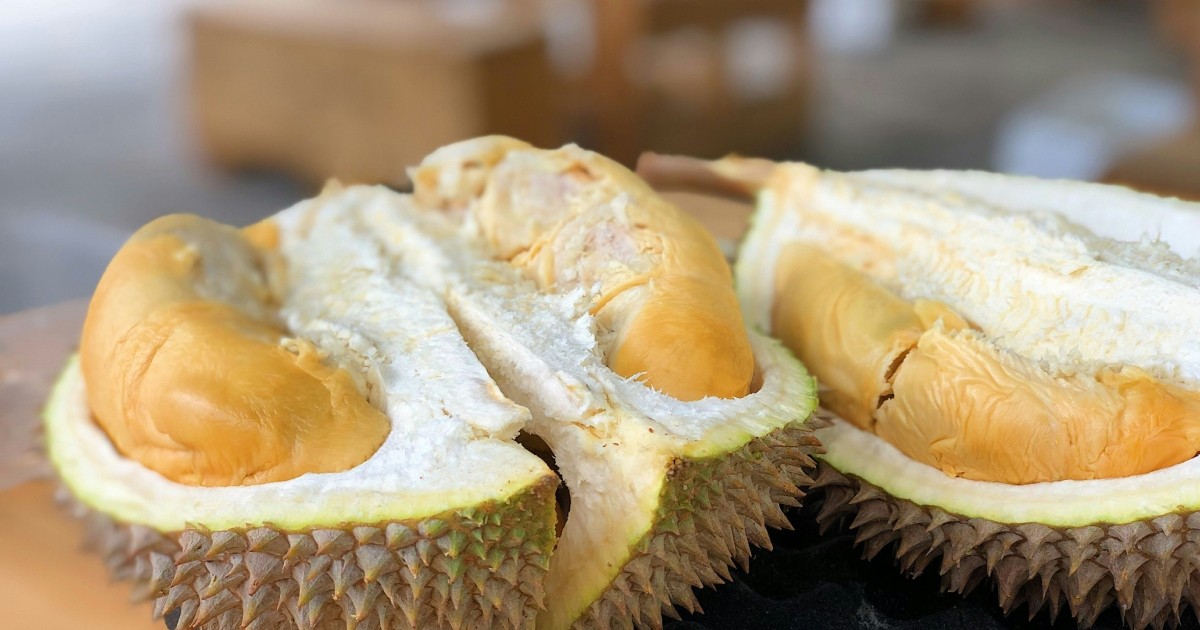


Durian season is in full swing — and there’s no lack of buffets, discounts and even giveaways popping up across Singapore.
But before you reach for another piece of the pungent fruit, you may want to stop and think: Just how many durians should you eat in a day?
While it has a reputation of being less healthy than other fruits, durian is actually rich in nutrients and can be part of a healthy and balanced diet.
According to Changi General Hospital’s dietitians, durian has good monounsaturated fats, otherwise known as “good” fats, that can help lower harmful cholesterol levels and moderate high blood pressure.
These can help reduce risks of heart disease and stroke, said the principal dietitian at Raffles Medical Group.
Durian brings other health benefits which include mproving muscle strength and skin health, regulating bowel movements, supporting the nervous and immune systems, and enhancing red blood cell formation as it is rich in potassium, dietary fibre, iron, vitamin C and vitamin B complex.
The fruit also has polyphenols such as flavonoids and carotenoids — anti-oxidative compounds that may help decrease the risk of cardiovascular diseases, cancer and diabetes, said dietitians from Mount Alvernia Hospital.
Interestingly, the claim that eating durians can put you in a great mood is not unfounded.
Durians contain tryptophan, a food-derived amino acid involved in the production of serotonin — the “feel good” hormone associated with mood regulation.
“During digestion, tryptophan gets converted into serotonin, which may induce feelings of relaxation and improved mood,” a doctor at Raffles Diabetes and Endocrine Centre explained.
“Tryptophan is also converted to melatonin, a hormone that controls your sleep cycle and may help you fall asleep easier.”
How much durian can we eat?
That being said, experts caution that the fruit should be enjoyed in moderation.
CGH dietitians recommend limiting consumption to two to three seeds of durian per sitting, a guideline echoed by Mount Alvernia and Raffles Medical.
While nutritious, the fruit is also high in calories, sugar and carbohydrates — which can cause weight gain and blood sugar spikes when consumed carelessly.
This also means that those who have diabetes should be more mindful when indulging in durian. The recommended intake per serving for diabetics is one to two seeds per sitting, according to Khoo Teck Puat Hospital.

For instance, a small whole durian has approximately 885 calories and 163g of total carbohydrates.
This would take up nearly half of the recommended daily calorie intake for an average adult (1,800 calories for women and 2,000 for men), and put you more than 50 per cent over the daily nutritional requirement for carbohydrates, the dietitians explained.
Is durian really ‘heaty’?
Beyond calorie concerns, durian has a long-standing reputation for being “heaty”. In Traditional Chinese Medicine (TCM), this refers to foods that are believed to raise the body’s internal body heat, potentially resulting in symptoms such as sore throat, mouth ulcers and constipation.
In TCM, durian is considered a “heaty” food, as it has “warming” properties that may be neutralised with “cooling” beverages such as salt water, mint tea, coconut water, chrysanthemum tea, and green tea, said a TCM physician at Raffles Chinese Medicine.
Durian is often paired with mangosteen due to the latter’s “cooling” properties — though there is no scientific research to support the claim.
The fruit pairing most likely stemmed from the fact that the two fruits are often harvested at around the same time, dieticians said.
Experts from both disciplines, however, maintain a common advice when it comes to enjoying durians — moderation is key.
A fatal combination?
Besides its perceived “heatiness”, the king of fruits is also subject to many other dietary taboos — such as how pairing it with alcohol such as beer can trigger heart attacks, or even death.
And while experts do not recommend pairing these food items together, the reason is less sinister.
According to doctors from National University Hospital, the combination is more likely to cause bloating, indigestion and discomfort, as the liver has to work “extra hard” to metabolise both fats and sugars in the durian and the alcohol, especially if consumed in excessive amounts.
So, what’s the verdict on the king of fruits, health-wise?
The general consensus from health experts suggests that balance is key when it comes to enjoying durian.
While the fruit may not be as “sinful” as many believe, it is crucial to be mindful while enjoying it — overeating can quickly outweigh its health benefits.
[[nid:738742]]
carol.ong@asiaone.com
Read the full article here