


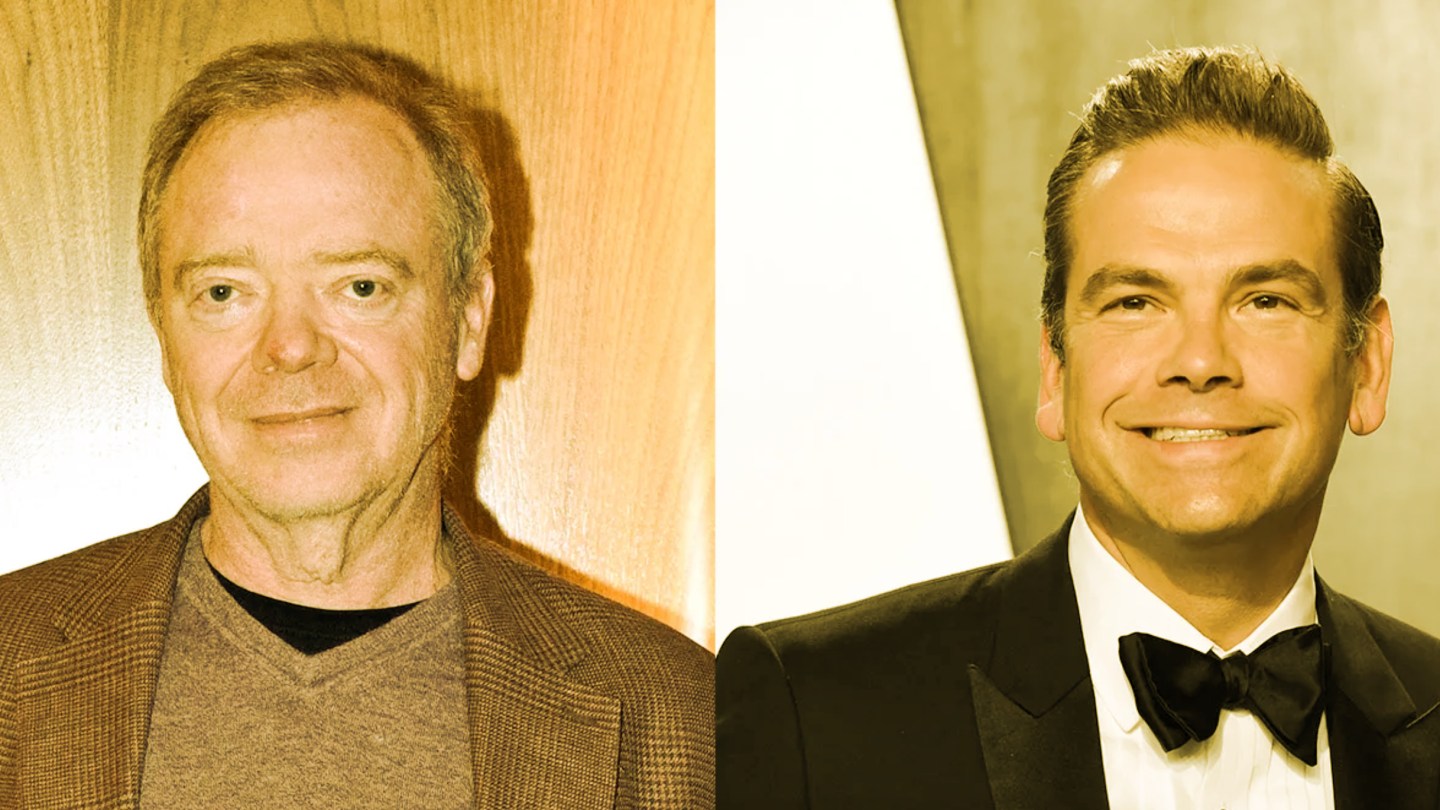


In late September of last year, Roku founder and CEO Anthony Wood told the company’s board of directors that he wanted to discuss the tricky topic of succession.
At the company’s quarterly board meeting, Wood “articulated his plan to scale back his involvement in running Roku,” and recommended someone who could serve as co-CEO alongside him before he ultimately exits to a board role. He also told the board that they may want to consider a sale of the company. (The timeline of the deal was disclosed in an S-4 filing associated with the deal on Aug. 7.)
The board took in Wood’s suggestion, and ultimately decided that a “market check” that would gauge possible buyer interest in the company was necessary.
That check of the market would ultimately lead to Fox Corp.’s $22 billion megadeal to acquire the streaming platform, a deal that will change the streaming landscape in a dramatic way if it closes as expected in the first half of 2027. Roku boasts more than 100 million streaming households that it reaches, while Fox (in addition to its broadcast and cable networks) owns free, ad-supported streamer Tubi, which just hit the 110 million user milestone.
Wood, 60, founded Roku in 2002, and built the predecessor to today’s product in 2008, when the company was associated with Netflix, which had a large equity stake. His initial plan to appoint a co-CEO was perhaps inspired by Reed Hastings’ effort at Netflix, which saw him elevate Ted Sarandos and later Greg Peters before stepping aside entirely.
But Roku’s board appeared skeptical of his succession effort, writing in the filing that Wood stepping aside “posed potential risks to Roku’s business, including, for example, the loss of his expertise and strategic insights, which could affect the execution of Roku’s strategic plan, and which risks, the Roku Board believed, could be increased given the inherent uncertainty of a CEO succession process.”
And while Wood had initially expressed a desire to step back from Roku in the near-to-medium term, the Fox deal will keep him in the fold as an executive for at least a year, before he shifts to the board role.
The filing indicates that Roku began the market outreach process early this year, with its financial advisors (and Wood himself in some cases) reaching out to 12 possible counterparties, including Fox. The board also explicitly opted not to reach out to three others “in light of strategic business considerations” and commercial sensitivities.” Roku would ultimately also bring one of those companies, dubbed, ‘Party K,’ into the fold, despite those concerns.
While Roku doesn’t name the parties it reached out to, one can imagine that Comcast, Google, Amazon and Apple could be among that group. At the end of the day, only Fox emerged as a serious bidder, though others certainly kicked the tires.
Fox Corp chief Lachlan Murdoch and Wood met in late April in New York, where he broke the news to the Roku CEO that Fox was planning to make a bid for his company, and breached the topic of whether Wood would be willing to stick around after any deal (Wood told him it would be premature to discuss). “At the meeting, Mr. Murdoch asked Mr. Wood about his perspectives on various elements of Roku’s business, including artificial intelligence content and how to continue to drive revenue growth,” the filing also states.
The two met again in New York in June, where Murdoch asked him once more about a role at the company, and mentioned the possibility of a Fox board seat post-deal: “Mr. Wood indicated that, if and only if the Committee determined that his doing so would be in the best interests of Roku’s other stockholders, he was open to a potential role, including a board seat, and would bring the discussion to the attention of the Committee. Mr. Wood also indicated to Mr. Murdoch that he would be willing to consider a continuing role for only a limited period (likely one year).”
“Mr. Wood additionally explained that, as he had stated at the September 26, 2025 and December 17, 2025 Roku Board meetings, his desire was to scale back his involvement in the day-to-day
management of Roku, including by stepping down as CEO, and he was reluctant to consider a role that could require continued involvement in management,” the filing also said. “Mr. Wood noted that, as he had informed Mr. Murdoch at their meeting when Mr. Murdoch had suggested the possibility that Mr. Wood continue his involvement with Roku for up to two years, Mr. Wood would be willing to consider a potential role at FOX for a shorter period…”
Ultimately, when the companies formally announced their merger in June, they told Wall Street that Wood “will have an ongoing role at the combined company and will join the Fox Board of Directors following the close of the transaction.” Though precisely how long he sticks around in an operating capacity remains to be seen.
The filing also pulls back the curtain a bit on the internal financial expectations for both Fox and Roku, with both companies forecasting substantial revenue growth over the next few years.
Fox says that it expects to end fiscal 2026 with $16.9 billion in revenue and adjusted EBITDA of $3.74 billion. The company says that it expects it to rise significantly to $21.5 billion in 2031, with adjusted EBITDA of $4.7 billion.
Roku, meanwhile, expects to end 2026 with $5.7 billion in revenue and $650 million in adjusted EBITDA, rising to $10.6 billion in revenue and $2.2 billion in adjusted EBITDA by the end of 2030.
That’s predicated on a deal close, of course. As with Paramount’s $111 billion merger plan for Warner Bros. Discovery, Donald Trump’s administration regulators have thus far been willing to allow many mega-deals to go through, provided the companies involved agree to remedies that maintain some level of competition.
In August, Capitol Forum reported that the DOJ had asked Fox and Roku to refile its premerger notification forms in order to give it more time to review the deal. Given Fox’s ownership of Fox News, it is also possible that some blue state AGs take a close look at the deal. After all, it’s 12 states, led by California, that are trying to block David Ellison’s Paramount deal. If the merger does close in the first half of next year, the companies expect $400 million in cost synergies.
When the Murdochs sold most of their entertainment business to Disney, it was to help Bob Iger turbocharge his company’s streaming ambitions, while Fox focused on a smaller, TV-focused strategy. With the Roku deal in sight, the finances of the two companies suggest that Fox may become a streaming giant, one that holds the keys to the platform, if not the content.
Read the full article here