




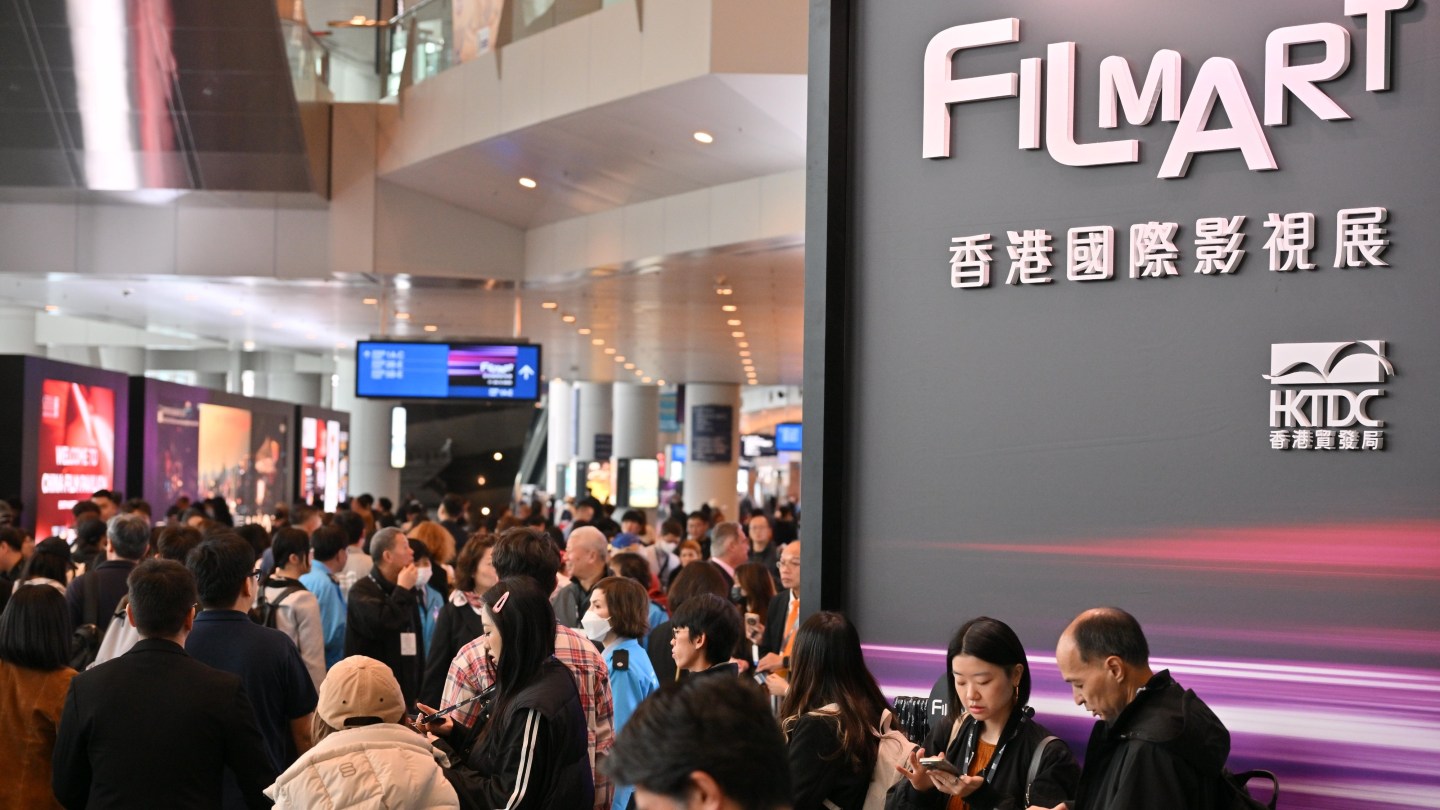

Hong Kong’s annual Filmart industry platform marks its 30th edition March 17–20. Before diving into how this year’s event plans to help chart the future of global entertainment, it’s worth reflecting on where things stood at its 1997 debut — and how much has changed since.
Filmart launched in June 1997, just weeks before Hong Kong’s return to Chinese sovereignty on July 1. There was palpable uncertainty — both locally and among international guests — about what the future held for the city and its film industry, which had been a key driver of Hong Kong’s creative and economic growth for decades.
By the late ’90s, local box office and production numbers were declining, and the “Hollywood of the East” label had started to fade. But organizers at the Hong Kong Trade and Development Council (HKTDC) saw an opportunity: position Hong Kong as a “connector” between Chinese-language cinema and the world. The timing proved prescient. Mainland Chinese cinema soon began to expand rapidly, and within 15 years, China had become the world’s second-largest film market.
The challenge was keeping pace — but Filmart proved an early adopter of industry-driving trends like pan-Asia (and global) co-productions and the rise of streaming platforms.
Today, while content remains central, organizers emphasize that Filmart has evolved into much more.
“Filmart 2026 is celebrating a key moment: 30 years as Asia’s leading content marketplace, and the fact that it will always continue to evolve and grow alongside the industry,” says Candas Yeung, associate director of the service promotion department at the HKTDC. “It is therefore the right time for it to transform from a content marketplace to a comprehensive platform to serve the whole entertainment ecosystem. To further power up the industry, we will equip players with cutting-edge technology, strategic partnerships, and innovative resources to navigate the evolving landscape and seize new opportunities.”
To that end, Filmart 2026 will amplify its focus on artificial intelligence and emerging trends. PwC predicts AI will contribute $15.7 trillion to the global economy by 2030, with media and entertainment capturing the lion’s share. Yeung says Filmart is “inviting related exhibitors and programming to always remain at the front of the curve” when it comes to this new technology.
This year’s platform will showcase the likes of emerging AI industry players KlingAI, Minimax, Xuanjia Technology and Daogu Culture.
“AI is transforming film and entertainment content production and reshaping the future of storytelling,” says Yeung. “Reports indicate that a significant majority of movies now utilize some form of this technology during production. For 2026, we are diving deep into this world: introducing an AI Hub with enhanced programming, alongside industry-specific AI training and hands-on workshops, all designed to equip participants with practical knowledge and enhance their capabilities. We want to promote AI adoption and foster collaboration between content creators and technology specialists.”
Another example of how Filmart has embraced the entertainment industry’s evolution came with the move — in 2025 — to expand the workings of its IP Catalogue section from simply a place to showcase projects to one that acts as an actual marketplace for them.
“Happily, the response continued to be strong — with more than 1,600 IPs uploaded to the expanded platform, spanning from mainly feature films, followed by TV programs and animation,” explains Yeung. “For 2026, we’ve further enhanced its functionality by adding advanced filter options to help users easily identify the production stage of whichever projects they’re interested in, as well as to clarify whether they are seeking buyers, investors, distributors or other partners.”
These improvements enhance the matchmaking process and make navigation more efficient, Yeung says, reinforcing the platform’s function as a critical link between creators and international partners.
In terms of Chinese-language cinema, one trend that has been impossible to escape is the rapid growth of animation, fueled by the global Ne Zha 2 phenomenon, and its place now as the highest-grossing animated hit of all time with an estimated $2.2 billion in global box office.
Filmart will feature a The Power of IP in Animation panel that will “explore market trends and growth opportunities across the globe, with spokespeople from leading companies including Warner Bros Discovery, CNC, Iconix Co, Ltd. and Fantawild Animation.”
Another panel — Harnessing Youth Engagement: Oshikatsu, Healing Economy and IP Marketing — will explore the global obsession with pop-culture idols and oshikatsu (fan support culture), alongside the wellness industry and their combined IP potential. Speakers include representatives from Chinese digital media and marketing leader Feibo Co-Create and gift-maker Noodoll.
“We plan to fully step into this evolving world of youth culture, where Oshikatsu, the healing economy, and the rise of goods/IP ecosystems are reshaping how young consumers connect and spend,” says Yeung. “Brands now have powerful opportunities to tap these emotional drivers — from building their own IPs to extending their stories into fan-centric worlds and partnering with beloved characters.
Yeung argues that by understanding younger generations’ motivations, behaviors and desire for “emotional ownership,” brands can create more resonant experiences that inspire lasting engagement.
It all circles back to Filmart’s founding mission: positioning Hong Kong as the bridge between markets and anticipating where the industry is headed. For Yeung, that vision remains central.
“Attendees are encouraged to engage with these trends and explore how they can enhance their businesses and projects,” says Yeung. “And, of course, everyone should take advantage of Hong Kong’s unique positioning as the bond between East and West, Chinese mainland and international markets – Filmart really is the place to expand reach across Asia and beyond.”
Read the full article here