




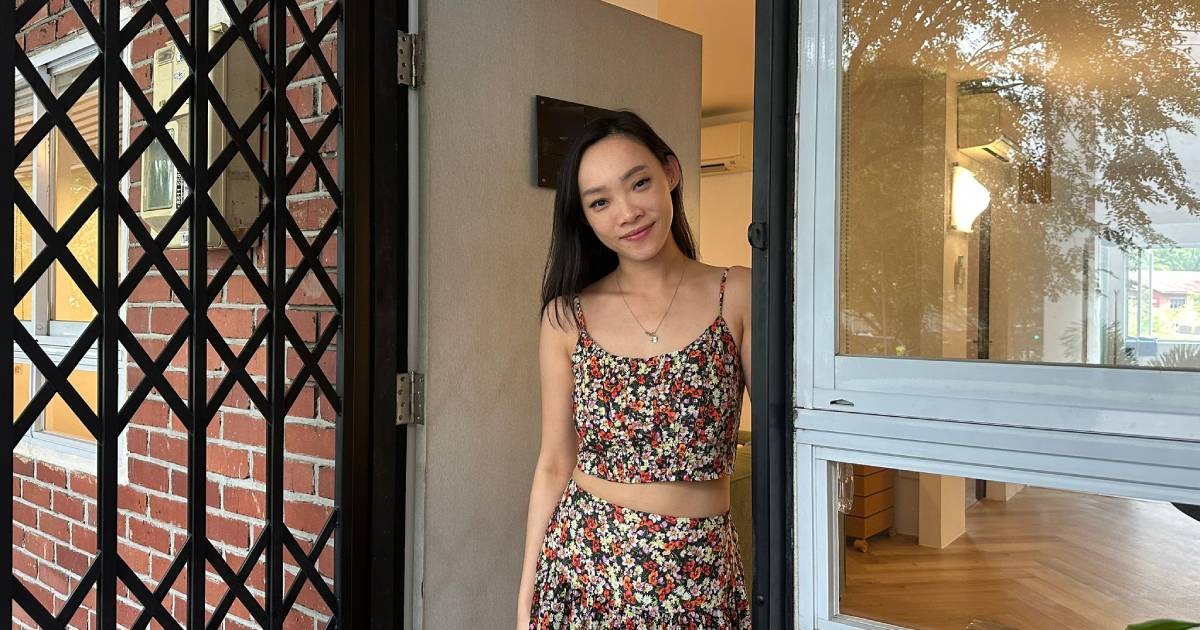


You may have seen a video of this cosy home on social media and wondered why the owner bought a 50-year-old HDB flat.
“This is the pathway to financial ruin” and “It’s a big no for me” were some of the comments on Tan Li Yi’s TikTok video, where she explained why she bought the house.
Others called her courageous for buying an old unit.
Despite these comments, Li Yi, who is in her late 30s, said she has no regrets about her purchase.
“I really didn’t understand what they meant until I realised that is the consensus — that I’m very brave to buy a house that will have almost no returns on investment. But it didn’t even concern me at all,” the small business owner told AsiaOne when we recently visited her beautiful red-brick home.
“I can see a lot of returns in this house. It’s going to give me the lifestyle I want. There are so many other returns other than financial returns.”
Search for ‘forever home’
For the past five years, Li Yi had been living with her mother in her childhood home in Bedok.
While there wasn’t a pressing need for her to move out, she felt it was time to have a place of her own.
“I think it was long overdue. I’m a fully grown, overripe adult. It’s time to move out,” she said with a laugh.
House hunting on her own came with its challenges, but Li Yi embraced the process.
“You have to do everything yourself,” she said.
“You have to search for a flat alone, and when you finally get the keys and start on renovations, you do it alone, without having somebody else to share the burden with. I think that is the challenge. But it is part of adulting.”
From the get-go, she knew which neighbourhoods she wanted to live in and narrowed her search down to two areas.
After about five months of house-hunting in 2024, she settled on a three-room flat in central Singapore.
“I chose this area because I really like the convenience. It’s charming and feels very authentic,” she shared, adding that her home is near hawker centres, old-school bakeries, fitness studios, and cafes that fit her lifestyle.
Li Yi purchased the flat for about $400,000 under the Single Singapore Citizen Scheme and secured the unit in early January.
While she had already set aside enough money for the house, she was unaware that she would not be granted a full loan because the flat’s remaining lease would not cover her until she turns 95.
“The loan was pro-rated, so I had to fork out more money,” she explained, adding that this cut a little into her renovation budget of about $30,000.
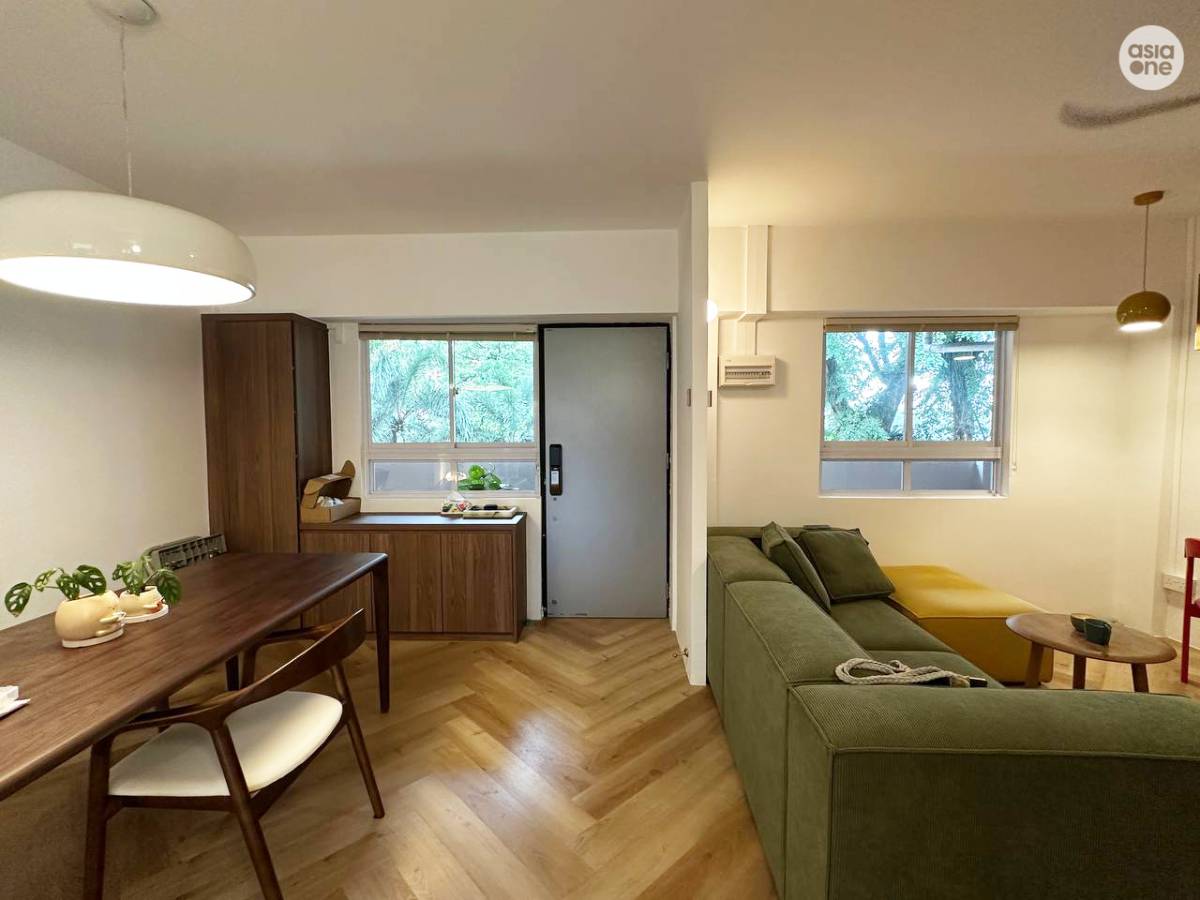

Renovations began in March and ended five months later. Once the renovations were done, Li Yi started her TikTok and Instagram accounts, @waffleflat, to document her home journey.
When asked why she dubbed it “waffle flat”, the homeowner said that there was no deeper meaning behind the name and she just liked the sound of it.
“It felt fun, light, and unpretentious, which matched how I wanted to document my home,” she shared.
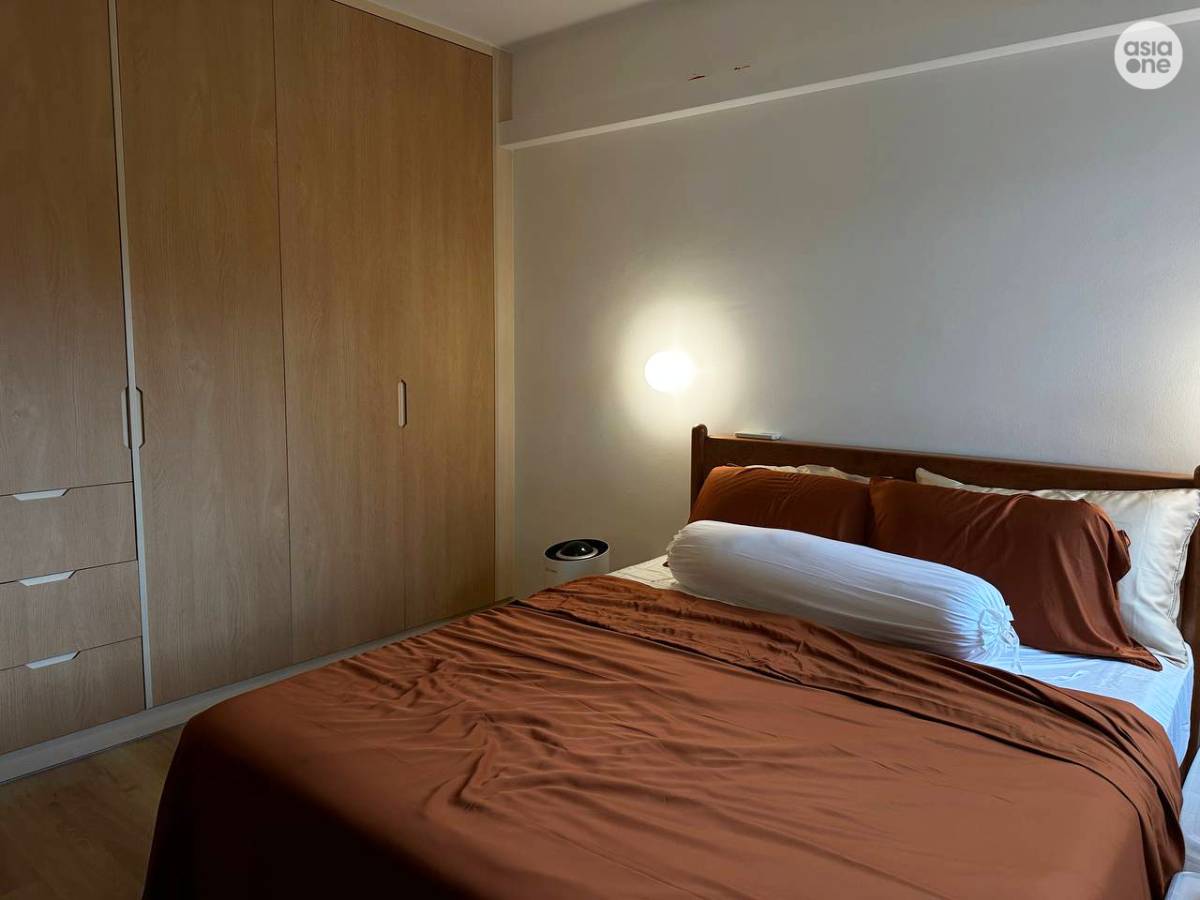
As she did not engage an interior designer, she managed the contractors herself and spent around $30,000, mostly on wall hacking, flooring, and carpentry for her bedroom wardrobe and kitchen.
The previous owner, who lived in the flat for around 10 years, had kept the house in good condition. Thus, Li Yi didn’t have to revamp some areas of the house.
“He had already done a massive renovation before me. So all the electric works, wiring, and windows, I didn’t touch those at all,” she shared.
To save money, Li Yi sourced the bulk of her furniture, including her sofa, walnut dining table, and bed frame, from Chinese shopping platform Taobao for around $5,000.
She also used e-commerce platform Carousell to hunt for good bargains.
“I bought my Wells water dispenser for around $600. The usual price is $2,800,” Li Yi proudly told us while gesturing towards her kitchen.
Between two homes
Despite owning her own house, Li Yi has yet to fully move in.
She still shuttles between her mother’s home and her flat several times a week, even though the journey takes about an hour by public transport.
The biggest reason for this was a lack of a “push factor”.
“There are a lot of people who have to move into a home because they have already sold their property. But I have my mum’s place, and I’m so comfortable there,” she explained.
Li Yi also admitted to feeling some inertia about moving despite her fondness for her new neighbourhood.
“I don’t know anybody here. I don’t even know the neighbourhood well,” she said.
To ease herself into the new space, she has been doing weekend “staycations” there and will often get her boyfriend, whom she met after purchasing the house, to accompany her.

She also found it difficult to leave her mother on her own.
“The thought that keeps running through my head is ‘Oh my god, my mum is going to be alone’. Am I leaving my mum? It is a struggle,” said Li Yi.
“I want to have my own space. I’d love to cook up a storm and invite friends over, because I can’t really do that at my mum’s place. But there is a bond there with my mum. Will she feel lonely?”
Before the Covid-19 pandemic, Li Yi rented a house for six years due to her work as a wedding stylist.
“When I rented my own place, I was so happy. I really liked staying on my own. So, I didn’t think it would be so difficult this time,” she told AsiaOne.
“But I realised that when you move into your forever home, there is a sense of longing for your old home, because you know the change is permanent.
While she is still adjusting to the new environment, Li Yi said being a homeowner has been a liberating experience.
“During the renovation process, I really felt a sense of freedom. I could basically do whatever I want to the space. I want to buy this sofa, I get it. I want a walnut table, I get it. I don’t have to ask anybody, and that’s the beauty of it. I really, really love that freedom.
“The downside is I have to be more responsible. I have to buy toilet rolls and all kinds of cleaning tools,” she said with a laugh.


While the home is already furnished with the basics such as a bed, sofa, dining table, and kitchen fixtures, Li Yi still has big plans for the space and estimates that it is only about 60 per cent complete.
She also plans to DIY several elements, including a mosaic-tiled bar counter and a coloured backsplash for the area above her kitchen sink.
Her favourite part of the house so far? It’s the kitchen.
“That’s where the light streams in during sunset. I wanted to build a little sanctuary there with all my plants in a corner. It’s still empty because I haven’t really decided on what to do. So I’m really looking forward to seeing what I can do with the space,” she said excitedly.
A home, not an asset
While many Singaporeans view their homes as an asset, Li Yi chooses to look at this from another perspective.
“Don’t fixate so much on the financial returns of a house. How about seeing it as a place that you go home to every day instead of an asset? Follow your heart a little bit more,” she said.
“Because we worry so much about the far future, we are neglecting what we can have now. Of course, I’m not asking people to be reckless, I don’t think I bought this house recklessly.”
Li Yi also said that there are many things that we can’t predict about the future.
“I didn’t plan to not be married at this time. If I kept having the mindset that I can only buy a house when I get into a relationship but end up not finding a partner, what would I do?
“Just do what feels right at the moment, prudently and not recklessly. I think that is the best.”
She added that there is no wrong or right when it comes to finding a home.
“It depends on our priorities. If your priority is on finance and returns on investment, then go ahead and get something else. But I have different priorities.”
[[nid:558541]]
melissateo@asiaone.com
Read the full article here