



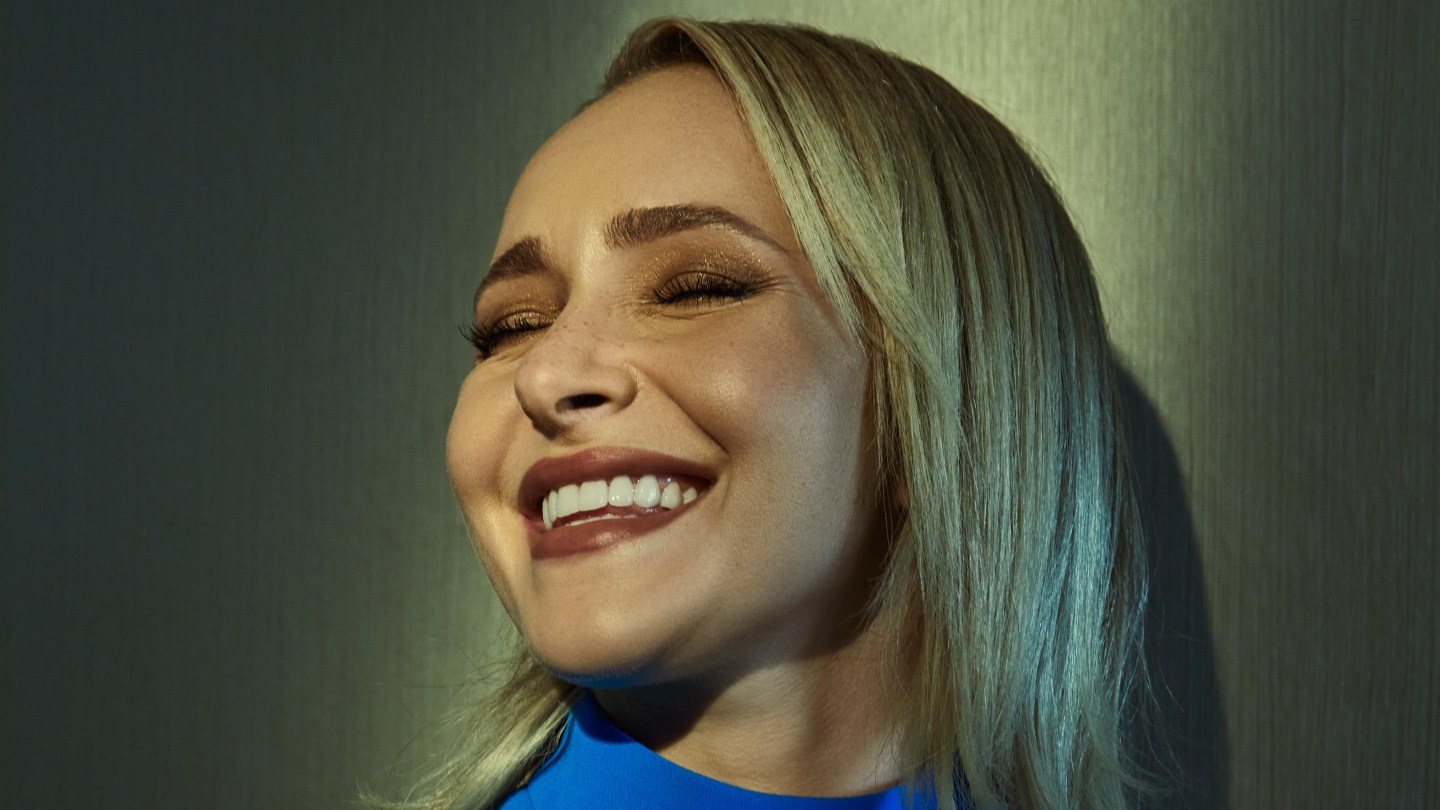


The first time that Hayden Panettiere realized she was tabloid fodder, she was 16 years old. A paparazzo had snapped her wearing shorts, bending over, and the photo was published along with commentary about her supposed cellulite. After that moment — and a brief dalliance with the comments section on the photo — she decided to start filtering out the press about herself. “But, sometimes, things would get through,” she says. “My publicist would get a call asking for comment about something about my life, and I’d have to decide, do I go no comment and let them put out whatever version they want? Or do I comment to get ahead of it, but be forced to talk about things that I really don’t want to?”
The actress, now 36, says that in the decades since, there have been countless moments of misinformation — and that it’s what led to, and gave her the bravery to, finally sit down and write her memoir. In This Is Me: A Reckoning (out May 19), Panettiere delves into her experience as a child actor at the whim of an overly eager stage mom, navigating her time on hit television shows (Heroes and Nashville) while her personal life crumbled and the substance abuse issues that stemmed from it all. “One of the things that I was most terrified about, when deciding whether or not to write this book, was that I knew what was going to come along with it,” she says of the ways she’s been rehashing her traumas during the book’s still-nascent press tour. “I had to sit with myself and make a decision, and I realized it was more important for me to share my stories and to wipe the slate clean.”
Below, she speaks to The Hollywood Reporter about the biggest revelations from its pages: the powerful people who caused her harm, the way her personal tragedies affected her biggest career milestones and the way she’s reflecting on the business of acting as a whole.
People have been really supportive of you coming out as bisexual in the book. Have you been engaging with the headlines this time around?
I’ve gotten a lot of positivity and it’s heartwarming. Reading those comments from people within the industry and outside of it, it makes me feel like I made the right decision to write the book.
A lot of the things that you discuss for the first time, like being bisexual, are things that you have known for a long time or experienced a long time ago. Is there anything in the book that you’re still trying to process?
Having to touch on everything about my relationship with my mother, that was one of the harder things to talk about. While writing it, I realized even more so how much of a toll it took on me. And then of course, anytime that [the death of] my little brother comes up. It’s still a subject where I’m moments from bursting into tears any time I try to talk about it. Time can be a great healer, but in this case, my grief just seems to evolve. It’s something I’ll never get over.
You write a lot about your family, whether it’s the complicated feelings you have about the way your mom pushed you during your career as a very young actress, or the dissolution of your parent’s marriage. Did you tell people you would be writing about these things?
I was fiercely protective of people in my writing. I felt very strongly about my ability to tell my stories and make them entertaining enough to put in a book, without having to drag people through the mud. I had members of my team that I would bounce ideas off of, or ask their opinions about things like that I was writing. I mean, my publicist is also my dear friend and I trust her, so I leaned on her to know. And then I made sure that Vlad [Klitschko, Panettiere’s ex-fiancé and father of her daughter] wasn’t going to be upset with me. But other than that, I just had to speak my truth — and it’s mine alone.
There are some celebrities that you name, like when you discuss getting set up with Steven Colletti, or dating and then breaking up with Milo Ventimiglia. And others whom you don’t name, like the incident on the yacht with the much older man. Was there a strategy for who did or didn’t get named?
Yeah, because it was a bad look for them and [the people I didn’t name] were generally people within my industry. They’re people I could run into again. I didn’t want to put myself in that position. Things happened a long time ago, but it was to protect me and my company from being sued by some very pissed-off famous people.
Can you talk about the morality clause you had with Neutrogena, because I think a lot of readers might not realize how standard that is.
Any contract you have, when you are a representative of a company, always has a morality clause. You are the face of a company, and the company wants to look good in the public eye.
Do you have the ability to negotiate back and forth on what each party considers ‘moral’ behavior?
That was always the interesting question, and what threw me the most about my postpartum depression being the thing that ultimately ended my time with them. Like, really, of all the things that people representing your company have done, the thing that you’re going to say is not allowed and that breaks the morality clause is speaking about my postpartum depression? That’s not a moral thing, that’s just a scientific thing. That’s not even legal. You cannot legally fire somebody for having postpartum depression. It’s not a choice I made. It wasn’t my fault. So that one blew my mind.
Do you think the same thing would happen today?
After I was public about it and talked about the Neutrogena aspect of it, I don’t think anybody in that industry will be doing that to anyone else.
Another contract you discuss in the book is your no-kill clause in Scream. I didn’t realize you could ask for that.
You can ask. It doesn’t mean you’re going to get it. And there are loopholes. It took a couple films for them to bring me back into the Scream franchise. And obviously, I wasn’t in the last one, but I’m still alive and kicking in that universe so I would be thrilled to come back whenever.
Your younger brother, Jansen, passed away shortly before the Scream 6 press tour started and you write about trying to go through with your press commitments. Did you feel pressure to do that?
I didn’t know whether it would be a welcome distraction or whether I was pushing myself too soon. It wasn’t until I was physically there doing it that I realized I was about to break down and had to cancel on a bunch of people. It takes a team that tells you it’s OK to cancel, that you’re allowed to, and that was my publicist. I’m not sure I should have put myself in that position.
When you do feel pressure, does it come from a studio or network wanting you to honor your commitments? Or is it more of a fear that you need to take all the moments you can to do press or to work?
I think it’s the way I was raised. I was groomed. I was like a little soldier and I always have been. No was never an option. It was just, here are your scenes, here’s your dialogue, memorize it, hit the marks, do what your director tells you to do. I took my marching orders.
At what point did you realize that being groomed in that way was abnormal?
When I started self-harming in the form of substance abuse. My people pleasing had built up and up, it was anger and anxiety and frustration. My life revolved around other people, and I lived to make other people happy and I was the last one on the list. The pressure of that built and built and just exploded. I started figuring out any way I could get through it. Sometimes they’ll say in treatment that, believe it or not, our addictions probably saved us at a certain point.
Once you realized that was happening, did you find it easier to make business decisions for yourself?
No. Then I was dealing with all those years of being the yes man and not sticking up for myself. Never saying no, I don’t feel comfortable doing that or telling people that I’m overworked. I would push myself to do whatever they wanted on set, but it was too much for any one person.
Can you pinpoint the role, or the business decision, that marked when your career was fully yours?
I don’t think anybody has seen it yet fully. It’s to come; it’s still something I’m working on.
You write about struggling with the storylines of your two biggest shows — the way the quality dipped on later seasons of Heroes, and the way Juliette’s arc on Nashville started to resemble your own personal strife. Was there ever a point at which the actors on those shows had the chance to speak up about it?
The scripts come in so fast, and we had so little time, that we’d really be throwing a wrench in the wheel. At this point in my career, I might try and say something like, “Let’s just please have a conversation before this even starts. Please don’t drag me through the mud constantly.” I’m happy to do it once in a while, but it takes a toll on me.
Did you have any mentors on those sets who could try to protect you or stand up for you?
I did, but not really on Nashville. I felt like I was very much on my own on Nashville. Jonathan Jackson was a great support to me when we played husband and wife. He’s an incredible scene partner and if I needed anything, he was there in a second.
Knowing what you do about the business, would you want your younger self to start acting as a child? Would you feel comfortable with your daughter doing it?
That’s the thing is I will always wonder if I would have gravitated naturally towards acting, if I had not been pushed into it. But I see my daughter, at 11 years old, taking an interest. I will say, please go to college, please try things out. And if you really love it, then I will support you wholeheartedly. And if she doesn’t like it, she can get out. Her world doesn’t have to revolve around that. I never had anything to fall back on. I never went to college. There’s no going back. But I am grateful for the position that I’m in, and for the things I want to accomplish. I would love to do action, I would love to produce, I want to direct. I’d love to do comedy. People would be shocked to know that I might be a little bit funny (Laughs).
Read the full article here