



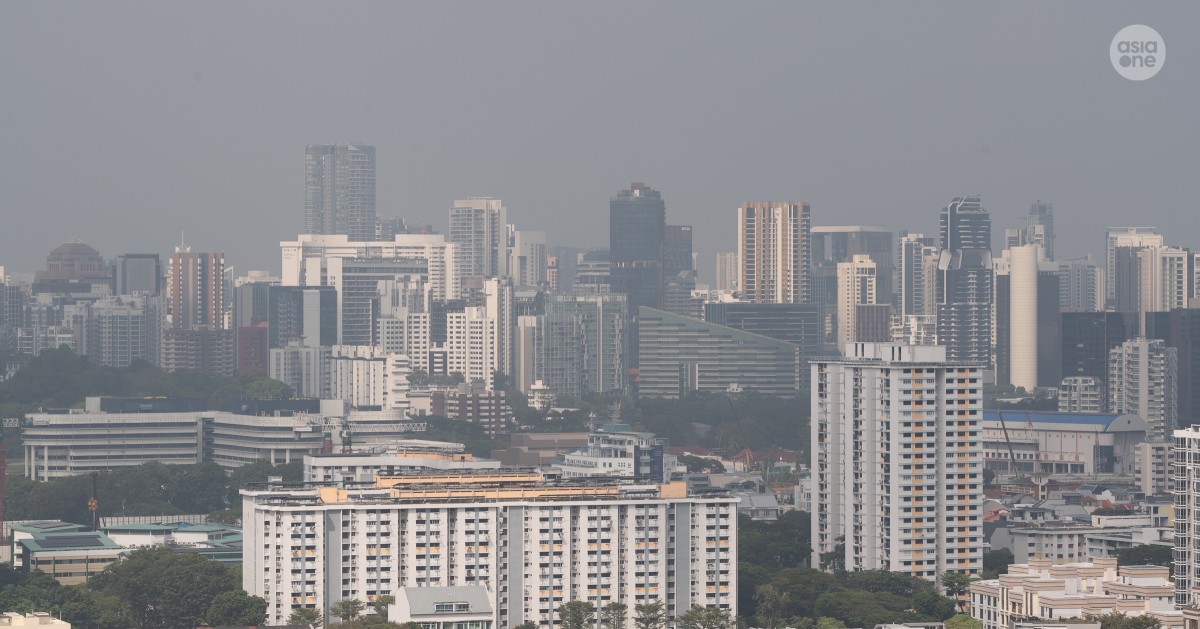

With Singapore facing hazy conditions due to smoke from forest fires in Johor, you might have noticed a burning smell when you step outdoors.
The National Environment Agency said on Monday (March 30) that this was exacerbated by strong winds and dry conditions.
According to NEA’s haze microsite, the Pollutant Standards Index (PSI) levels in Singapore are still in the good to moderate range — below the unhealthy threshold of 101.
PM2.5 readings, which measure fine particles with a diameter of 2.5 micrometres or less, have also remained at a normal level.
Some people, however, shared that they’ve been feeling unwell due to the haze.
Local content creator Nicole Liel, who lives in Yishun, stated in a TikTok video last week that she has been getting headaches.
Several netizens commented on her video, saying that they’ve also experienced symptoms such as difficulty breathing and coughing.
Some netizens on Reddit said the haze has affected their health as well.
One Redditor wrote: “I have been sneezing non-stop these few nights, keep having to blow my nose.. .woke up this morning with my nostrils itchy and having this mild burning sensation.”
According to CNA, clinics in Singapore have seen a rise in haze-related cases, with some witnessing patient numbers climb by up to 20 per cent over the past three months.
Aside from respiratory issues, people are also experiencing itchy eyes and skin flare-ups.
How to protect yourself from haze
So, how can people look after their health during this time?
HealthHub recommends checking hourly PM2.5 readings and daily PSI readings before deciding on outdoor activities such as runs or walks.
While it is still safe to continue outdoor workouts or activities if PSI and PM2.5 levels are in the normal range, the Ministry of Health (MOH) advises people to drink plenty of water if they are experiencing symptoms such as a dry and itchy throat.
If the outdoor air quality worsens, one should avoid going out and close all doors and windows to reduce exposure to haze particles. While air conditioners can help with air circulation and cooling, an air purifier is recommended to further reduce indoor particle levelz.
If the PSI reading is over 300 and you have to go outdoors, make sure to use an N95 mask — which can filter out even PM2.5 haze particles. Those with chronic lung or heart disease, or the elderly or pregnant, can also wear an N95 mask when the PSI reading is higher than 200.
Normal surgical masks — while not effective in filtering fine particles — can provide a barrier between the wearer’s nose and mouth, and larger irritants in the air, said MOH.
Those with chronic heart and lung conditions, as well as children and the elderly should take extra precautions during this period, even if pollution levels are not high.
This includes the measures mentioned earlier, alongside ensuring your medications are readily available and within reach.
If you develop symptoms or feel unwell, seek medical attention immediately.
[[nid:732502]]
Read the full article here