





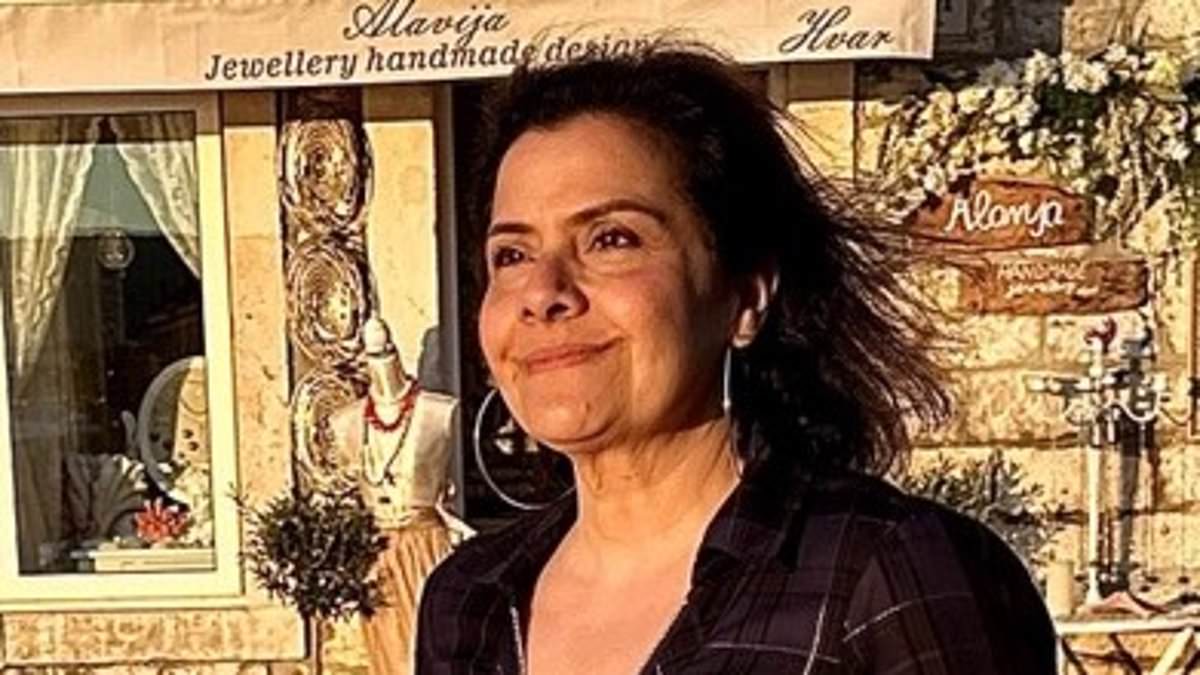


Nina Wadia showed off her incredible glow up and weight loss as she laid into fat jabs in a new interview and insisted they ‘don’t work’.
The EastEnders star, 57, who played Zainab Masood in the BBC soap, detailed how she had achieved her transformation without the use of weight loss injections.
Nina said she had become ‘passionate’ about being as active as she could while on her weight loss journey.
‘For me I have done it very very slowly. I exercise. I walk. I eat healthier. i think its better to do it that way,’ the actress explained.
Giving her opinion on jabs, she said: ‘Quick fixes never work. it’s a change in lifestyle. I’ve just done work with the NHS on this.’
Nina is working with National Lottery funded campaign,This Girl Can, as she urges women to get moving.
Nina Wadiashowed off her incredible glow up and weight lossas she laid into fat jabs in a new interview and insisted they ‘don’t work’
The EastEndersstar, 57, who played Zainab Masood in the BBCsoap, detailed how she had achieved her transformation without the use of weight loss injections (pictured before)
She added to The Sun: ‘It’s very important about being active as you get older. I’m very passionate about it. And to do it naturally.’
The jabs, which were originally developed as diabetes medication before being prescribed off-label as a weight loss drug, work by mimicking a natural gut hormone that increases feelings of fullness. This in turn lessens appetite.
Around 2.5million Britons are now thought to be having weight-loss injections such as Mounjaro and Ozempic.
Now, a trial giving thousands of overweight Britons fat-busting jabs in a bid to get them back to work is now underway, officials have confirmed.
In a first-of-its-kind ‘real world’ trial, up to 3,000 people in Greater Manchester will be prescribed Mounjaro by their GP to assess how effective the drug is on long-term health related issues like unemployment and how many sick days people take.
Previous studies have shown that the drug, dubbed the ‘King Kong’ of fat-busting jabs, can help people lose up to a quarter of their body weight over a year and a half.
Eli Lilly, which makes the drug, is supporting the five year trial as part of a £279million investment in collaboration with the Government.
When the study was announced last year, Health Secretary Wes Streeting said it was ‘key to building a healthier society, healthier economy and making the NHS fit for the future’.
Nina said she had become ‘passionate’ about being as active as she could while on her weight loss journey. ‘For me I have done it very very slowly,’ the actress explained
Giving her opinion on jabs, she said: ‘Quick fixes never work. it’s a change in lifestyle. I’ve just done work with the NHS on this’
The Prime Minister also said at the time that weight-loss drugs could kickstart a major back-to-work drive and boost productivity, describing them as ‘very important for the economy’.
Two in three Britons are classed as overweight or obese and NHS figures show people now weigh about a stone more than 30 years ago, costing the economy an estimated £100billion per year.
Of these, around 600,000 adults live with obesity in Greater Manchester, according to Mark Fisher, chief executive officer of the NHS Greater Manchester Integrated Care Board.
The estimated cost of obesity in the region was more than £3bn in the cost of NHS treatment, social care and quality of life, a 2023 report by consultants Health Innovation Manchester, said.
Dr Imran Ghafoor is a GP Partner at Peterloo Medical Centre in Middleton which is involved in the trial, told the BBC that patients trust his practice as a ‘familiar and accessible space’.
Research from the trial would help ‘test solutions tailored to real lives’, he added.
Currently, the powerful injections are only available on the health service for the very fattest patients and those with several linked diseases.
It means most users are forced to buy the drugs privately, at a cost of roughly £200 a month.
Under the NHS 10-year plan, published earlier this year in July, ministers will work with industry ‘to test innovative models of delivering weight loss services and treatments to patients effectively and safely’ in convenient locations.
This could include ‘on the high street, or at any out-of-town shopping centre’.
Read the full article here