
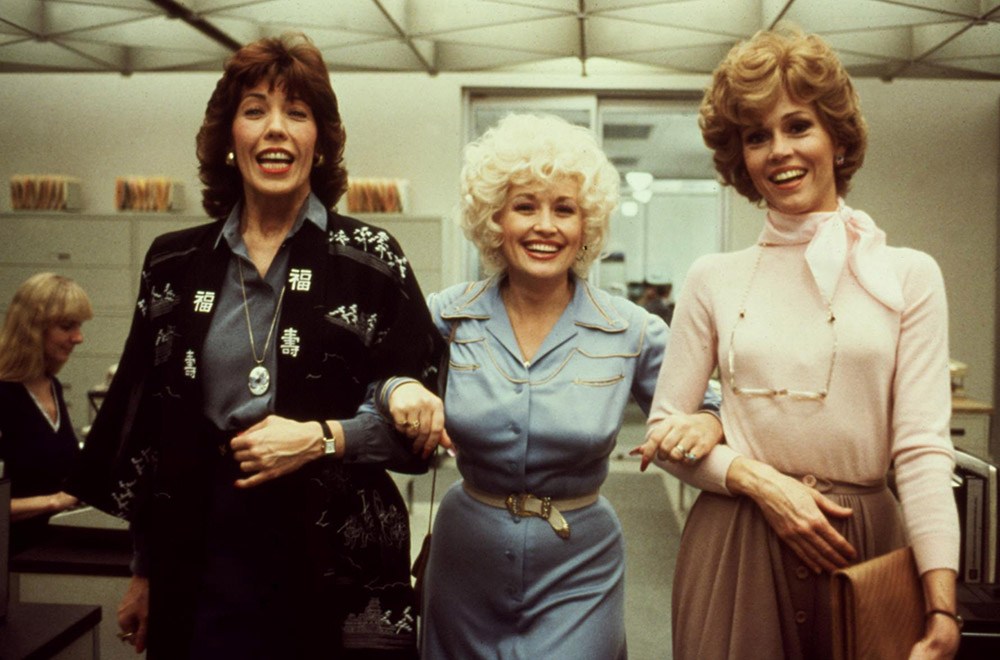


When Jane Fonda was developing the rollicking 1980 workplace farce 9 to 5, inspired by a real-life women’s rights organization of that name, at some point the project shape-shifted from the serious drama that was originally planned to a comedy, enlisting the brilliant Colin Higgins to direct and work on the screenplay with Patricia Resnick.
Having cast Lily Tomlin as her acerbic ally in the secretarial pool, Fonda and producer Bruce Gilbert wanted to broaden the film’s appeal, landing on the idea of a third lead who might push beyond urban liberals to reach mainstream, conservative and Southern audiences. From that commercially-driven demographic strategy, Dolly Parton the Movie Star was born.
As Doralee Rhodes, the happily married secretary of Dabney Coleman’s lecherous corporate vice president, kept busy dodging his unwelcome advances, Parton was a natural. Her luminosity, effervescence, folksy delivery and innate comic timing infused the film with livewire energy, whether she was fantasizing about hog-tieing and spit-roasting the boss or bringing that fantasy to life, like a seasoned rodeo queen.
The movie became a massive hit, grossing more than $103 million at a time when a women-centric, empowerment-minded blockbuster was almost unimaginable. Every one of the predominantly female ensemble comedies that became pop cultural fixtures in later decades — The First Wives Club, Sister Act, The Devil Wears Prada, Bridesmaids, 9 to 5 — a debt.
The eternally catchy country pop theme song Parton wrote and recorded for the film left its own mark, reaching number one on Billboard’s Country, Hot 100 and Adult Contemporary charts. Parton often said in interviews that she came up with the song’s tapping typewriter-key rhythm by clicking her long acrylic fingernails together.
The death of a global superstar is invariably a sad event, but the loss of Parton today at age 80 is an uncommonly crushing blow to many of us. For gay men, she was our North Star, a beacon of inclusivity in a world of persistent intolerance. Her theme park near the Great Smoky Mountains, Dollywood, was a pilgrimage destination on the queer-tourism map. If gays ran the Oval Office, her birthday would be a national holiday.
Parton frequently mined self-deprecating humor from her almost cartoonish appearance — the boobs, the big blonde wigs, the bejeweled outfits, the cosmetic surgeries — and yet she remained unequivocally real.
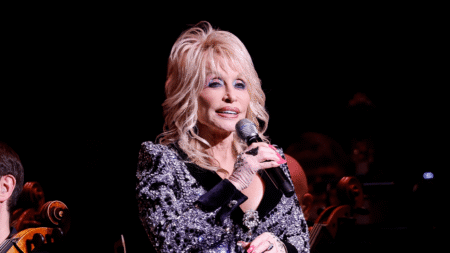
I saw her perform just once at a Radio City Music Hall concert in 2005 as part of her Vintage Tour, along with a sea of gay men who had resurrected their Westernwear from Madonna’s “Don’t Tell Me” period for the occasion. When an elaborate piece of stage scenery malfunctioned and failed to descend from the flies during her opening number, Parton quipped that a little old country girl from East Tennessee should never have even attempted something so fancy.
The iconic look and larger-than-life persona were an inextricable part of her sui generis screen presence in a handful of beloved movies. She was never an actress with significant range, but the thing is, she never had to be. The sweetness, the sense of humor and the old-fashioned goodness that epitomized who she was in her many walks of life made her incandescent. From her very first entrance, we knew exactly who her character was, almost all of them a mirror to who Parton was in real life.
In The Best Little Whorehouse in Texas, starring as Miss Mona Stangley alongside Burt Reynolds, she made being the madam of a brothel — or as she puts it in one of her songs, “A Lil’ Ole Bitty Pissant Country Place” — seem wholesome, caring for her “girls” like they were her own children. Rewatching that cornbread musical in a Houston gay bar in the early ‘80s was a hootenanny I’ll never forget, Stetsons constantly flying up in the air in jubilant appreciation.
In Steel Magnolias, an all-star tear-jerker about the fortitude to be drawn from female friendship in times of sadness, Parton played the big-haired, open-hearted small-town Louisiana beauty parlor owner, Truvy Jones. (Her character names alone are divine.) Her salon was a social hub, a place for harmless gossip and friendly banter, and a respite for its regulars from their frequently exasperating husbands and sons.
Watching Parton hold her own alongside pros like Sally Field, Olympia Dukakis and Shirley MacLaine was bliss, not to mention seeing her character in a loving marriage with the coolest — OK, and sexiest — of modern-day cowboys, Sam Shepard.
It’s doubtful that anyone would try to make a case for the 1984 Sylvester Stallone vehicle, Rhinestone; I wonder if there’s even a living soul who managed to get through it. But Parton could sew a silk purse out of a sow’s ear, introducing two top 10 country hits in the movie.
Her gifts were put to more memorable use in the cheesy but disarming comedy Straight Talk, as Shirlee Kenyon, a Southern transplant looking to rebuild her life in Chicago, where she becomes an accidental talk radio call-in advice show host. And Parton brought her signature warmth and wit to the guilty pleasure Joyful Noise, playing G.G. Sparrow, a feisty widow wrestling for control of her small Georgia town’s choir with Queen Latifah’s Vi Rose Hill. When Vi Rose gets her in a headlock, G.G. squawks, “Oow, you’re breakin’ my hair!”
Putting aside her many cameos and popular TV movies, Parton’s filmography was by most standards meager. But she inhabited every role with spirit, vigor, compassion and charm for days, qualities entirely true to herself. Her death leaves the world a much poorer place.
Read the full article here