

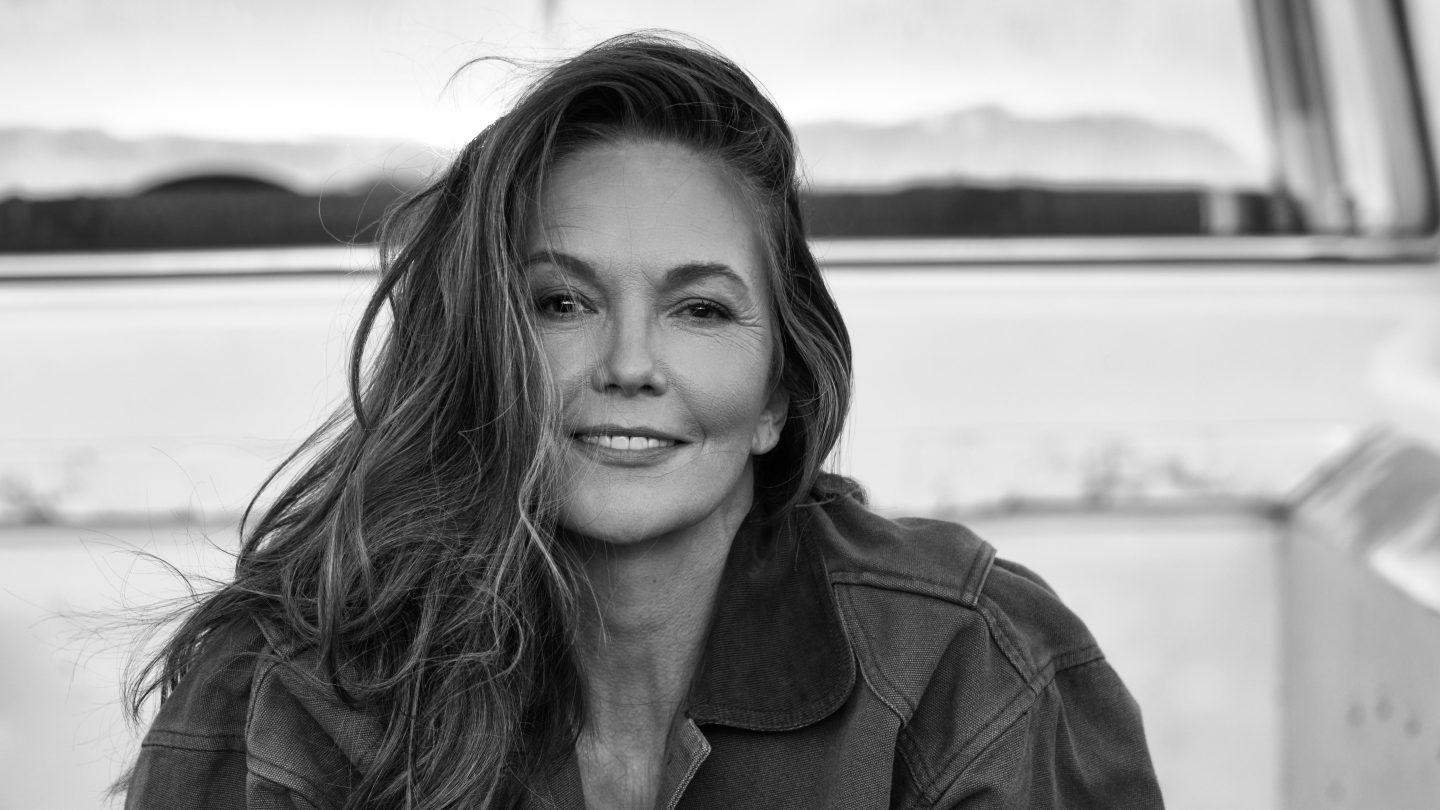

Diane Lane hadn’t shot a film since the pandemic until Anniversary came her way — a break that turned out to be unfortunately, eerily appropriate for the dystopian thriller, which covers five years and examines an American family’s unraveling amid the rise of an authoritarian regime. Directed by Jan Komasa (the Oscar-nominated Corpus Christi) and co-starring Kyle Chandler, the film pinpoints pockets of modern radicalization before imagining what might happen if they start seizing real political power. Lane’s matriarch, a Georgetown professor facing down a former student’s rebellion, starkly contends with that notion.
It might seem like juicy fodder for a polarized cultural moment, but in conversation a few months after the movie’s brief theatrical release, Lane admits with some weariness that Anniversary wasn’t able to make much noise at all. (It’s currently available for digital rental.) Whether that has more to do with the struggles of marketing such a polemical drama, or the brutal current realities of the independent film landscape, remains to be seen. But for Lane, an Oscar nominee who more recently netted an Emmy nod for her turn in Feud: Capote vs. The Swans, this rare big-screen leading role is worth talking about and celebrating — even with all the challenges that come with it.
How have you experienced the release of Anniversary?
I’ve had multiple responses that I’ve never had to this film. I had people reaching out to me saying, “Gee, I know you had a film coming out. Where is it? Where can I see it?” That was a unique experience for me. (Laughs.) I had people even in Germany when it was over there like, “It says it’s new, and it’s playing at one showing in the middle of the day. Is it an art film?” I said, “I don’t know. I mean, it certainly encompasses some art within the story…”
It balanced out with getting these amazing texts from people who I didn’t know, had my phone number in very high places. “Thank you for this movie. It’s important. As a human and as an American and as a person who has been in this industry for a long time, yay for you because of this.” It doesn’t line up very often like that, as we all know. Access is granted within our industry in a different way than the gen pop.
That dynamic you’re talking about, of people not knowing how to see movies they know have been released — that must feel strange.
It’s amazing. I didn’t even know there was a thing called “The Store” on Apple TV. I didn’t know about those little icons on the left of my screen and what gems live in there, because you wouldn’t know. That’s a flaw in the design, in my opinion. There was a little sign store in my small town in Georgia where I lived, and it said on their sign, “A business with no sign is a sign of no business.”
I’ve lived in many different zip codes, and I know this country pretty well, even though I live between two realities. It’s interesting to get to see the fact that some people have access to things and some people don’t. I’ll leave it there on that topic because that is an umbrella of truth, for a lot of ingredients under that umbrella.
When I saw the movie, it stood out for a few reasons: You have a great part, and it’s got its finger on the pulse in a pretty terrifying way.
We thought we were making something that was a lot closer to fiction. We showed disappearing people — though I guess in our film, it’s dated because their faces are exposed. It’s just been very affirming as to why I said yes to the film. Jan Komasa is an auteur, and he’s allowed to experiment with his palette. This was not a money gig, as they say, and convincing people wasn’t hard because the material allowed us to feel as though we were going to have American fears seen and American pain seen — the fractiousness that we endured was dialed up because of the pandemic.
Every actor was fully utilized in their capacity, and that’s what I love about working for Jan. He allows you to find where your 10 is on your dial. You’re not offered that all the time. I was grateful for the tension that we could bring, how to make that palpable, the commencement of us meeting and convening in Ireland.
Your dial gets to 10 with an incredible harrowing scream. How did you get there?
You only have one of those in you. I’m not a trained screamer. I didn’t go to RADA — I did not have the opportunity to properly train as an actor in terms of, if this were a theater piece, I would not have done that. I would’ve known how to make it sustainable. But this is not a marathon, this was a sprint.
This is not a linear story as people might be rightfully anticipating when they go to a film. I always wondered if the title was going to be helpful or the opposite of helpful because when you have an anniversary of something, it implies a level of revisiting the question: “How are we doing compared to five years ago?” for example. This film covers five years or so, the genesis part of it for the story was that Jan noticed his family changing by looking at photographs over time and before people changed — and hence the change in the film, which is called “The Change.”
Some people were upset that we didn’t describe what that is. Well, excuse me: Do you bring nothing when you sit down in a theater or your sofa or wherever you watch? You don’t bring your experience and feel the parallels in your life? If not, I don’t know what to say — perhaps pick a different genre of storytelling. I think it’s nice to feel seen in terms of the emotions that we hold at bay by being polite, and families are not polite. That’s the truth of it in a lot of families.
This is the first film you’ve shot since the pandemic. You’ve done some TV work, but given what you were talking about, the promise of this role, was it a matter of waiting for the right thing to come along?
When you cover a lot of ground as a working person, other times you have to allow for — like, you’re a tank needing to refill your reserves, to be replenished. I had a lot of life changes that I’ve been straddling and living, so I’m enjoying the way that informs my choices. Sometimes you get a case of the “Who the hell do I think I am?” and then other times you feel like, “I like a little sugar in my bowl.”
Well, and then there’s that problem of visibility you were talking about, when you do get that.
I just watched Jay Kelly and I enjoyed it. Awards season is such an interesting time because you get this flood of everybody’s best or proudest work, whether it’s a corporation or an individual. I get it is a crowded field, and we’re saying, “Hey, we’re over here!” We’re over here standing at a point in time and saying, “We just want you to know this film exists.”
You were an executive producer on this project. What does that look like on a tight indie like this?
I don’t know how else you can convince other actors to come on at the same price you are. (Laughs.) It is kind of funny that I wanted them to know that I am not gouging the baby. This is all for love from all of us. If you like the material, I’m the first one on board. I’ll carry the load and I’ll promote the thing. I’ve never put myself in this position before, so I’m a little sweaty, but it is a good kind of sweaty. I like it. I don’t know if it’s addicting or not. I’ll let you know. It might be a one-off. I don’t know if I’m going to matriculate into other capacities in this industry, perhaps because my father got his wish — I’m a lifer, and that’s OK. It’s fun, and I love the people that I get to work and play with. Sometimes you get to be in something that you really care about, and that’s a blessing.
Read the full article here