



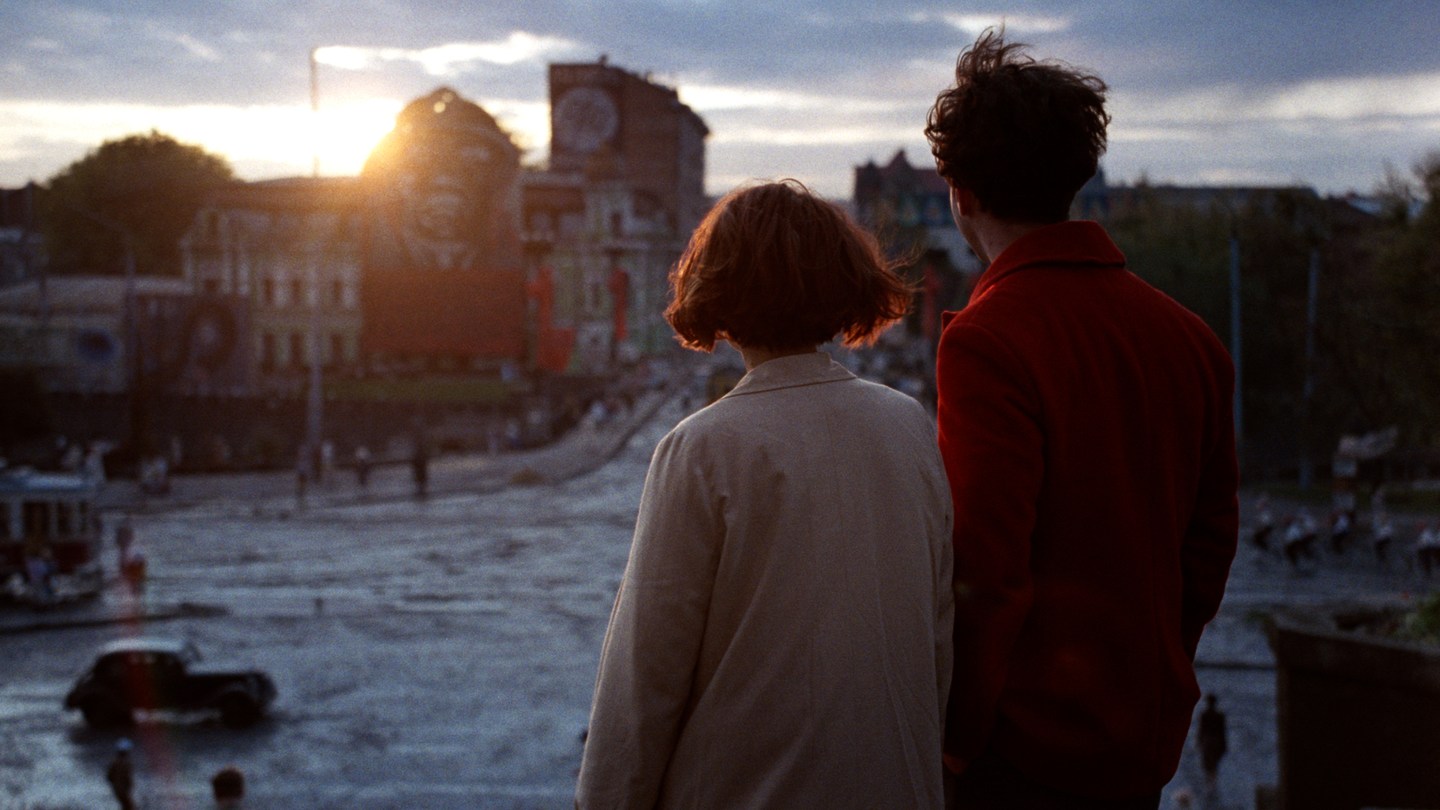


Director Ilya Khrzhanovsky is defending his upcoming film DAU against attacks by the government of Ukraine that it represents Russian propaganda and should not be screened at the Venice Film Festival next month.
Khrzhanovsky took to Facebook on Thursday to post a point-by-point rebuttal of the criticism of his film and claims linking him, the film’s financiers, and DAU actor Teodor Currentzis to Vladimir Putin’s Russia.
“DAU is not a Russian film and does not represent Russia at the Venice Film Festival,” Khrzhanovsky writes, noting that he is “not a citizen of the Russian Federation” having renounced his Russian citizenship “in protest against the state policy of the Russian Federation and its war against Ukraine.”
His film, Khrzhanovsky said, “is not an instrument of Russian state cultural policy. It is an artistic statement about the nature of totalitarian evil.”
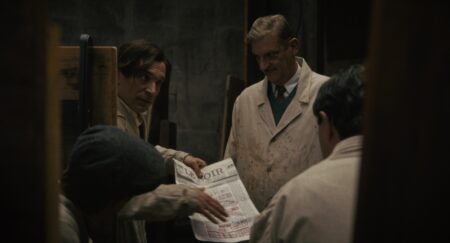
The 3-hour DAU film is the latest in a series of movies, art installations and video projects created by Khrzhanovsky using material filmed over three years from 2008 to 2011 on a closed set in Kharkiv, Ukraine.
Earlier this week, the Ukraine Ministry of Foreign Affairs, the Ministry of Culture, and the Ukrainian Embassy in Italy issued a joint statement criticizing the Venice festival for including DAU in its line-up.
“At the time when Russia is continuing its war of aggression against Ukraine, systematically destroying cities, cultural heritage and national identity,” the statement reads, “offering one of the world’s most prestigious cultural platforms to a project linked to the Russian state and its networks of influence sends a deeply worrying signal.”
The statement goes on to list the film’s alleged connections to Putin’s Russia, including Khrzhanovsky’s citizenship, and that of DAU lead actor Teodor Currentzis, and its connection to Sergei Adoniev, a Russian business man who has been sanctioned by Ukraine and the U.S.
Venice Film Festival artistic director Alberto Barbera took to Instagram on Wednesday to clap back at those allegations and to defend his decision to include DAU at this year’s festival. In his post, Barbera describes Khrzhanovsky as “a Russian dissident who ended up on the regime’s blacklist as a terrorist and enemy of the state — a director who, from the very beginning, has taken a stand against the Russian invasion of Ukraine”. He called the attacks on DAU an “inexplicable smear campaign against a film that its accusers have evidently not even seen yet.”
The DAU project, initially conceived as a biopic of the Nobel Prize-winning Soviet scientist Lev Landau (nicknamed Dau), became a massive immersive installation. Hundreds of cast members, actors and non-actors, lived on the closed set, in costume and in character, isolated from the outside world during filming. From the hundreds of hours of footage shot, Khrzhanovsky has produced several feature films. DAU. Natasha, screened at the Berlin Film Festival in 2020, winning a Silver Bear for outstanding artistic contribution for cinematographer Jürgen Jürges.
In his Facebook post, Khrzhanovsky refutes or qualifies the various accusations made against him and his film. Adoniev, he says, was a financier of the broader artistic 𝘋𝘈𝘜 project but “his financing ended completely in 2019 and he has had no financial relationship with the project since then. He did not finance the completion of the film selected for the competition of the Venice Film Festival.” Adoniev’s involvement, the director adds, was prior to his being sanctioned by the U.S. or Ukraine government.
The filming of the DAU project in Ukraine, writes Khrzhanovsky, took place before the Russian invasion of the country. His own position on Russia’s war against Ukraine “has been and remains unequivocal,” he writes. “I publicly supported Ukraine long before the full-scale invasion. Following the annexation of Crimea in March 2014, I signed an open letter by Russian filmmakers in support of Ukraine.”
A stickier point is DAU lead actor Theodor Currentzis. A well-known Greek conductor, Currentzis took on Russian citizenship in 2014. Currentzis has never publicly supported Russia’s war against Ukraine, but he has not publicly condemned it either.
“However one may judge his decision not to make such statements [against the war], judging a person on the basis of the citizenship they hold — and, even more so, using citizenship acquired years after most of the filming as evidence of the film’s current connection to the Russian state — is not justified,” writes Khrzhanovsky.
Given what he characterized as his long and enduring support for Ukraine, Khrzhanovsky said the attempt to frame him and his film as supporting the Russian state or its war against Ukraine was “especially painful for me.” He said he understood the need, “during wartime, to scrutinize the sources of financing of cultural projects, political connections, and possible instruments of Russian influence. [But] that is precisely why standards of factual accuracy must be particularly high.”
His movie, he said, “should not be prematurely judged on the basis of false associations, distorted chronology, or assumptions that contradict the documented history of the project. I have been and remain opposed to Russia’s war against Ukraine and to the political system that made this war possible.
Opposing totalitarianism also means defending factual truth.”
DAU will screen in competition at the 2026 Venice Film Festival, which runs Sept. 2-12.
Read the full article here