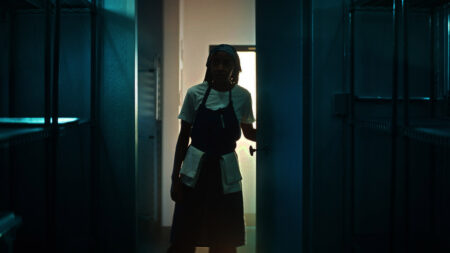





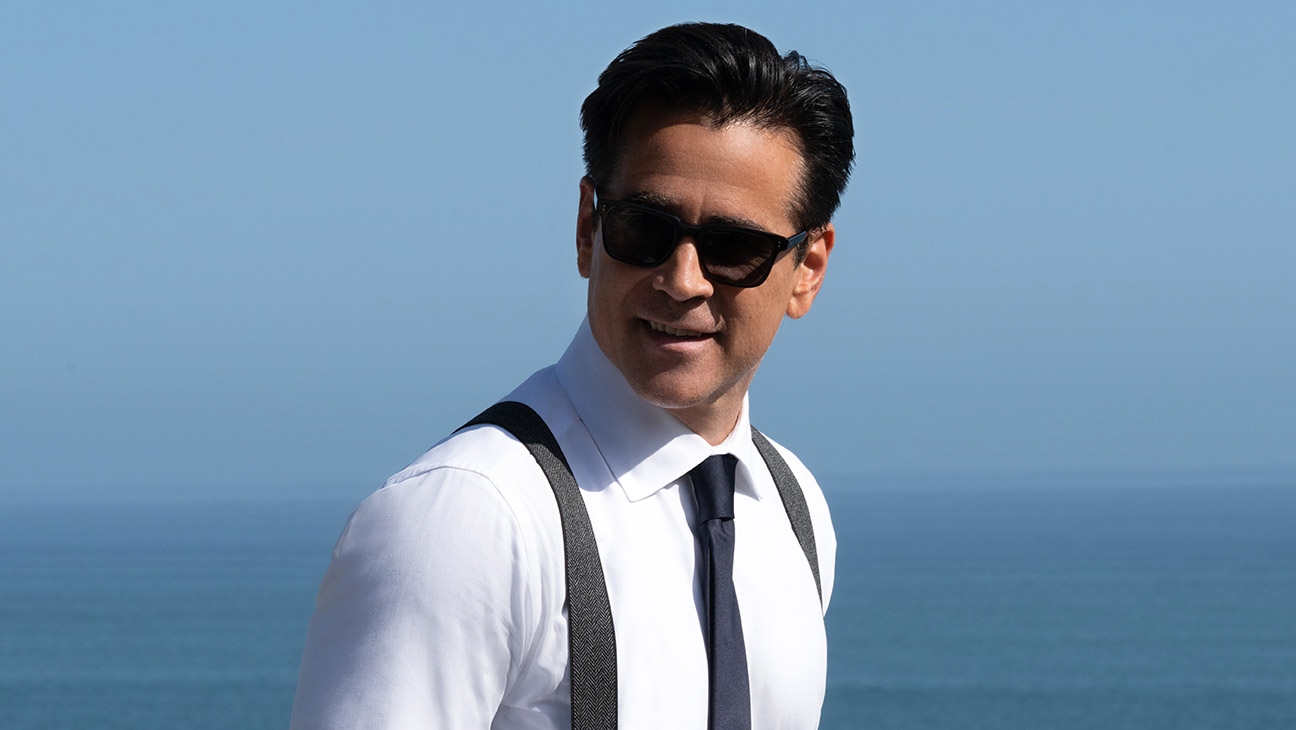


In 2020, Colin Farrell began a six-year back-and-forth between two polar opposite characters, Oz “The Penguin” Cobb and John Sugar.
That’s not to say that there aren’t some similarities between the Gotham City gangster in The Penguin and Los Angeles private investigator of Sugar. They’re both cinephiles. They both have a knack for anticipating human behavior in order to garner their preferred outcome, and they each have talent for wriggling (or waddling) their way out of jams.
However, their core selves are night-and-day different in that Oz will hurt anyone and everyone to get what he wants, even his own flesh and blood. Conversely, Oz is as altruistic as one can be, and he’ll often endure great pain if it means defending the defenseless. Oh, and he happens to be an alien.
For Farrell, Sugar and his two seasons’ worth of time as the compassionate PI has served as an antidote and “sanity check” to the toxic, unrecognizable Penguin character he’s transformed into via three-hour makeup processes on Matt Reeves’ The Batman and Lauren LeFranc’s The Penguin series. (The Irish actor will soon be reprising Oz Cobb for the third time in Reeves’ The Batman: Part II.)
“I love playing the Penguin. This is not a bitch, but it’s so dark. The character has such a poison within him,” Farrell tells The Hollywood Reporter in support of Sugar season two. “Sugar, on the other hand, is so gentle, optimistic and so fundamentally decent. It’s a lovely moral palate cleanser.”
After season one’s show-altering reveal that Sugar is an alien, his fellow alien species is exposed and harmed by the human powers that be, forcing them to retreat to their home planet. Sugar stays behind, though, to hopefully find his missing sister, Djen. But at the top of season two, the trail goes cold, and he assumes the worst case scenario about her fate. Thus, he channels his grief into a new case involving the sudden disappearance of Ji Moon (Raymond Lee), so that his boxer brother, Danny Moon (Jin Ha), doesn’t have to experience the sorrow Sugar feels about his own sibling.
Following the alien rug-pull, Sugar, which is showrun by Breaking Bad alum Sam Catlin in season two, could’ve easily gone in a more sci-fi direction, but it’s instead become an even more down-to-earth L.A. story. The search for Ji Moon has Sugar encounter many of the real-life issues the city is facing, such as homelessness and the fentanyl crisis. As a producer, Farrell stressed a certain sensitivity so that the show didn’t come off as exploitative or overtly virtuous.
“I’d be terrified that, in portraying any aspect of the homeless community in this city, you’d be patronizing them, infantilizing them, exoticizing them or using it just for the show to say, ‘Oh look, we’re so caring,’” Farrell says candidly. “I hope we didn’t fall short.”
Below, during a conversation with THR, Farrell also discusses how season one’s extraterrestrial twist is expanded on in season two, and whether Sugar is a human story or an immigrant story.
***
I last spoke to you for The Penguin while you were on the set of Sugar season two. You’ve gone back and forth between Oz and Sugar the last handful of years. Has Sugar’s inherent decency become something of a moral palate cleanser for Oz’s wicked ways?
Yeah, a sanity check. I love playing the Penguin. What a dream for a kid who grew up watching Burgess Meredith in Batman ‘66 and then onto Danny DeVito, my old pal, in Tim Burton’s Batman Returns. To play that part is brilliant, and to work with [prosthetic designer] Mike Marino and do that whole thing with the makeup is amazing. This is not a bitch, but it’s so dark. The character has such a poison within him, and you take it away a little bit.
Sugar, on the other hand, is so gentle, so optimistic and so fundamentally decent. He sees the best in every single person. He sees through people’s pain and he sees the goodness that lies beneath it. It’s a lovely moral palate cleanser.
Sugar may be an alien, but he’s more human than most humans. As you referenced, it’s really affecting when he comments to himself about how poorly human beings treat those most in pain. Has Sugar’s perspective made you even more aware of how desensitized we’ve become to those who need help?
I don’t know if I’m more aware of the reality of people’s struggle. You’re assaulted by the reality of the struggle for the most vulnerable amongst us. It’s usually the youngest and the oldest. You have some kind of energetic engine when you’re in your teen years and your twenties and your thirties to at least stand up and fight against something that you don’t believe in. But when you’re a baby or a child or you’re aged or infirm, you’re physically at your most vulnerable, and you don’t have the voice.
Sometimes, those who love a child or those who love an aged person are able to fight. But even those people who care for their child or for their 84-year-old father are so burdened and so fatigued with care that they don’t have the engine to fight. Does this show reveal more to me how the most vulnerable amongst us are suffering as a result of disinterest, apathy, greed? Not really, unfortunately. It’s everywhere you look.
Sugar and Oz are both cinephiles as well. How do you compare and contrast their relationships to film?
Oz learned a lot about human beings from the bullying that he received on playgrounds and from watching his mother and brothers — or from watching Rex Calabrese and his boys on the street corner outside the bodega — but he also learned about human beings from watching films. And Sugar, more than anything, because he had no prior experience with human beings, he really learned a lot about the human condition from observing films. They’re both deeply observant people. But the main difference is that Oz uses his understanding of human behavior to only help himself. Sugar uses it because he wants to help eight billion people on Planet Earth.
In season two, Sugar’s missing sister haunts him so much that he stops at nothing to reunite a pair of Korean brothers. I bring this up because you produce this show with your sister, Claudine Farrell. Did the two of you originate the sibling storylines on this series?
Claudine! She’s next door. (Laughs.) No, we didn’t. Both of us are producers, but Sam Catlin, our showrunner, and his team of writers, as they should have, had the space to think about an arc. He came up with these two Korean immigrants, the Moon Brothers, and I loved the dynamic.
Los Angeles is a city that is populated by many, many immigrants. I’m an immigrant. Just because I’m an actor in Hollywood and all that shit doesn’t mean I’m not fundamentally an immigrant to this country. So I loved it when Sam articulated where he was going with the season, and Raymond Lee and Jin Ha did such a great job with the Moon Brothers, Ji and Danny.
Sam feels that Sugar, at its most basic level, is an immigrant story, but I think it’s more of a human story. I get that Sugar is an immigrant from a distant land, but it’s a story that uses the allegory of this alien creature to explore the human condition more than anything.
Sugar is ordered by his fellow aliens to not assimilate during his time on Earth. Do you remember one of the first ways you noticed yourself assimilating into your life as an Angeleno?
Honestly, it was the first time I used the word awesome. I also worry about my accent, man. I know it seems superficial. But an accent, for many of us, is a very important anchor and a very important source of identification. It’s an aural tribal call to each other. I just said “other” thicker than I would have if I wasn’t talking about my accent. That’s how deep and how complicated it is in the mind. I’ve yet to have somebody say I sound American at home [in Ireland], but I do know that my accent has greatly lightened up over the years.
Season one’s twist that Sugar is an alien recontextualized the entire series, and while there’s a couple cool twists in season two, the writers didn’t try to one-up themselves to that degree. Were you glad that Sam and co. didn’t try to force another huge, show-altering reveal just because people responded so well to it in season one?
Yeah, I think so. That was a big shadow that hung over the first season. We didn’t know what episode it was going to be revealed, and we didn’t know what Sugar was going to look like when his true self was revealed. So there was a bit of nervousness around that, and it was nice to be done with it in episode six of season one. The way we explore that revelation in the second season is more from a character standpoint.
There’s a little bit of backstory with Laura San Giacomo’s character that articulates through their interactions what Sugar was like when he first arrived here. It allows the audience to experience how much he’s changed and evolved in his time amongst human beings. Laura San Giacomo’s character is a very important character because she’s an indicator and a warning sign as to what can potentially befall either Sugar or any of his fellow species if they get too lost in the experience of being human. If they become too assimilated, they can lose themselves to grave consequences.
Now that Sugar’s alien nature is known to the audience, season two could’ve leaned even more into sci-fi, but it mostly deals with real L.A. issues: homelessness, fentanyl, climate and a number of institutional problems. What did you make of that choice to lean into your location even more?
I loved it because I love Los Angeles. I’ve grown to love Los Angeles through the years. I can’t say I understand it in the way I understand Dublin. I don’t understand everything about Dublin. It’s hard to understand everything about a place that has two million people bumping off each other. But here, I don’t get it. I’ve been in L.A. for 25 years, and I like that it’s still very new to me. It’s got so much texture and so many different pockets of cultures coexisting at the same time. There’s K-Town, which is where a lot of the story takes place this season. There’s Thai town, there’s Salvadorian pockets, and there’s a huge Mexican population, of course. It’s an endlessly fascinating city.
So the idea that we had to go any further afield than the issues and the beauties that this city contends with on the daily, it didn’t cut muster. This show is not a sociological treatise on the struggles of a contemporary American city. It’s really not. It’s got a lighter touch than that by design, but at the same time, it really felt of worth to address the fentanyl epidemic here. It really felt of worth to address something that exists across all nations of the world, which is institutionalized corruption, particularly with a political slant and leaning. And through Raymond Lee and Jin Ha’s Ji and Danny, we explore the issue of immigration to a certain extent. It’s not a heavy-handed show, but at the same time, you can’t be glib.
You also want to be really careful. I’d be terrified that, in portraying any aspect of the homeless community in this city, you’d be patronizing them, infantilizing them, exoticizing them or using it just for the show to say, “Oh look, we’re so caring.” When we shot some of those scenes [at the homeless encampment] beneath the underpass, there were a couple of shots and a couple of makeup choices that were made where I was like, “Ahh, we’ve got to be careful here.” I’m not saying we nailed it in a respectful way. I’m not saying we treated that pocket of Los Angelean society with the dignity that every pocket of society deserves to be treated with, but the worry was that we would fall short of that. I hope we didn’t fall short.
But yeah, this series doesn’t lean into sci-fi as much as it could. If we go to future seasons, I would love to do a little more sci-fi, but never relinquish what the show should be at its core. Before we shot the pilot [four] years ago, we spoke about how this is a show about human beings in Los Angeles, which, to greater and lesser degrees, are like human beings everywhere.
Are you ready for another sweaty summer under Oz Cobb’s 30-pound bodysuit and two pounds of silicone rubber?
(Laughs.) Thankfully, [The Batman: Part II] won’t be the whole summer, man. I only have about two or three scenes. So I’ll just be a couple of weeks, but the good thing is that I will get to enjoy more of the film than I would if I was in it more.
***
Sugar season two is currently airing new episodes every Friday until Aug 7.
Read the full article here