





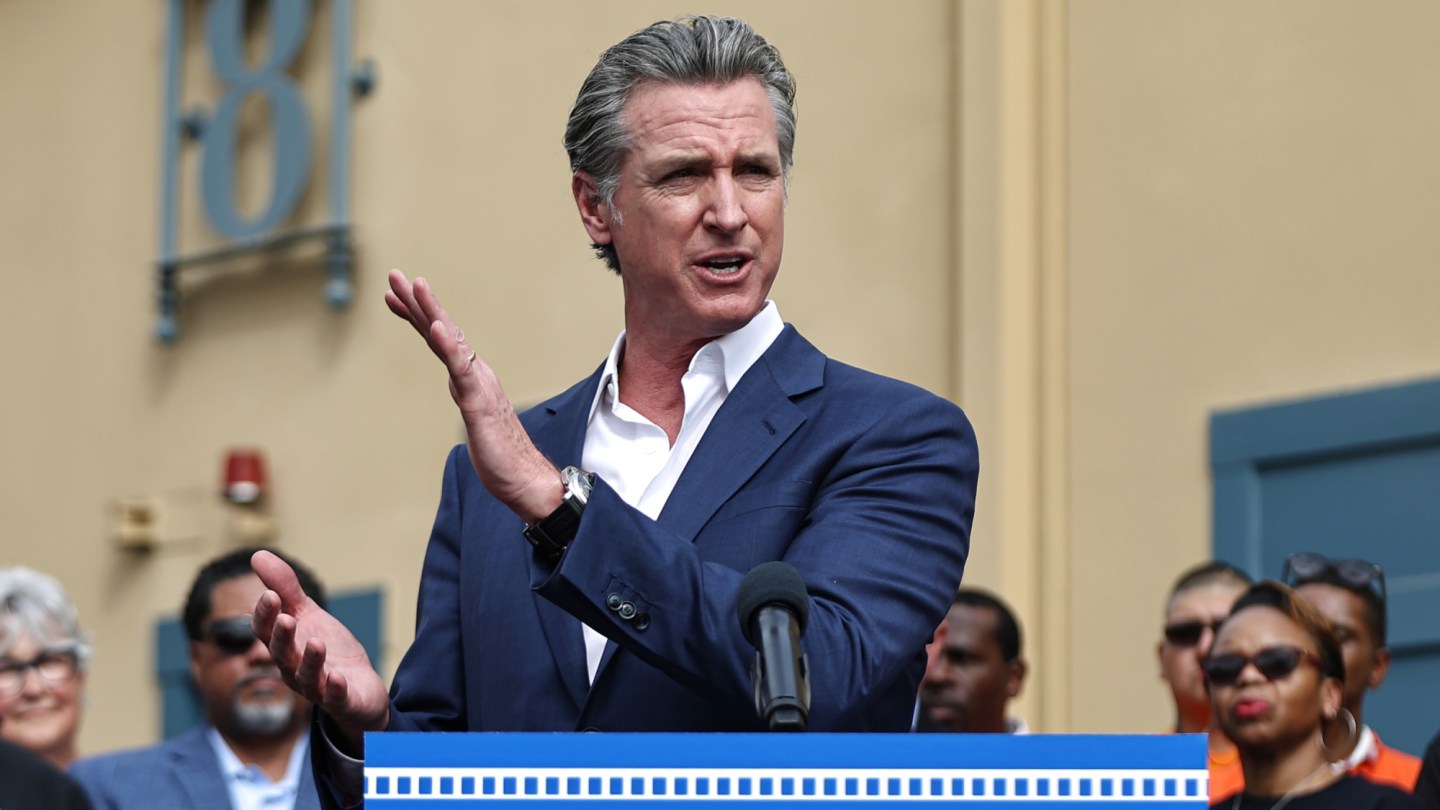


The entertainment industry in California won a crucial lifeline when Gov. Gavin Newsom signed a $420 million boost to the state’s film and TV tax incentives program into law in 2025.
Now, stakeholders claim that win is in jeopardy thanks to language in a recent state budget bill that was signed into law on June 29. And they’re racing to pass a solution by the end of the legislative session.
“Budget bill SB 122 puts our program at risk by retroactively changing the rules and threatening the recovery efforts of our already fragile industry throughout California,” reads one letter that entertainment unions are encouraging their members to send to legislators. “Changing the rules after the fact creates uncertainty and instability, further disrupting our struggling industry.”
The letter calls for the legislature to exempt the entertainment industry from the bill in question, SB 122. So far, around 350,000 such messages have been sent to legislators from union members, a spokesperson for the Entertainment Union Coalition tell The Hollywood Reporter.
SB 122 extends temporary caps on the use of business tax credits over $5 million in a given tax year and, starting in 2030, enshrines a permanent tax credit cap of 70 percent of a taxpayer’s liability or $5 million, whichever is greater. Practically speaking, that means that if a major studio has earned tens of millions in tax credits in a single year by locating their productions in the state, it could take years to realize the full value of those credits.
For instance Paramount nabbed $37.7 million in tax credits, including for Viola Davis thriller Ascent and a sequel series to the film Clueless, from the California Film Commission in its latest round of incentives. As the studio puts these projects into production, however, it will need to keep in mind that for now SB 122 is capping the amount of credits it can get back in a year to $5 million, with rules slightly modified starting in 2030. Same scenario for Disney, which received $45 million from California to shoot a big as-of-now untitled detective series in the state. Disney can only get back a fraction of the tax credits it earns in California annually.
Critics say this slow payout process will diminish the value of California’s film and television tax credit program which, along with the uncertainty created by this sudden change in policy, could persuade skittish productions to take their business elsewhere.
Legislators including State Assemblymember Rick Chavez Zbur and Senator Ben Allen — who both carried bills realizing 2025’s tax credit boost — are working on finding a legislative solution. “I am confident that we all can work together to make some changes to SB 122 that continues to allow the film tax credit program to achieve its goals, which is to preserve and grow the film and television industry in California,” Zbur said in an interview.
Sources tell THR that entertainment organizations were blindsided by finding themselves exposed to the tax credit cap. Some were allegedly told that the industry would be carved out from the bill, only to later learn that they weren’t.
To Zbur, it was a matter of simple confusion. “When we were voting on SB 122, I think there was confusion about the details of it. I think members believed that the film and TV tax credit was exempt from the program,” he said. “As it turns out, the exemption that was in the bill was an exemption only to the refundability aspects of the program, which basically meant that the program was not exempt in the end.”
Since the $750 million tax credit was signed into law last year, Los Angeles hasn’t yet experienced a significant recovery in production levels. Still, advocates believe they may soon see a turnaround as projects that earned credits — like the nine TV shows recently awarded $145.5 million to film in California — get going. The budget trailer bill, they claim, will dampen a return to form that has barely gotten started.
“Amending SB 122 is essential to helping to ensure that the next production happens in California rather than in the United Kingdom, Australia, Georgia, Vancouver or Saudi Arabia,” Brigitta Romanov, the president of the California IATSE Council, said in a statement to The Hollywood Reporter. “For IATSE members, this legislation is about helping to ensure the entertainment industry continues to fuel jobs that feed families and our state’s economy.”
Also threatening momentum for production in California is the Paramount-Skydance Warner Bros. megamerger hanging in the balance. Amid legal fights over the legality of the deal, Paramount Skydance CEO David Ellison has threatened to move one or, if he succeeds in merging the companies, two studios out of California if the parties don’t come to a settlement by Oct. 1. The relocation threat may be an unrealistic bargaining tactic, but it’s not calming any nerves about production levels in California.
Within this delicate environment, the fight against SB 122 has become a last-minute scramble, with advocates trying to get an amendment in motion before the legislative session adjourns on August 31. Some kind of solution to resolve industry concerns is expected to be proposed within the next week.
“Our success in last year’s fight was a direct reflection of the engagement and voices of our members,” at least a couple of entertainment unions have said in messages to members, referencing the 2025 tax credit increase. “We are now asking our members to once again use their voice to raise the concerns about our fragile industry and call for an urgent solution.”
Read the full article here