




In the opening minutes of Netflix‘s Breakdown: 1975, Oliver Stone pulls out a piece of lined paper and begins enthusiastically reading a list of his favorite films, ostensibly from 1975, given the title of Morgan Neville‘s documentary and the talking points already raised by Jodie Foster’s narration.
He’s doing OK for a bit, before getting to All the President’s Men and Network.
Breakdown: 1975
The Bottom Line
Lots of ideas, little depth.
Airdate: Friday, December 19 (Netflix)
Director: Morgan Neville
It’s here that film scholars and people with detail-oriented compulsions will notice a very, very obvious problem: Both All the President’s Men and Network were 1976 releases. This is not a blurriness that will be alleviated over the next hour-and-a-half.
Breakdown: 1975 is packed with great clips and peppered with solid observations, but it’s truly an odd documentary — one likely to be enticing for viewers with a casual interest in history or filmmaking, but infuriating for anybody craving even intermediate instruction.
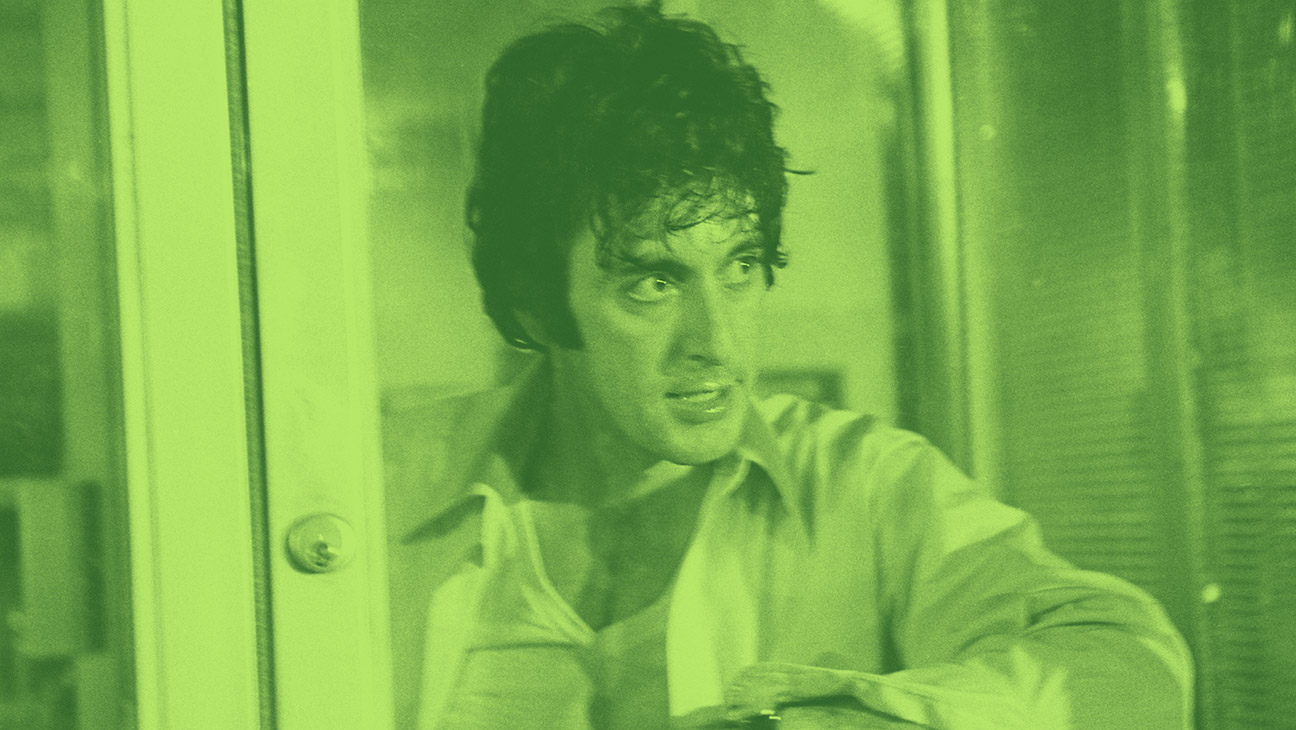
Half of the talking heads and half of Foster’s badly scripted voiceover (“Were we living the American Dream or an American Nightmare?”) operate as if the doc’s focus is actually intended to be 1975 and the impressive assortment of films released in that specific year — One Flew Over the Cuckoo’s Nest, Dog Day Afternoon, Nashville, Jaws and more.
Just as often, though, Breakdown: 1975 treats the very concretely defined concept of “1975” — a year existing between January 1, 1975 and December 31, 1975, if there was any confusion — as a construct, a nebulous midpoint between the end of Watergate and the American Bicentennial.
It’s a choice that makes sense on a broad thematic level and, more than that, on a cinematic level; as movie years go, 1975 was very good, but it wasn’t necessarily better than 1976 and it can’t come close to 1974, so it behooves Neville and his gang of experts to be able to talk about Network and All the President’s Men and Taxi Driver and The Conversation and Chinatown and Alice Doesn’t Live Here Anymore as a non-1975 bonus.
On a practical level, though, it takes the relatively clean and contained promise of the title and makes it impossible, resulting in an easily distracted project that barely has time to be more than superficially invested in any topic, racing through its biggest ideas in unconvincing (and, at times, questionably accurate) fashion.
The overall thesis — one that’s hard to dispute on its simple merits — is that the period between Watergate and the Bicentennial was one of tremendous cynicism and disillusion in the United States (despite the lack of specificity in the title, Breakdown: 1975 defines 1975 as an exclusively American phenomenon). Richard Nixon had resigned but been pardoned. Saigon fell. Oil prices soared.
Then there were a bunch of other things either happening or on the verge of happening. There were the competing pushes to pass and thwart the Equal Rights Amendment. Gerald Ford survived two assassination attempts in a month. We were on the verge of the personal computer revolution and the rise of Ronald Reagan and a new conservatism. It was the end of the counterculture and the birth of the Me Generation.
As Foster’s narration puts it, in just one of dozens of cringe-worthy lines, “To some, the era felt like a disco ball, where hundreds of little me’s swirled around.”
People were, the documentary tells us, asking, “Does America still work?” And the movies were too!
Neville has assembled a solid group of experts and talking heads, including filmmakers like Martin Scorese — watch Mr. Scorsese on Apple for better Scorsese content — and Nashville scribe Joan Tewkesbury; period stars like Ellen Burstyn and Albert Brooks; modern stars/enthusiasts like Seth Rogen, Patton Oswalt and Josh Brolin; historians like Rick Perlstein; critics like Wesley Morris; academics like USC’s Todd Boyd; and general cultural observers like Frank Rich and Kurt Anderson. Former Variety chief Peter Bart is present, but despite the fact that he was working as a studio executive in that particular period, he and the documentary offer no real industry perspective.
Once you accept that according to this doc, a 1975 movie is any movie released in 1975, produced in 1975, influenced by anything that happened between 1974 and 1976, released in 1974 but perhaps seen in second-run movie theaters in 1975, or even pre-dating Watergate but the filmmakers hope you won’t care, Breakdown: 1975 makes some persuasive arguments about why this was an especially fertile time for certain genres, from the conspiracy thriller to the vigilante drama.
It’s far less convincing making other connections. Did 1975-ish have a bunch of movies with bleak endings, perhaps reflecting the mood of the country? Sure. But once we’re a half-decade past Midnight Cowboy and Bonnie and Clyde and Easy Rider, what are we saying is particularly “1975” about “pessimism”? And yes, there were a bunch of disaster movies in this period, which definitely reflected some distrust for institutions. But once you talk about The Poseidon Adventure — released in 1972 and based on a 1969 novel — the point becomes ahistorical. And while I understand bringing Richard Pryor and blaxploitation into the conversation because, as Morris notes, most of the genres that fit with the time and theme are conspicuously devoid of Black voices, using Cooley High as 1975’s representative blaxploitation movie rather than Sheba, Baby or Dolemite is very odd.
I could run through an almost endless list of 1975 favorites that don’t even get referenced or get two clips in a context that makes very little sense. But hey, at least we get several minutes on the 1973 adaptation of Jonathan Livingston Seagull, which has relevance, but appears here more in a “Huh, that was an odd thing we made popular back then” way.
With almost nothing receiving the depth it deserves, Breakdown: 1975 gives the impression of working its way down a checklist, even if the connective tissue between ideas is close to nonexistent. Like…sure, let’s acknowledge TV existed by mentioning All in the Family, but absolutely nothing else other than, for some reason, ABC’s Wonder Woman, used for clips of Lynda Carter stopping bullets as a manifestation of feminism, but never discussed.
The checklist approach at least gives fleeting notice to a lot of really good films from the period, though it’s hard to know which of those films get tantalizing enough exposure to draw viewers to them. It’s even harder to know how many of those movies, if any, will ever be available on Netflix (at least before a Warner Bros. deal goes through).
It’s too bad so many things get treated at such a surface level, because the talking heads are good and a lot of their quick commentary is fun. My favorite bit comes when the experts attempt to tie Jaws in with the themes discussed earlier in the documentary, only to conclude with Sam Wasson’s observation that “It’s a movie about nothing.” I don’t agree, but I’m not sure he does either, which is part of the joy of analysis.
If you didn’t know that Breakdown: 1975 came from an Oscar-winning filmmaker, you might be inclined to think it was a video essay from a film school student with some very well-connected friends. Were I the teaching assistant grading that video essay, I’d probably give it a B-/C+ with the comment: “Entertaining and engaging, but lacking in focus and substance.”
Read the full article here