




Imagine not knowing, for decades, the fate of your parents or other family members, who were the victims of forced disappearances organized by an authoritarian regime. That has long been a reality for people in Spain. After all, Spanish dictator General Francisco Franco, who led the overthrow of the republic and then ruled from 1939 until his death in 1975, still casts a long, and often painful, shadow. Atlas of Disappearance (Atlas de la Desaparición), a new documentary from Colombian filmmaker and researcher Manuel Correa (The Shape of Now), is trying to change that by confronting the legacy of forced disappearances during his regime’s reign after 80 years of silence.
Following an investigation to help find victims’ earthly remains and shed light on a dark part of Spanish history, the doc combines cutting-edge technology, such as forensic architecture, and paper archives in a historical investigation based on the director’s experience working within the international and multidisciplinary research organization Forensic Architecture, based at Goldsmiths, University of London. The goal: to overcome institutional resistance, bureaucratic hurdles and other factors keeping families from getting answers to their decades-old questions.
World premiering on Friday, March 13, in the F:ACT Award section of the 23rd edition of CPH:DOX, the Copenhagen International Documentary Film Festival, Atlas of Disappearance follows several families on their endless-seeming journey through bureaucratic and legal jungles and social obstacles. “Over a period of more than 20 years, the Franco regime quietly orchestrated the exhumation and transport of more than 33,000 bodies from mass graves throughout Spain to the Valley of the Fallen, the monumental mausoleum built to glorify Franco’s victory,” explain the press notes for the film.
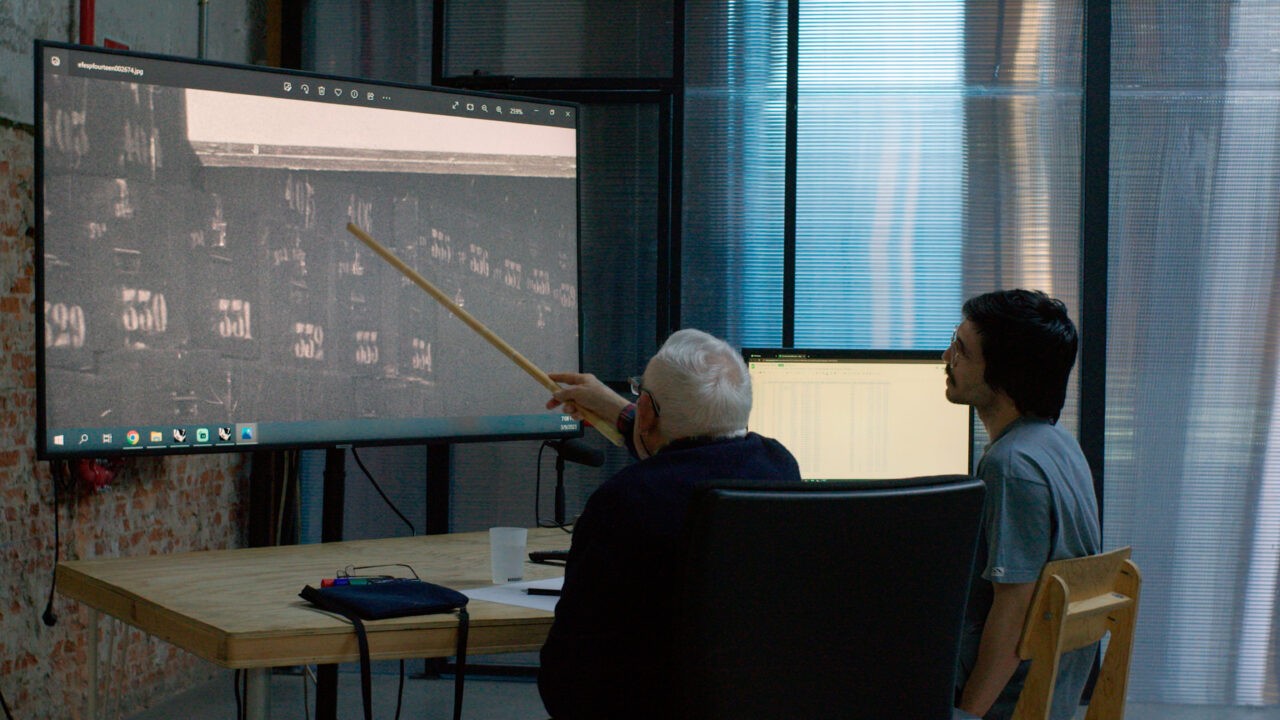
To support the families’ search efforts, Correa founded the Office of Documentary Research, a collective of geographers, architects, and artists. Their investigation used digital maps, citizen archives, and new forensic technologies to reconstruct what has been concealed and kept behind a curtain of silence. It also tapped into families’ own archives and insights into the disappearances, including documents, letters, and memories, which paint a picture of personal loss and the systematic destruction of evidence.
Correa served as director and cinematographer on Atlas of Disappearance and co-edited the doc with Ivan Guarnizo. The producers are Anna Giralt Gris, Jorge Caballero Ramos and Emil Olsen. Sales are being handled by Agencia Audiovisual Freak and Artefacto Films.
Watch a trailer for Atlas of Disappearance here.
Ahead of the world premiere of the doc, Correa talked to THR about how the fates of Franco victims have long remained a taboo topic in Spain, the emotional impact of secrecy and silence, the painstaking work of helping their families find answers, how modes of violence and repression are becoming more sophisticated, and what’s next for him after Atlas of Disappearance.
How did you get involved in an investigation into Spanish history and political violence as a filmmaker from Colombia?
I’ve been researching disappearances throughout my career, especially in Colombia, where I was working with mothers whose children had disappeared. My work is very slow, because I work a lot with communities and ask people what they need.
I met Silvia Navarro-Pablo, the head of the association that wants to remove the disappeared from the Valley of the Fallen who you see in the film, through email exchanges. I thought, “I’m going to go to Spain as a tourist to meet her.” We had a conversation, and then I felt: “These people need a hand.”
For me, films are very important because, of course, I’m a filmmaker. But what really excites me about films is the process of making them, because suddenly you find yourself in a position where you have resources that you can deploy to make things happen. So, I created an office of researchers, including mathematicians and geographers, to try to create a more truthful, more complete version of what happened in the Valley of the Fallen.
How did you approach structuring your work and findings into a documentary narrative?
That was actually one of the most difficult things, because we had three victims who had more information, but even their information was full of gaps. So, it needed a lot of research, getting into archives, creating models and visualizations.
What this film is attempting to do is use modern tools. As the modes of violence and the modes of repression become more and more complicated and increasingly technologically sophisticated, so do the tools for investigating them, for telling stories about them. They have also become more complicated and more sophisticated. With that in mind, for me, it was important that we told the story as it unfolded, as we researched it, and as we started finding out things.
The biggest crime in these cases is the silence, right? You take these people, you kill them, and you don’t say anything about it. They deleted them entirely and put them in mass graves. They don’t even tell you where they are 20 years later. The government goes to dig them up and to secretly move them to a place and doesn’t tell anybody. So it’s all about secrecy. The film also mentions the monks [of The Benedictine Abbey of the Holy Cross in the Valley of the Fallen], who impede filming inside, which is very telling. It’s a continuity of this silence.
If you’ve never been told anything, you never really have an answer. In this case, having an answer is the same as having a body. For a lot of these people, without having the body, you cannot mourn.
How long did you work on Atlas of Disappearance? It feels like every time we see the families and your team finding out something, new questions arise, or a wall of silence appears.
Yes, that’s correct. It was eight years in the making, so we needed patience. It was a very, very, very difficult project. It was titanic. Every single time we peered through a door, the door would close. Or we would talk to somebody, and they would give us misinformation, such as the monks. It’s so full of misinformation, and this misinformation would also lead us onto paths that were not useful.
That was part of coming up with a clear narrative that can hook you emotionally and that can help narrate this story. We did so much research, and we hope we were able to shape it in a compelling way, and to hopefully provide a narrative that, despite the hardships, includes some hope. It’s the hope that new ways of thinking and new ways of researching can clarify past atrocities.
Atlas of Disappearance features computers and all sorts of technology and tools. So, you have modern technology, mathematics and figures helping you tell a story about human lives lost and human trauma. How important was it to emphasize these human aspects in the film?
It was super important. When we talk about numbers, we’re basically trying to represent scale, but in reality, we are not talking about numbers. We’re talking about lives. We’re talking about lives that were ended, that were cut short, and a lot of families were devastated and continue to be devastated by this. So when we’re talking about numbers, it’s a representation of a lot of lives.
This is why it was important for us, for instance, to read the names out loud of the people that we know are buried there and to take time to read the names of the disappeared in the film. That’s also a political [choice], because it’s a way to bring them back. When we were directing that, it was actually colossal. We spent about 70 hours reading out names. All the people reading names did so for an hour each, and we asked them to take their time, because these are the names of people lost. And a lot of people reading their names actually broke down while reading.
We are using mathematics, but we really wanted to do the exact opposite of the political project of disappearances, which is naming. These people were disappeared, removed from history. And now we’re reading their names. We bring them back, in a sense, at least symbolically.
How have Spanish governments’ attitudes toward unearthing information about the victims of the Franco regime changed over time?
In Spain, the Valley of the Fallen is something that has not been dealt with until the current government, which is actually trying. But before that, nobody would talk about it. When I started making the film, you could tell that it was the most taboo thing. I would talk about it in the street, and people would look at me. It was really, really taboo. And I think now things have changed, partly because the government [led by Prime Minister Pedro Sánchez of the Spanish Socialist Workers’ Party since 2018] has put it in the spotlight.
How universal is the story of Atlas of Disappearance?
It’s a political stance of mine that every global story is a local story first. And it’s very sad to see that there is a very tragic turn of events right now in world politics. When I started making the film, of course, there were wars, but not like right now. We are seeing wars of attrition like we haven’t seen for a century in terms of the scale and the rhetoric. We’re seeing massacres left and right, and people talking again about mass graves. It has been a long time since we saw this sort of scale, especially in the West. So it is very worrying.
And in these wars we’re seeing right now, we also see something that is very similar to the logic of disappearance that the film addresses. And we see a similar logic of misinformation. “No, I didn’t bomb this school. Oh no, these mass graves are fake!”
Do you have any new film projects in development?
Yes, a film about [Martha Lucía González,] a judge in Colombia who, in 1988, when she was only 30 years old, got assigned to investigate two massacres. She found out that the military had worked together with the narcos to create a paramilitary army. And she discovered schools for hitmen. They had a school where they would train farmers how to become hitmen. And the final test was to kill and cut into pieces a person in less than five minutes. So it was absolutely brutal.
So this judge managed to do this investigation, and she started getting death threats, and there was a car bomb to try to kill her. So the government decided it couldn’t keep her in Colombia and sent her to Indonesia as a consul. Paolo Escobar sent hitmen to try to kill her and failed, but then had her father in Colombia killed. And then she disappeared from the face of the Earth for 30-something years [before resurfacing]. This is her story, a story that I think Colombia needs to know.
Read the full article here